{"title":"Linguistic Prediction in Autism Spectrum Disorder.","authors":"Aimee O'Shea, Paul E Engelhardt","doi":"10.3390/brainsci15020175","DOIUrl":null,"url":null,"abstract":"<p><strong>Background: </strong>Autism spectrum disorder has been argued to involve impairments in domain-general predictive abilities. There is strong evidence that individuals with ASD have trouble navigating the dynamic world due to an inability to predict the outcomes of particular events. There is also evidence that this is apparent across the diagnostic criteria of ASD and common among correlates of ASD. However, the question remains as to whether this impairment in predictive abilities is domain-specific or domain-general, with little research investigating prediction in linguistic measures.</p><p><strong>Methods: </strong>The current study investigated whether individuals with ASD showed atypicalities in linguistic prediction using a cloze probability task. In Experiment 1, 33 individuals with ASD were compared to 64 typically developing individuals in an offline cloze task.</p><p><strong>Results: </strong>There was no significant effect of an ASD diagnosis on the cloze probability. However, individuals with higher levels of autistic traits were significantly more likely to produce lower-probability (non-modal) cloze responses. In Experiment 2, 19 individuals with ASD were compared to 22 typically developing individuals in a lab-based cloze task, in which we also measured the reaction times to begin speaking (i.e., voice onset time). The results showed that individuals with ASD had significantly slower reaction times (~200 ms) but, similarly to Experiment 1, did not show differences in the cloze probability of the responses produced.</p><p><strong>Conclusions: </strong>We conclude that individuals with ASD do show inefficiency in linguistic prediction, as well as indicating which ASD traits most strongly correlate with these inefficiencies.</p>","PeriodicalId":9095,"journal":{"name":"Brain Sciences","volume":"15 2","pages":""},"PeriodicalIF":2.8000,"publicationDate":"2025-02-10","publicationTypes":"Journal Article","fieldsOfStudy":null,"isOpenAccess":false,"openAccessPdf":"https://www.ncbi.nlm.nih.gov/pmc/articles/PMC11852888/pdf/","citationCount":"0","resultStr":null,"platform":"Semanticscholar","paperid":null,"PeriodicalName":"Brain Sciences","FirstCategoryId":"3","ListUrlMain":"https://doi.org/10.3390/brainsci15020175","RegionNum":3,"RegionCategory":"医学","ArticlePicture":[],"TitleCN":null,"AbstractTextCN":null,"PMCID":null,"EPubDate":"","PubModel":"","JCR":"Q3","JCRName":"NEUROSCIENCES","Score":null,"Total":0}
引用次数: 0
Abstract
Background: Autism spectrum disorder has been argued to involve impairments in domain-general predictive abilities. There is strong evidence that individuals with ASD have trouble navigating the dynamic world due to an inability to predict the outcomes of particular events. There is also evidence that this is apparent across the diagnostic criteria of ASD and common among correlates of ASD. However, the question remains as to whether this impairment in predictive abilities is domain-specific or domain-general, with little research investigating prediction in linguistic measures.
Methods: The current study investigated whether individuals with ASD showed atypicalities in linguistic prediction using a cloze probability task. In Experiment 1, 33 individuals with ASD were compared to 64 typically developing individuals in an offline cloze task.
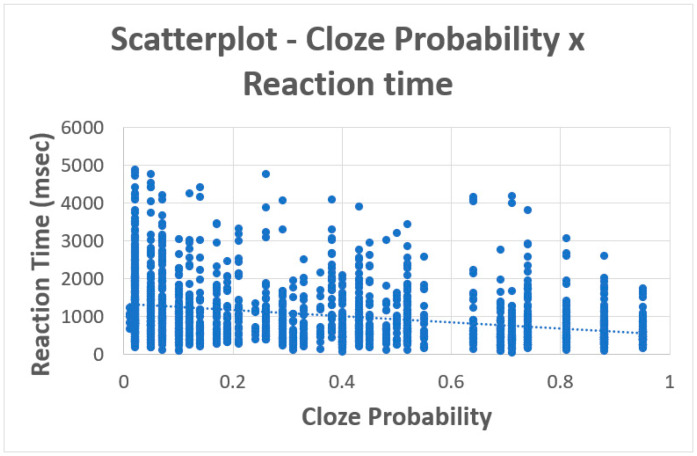
Results: There was no significant effect of an ASD diagnosis on the cloze probability. However, individuals with higher levels of autistic traits were significantly more likely to produce lower-probability (non-modal) cloze responses. In Experiment 2, 19 individuals with ASD were compared to 22 typically developing individuals in a lab-based cloze task, in which we also measured the reaction times to begin speaking (i.e., voice onset time). The results showed that individuals with ASD had significantly slower reaction times (~200 ms) but, similarly to Experiment 1, did not show differences in the cloze probability of the responses produced.
Conclusions: We conclude that individuals with ASD do show inefficiency in linguistic prediction, as well as indicating which ASD traits most strongly correlate with these inefficiencies.
期刊介绍:
Brain Sciences (ISSN 2076-3425) is a peer-reviewed scientific journal that publishes original articles, critical reviews, research notes and short communications in the areas of cognitive neuroscience, developmental neuroscience, molecular and cellular neuroscience, neural engineering, neuroimaging, neurolinguistics, neuropathy, systems neuroscience, and theoretical and computational neuroscience. Our aim is to encourage scientists to publish their experimental and theoretical results in as much detail as possible. There is no restriction on the length of the papers. The full experimental details must be provided so that the results can be reproduced. Electronic files or software regarding the full details of the calculation and experimental procedure, if unable to be published in a normal way, can be deposited as supplementary material.



 京公网安备 11010802042870号
京ICP备2023020795号-1
京公网安备 11010802042870号
京ICP备2023020795号-1

 分享
分享
 求助内容:
求助内容: 应助结果提醒方式:
 扫码关注我们
