Sarah Monserrat Lomelí Martínez, Fermín Paul Pacheco Moisés, Oscar Kurt Bitzer-Quintero, Javier Ramírez-Jirano, Daniela L C Delgado-Lara, Irán Cortés Trujillo, Juan Heriberto Torres Jasso, Joel Salazar-Flores, Erandis Dheni Torres-Sánchez
{"title":"Effect of N-Acetyl Cysteine as an Adjuvant Treatment in Alzheimer's Disease.","authors":"Sarah Monserrat Lomelí Martínez, Fermín Paul Pacheco Moisés, Oscar Kurt Bitzer-Quintero, Javier Ramírez-Jirano, Daniela L C Delgado-Lara, Irán Cortés Trujillo, Juan Heriberto Torres Jasso, Joel Salazar-Flores, Erandis Dheni Torres-Sánchez","doi":"10.3390/brainsci15020164","DOIUrl":null,"url":null,"abstract":"<p><p>Oxidative stress levels are exacerbated in Alzheimer's disease (AD). This phenomenon feeds back into the overactivation of oxidase enzymes, mitochondrial dysfunction, and the formation of advanced glycation end-products (AGEs), with the stimulation of their receptors (RAGE). These factors stimulate Aβ peptide aggregation and tau hyperphosphorylation through multiple pathways, which are addressed in this paper. The aim of this study was to evaluate the regulatory effect of N-acetyl cysteine (NAC) on oxidant/antioxidant balance as an adjuvant treatment in patients with AD. The results obtained showed that NAC supplementation produced improved cognitive performance, decreased levels of oxidative stress markers, lowered activities of oxidase enzymes, increased antioxidant responses, and attenuated inflammatory and apoptotic markers. Moreover, NAC reversed mitochondrial dysfunction, lowered AGEs-RAGE formation, attenuated Aβ peptide oligomerization, and reduced phosphorylation of tau, thereby halting the formation of neurofibrillary tangles and the progression of AD.</p>","PeriodicalId":9095,"journal":{"name":"Brain Sciences","volume":"15 2","pages":""},"PeriodicalIF":2.8000,"publicationDate":"2025-02-07","publicationTypes":"Journal Article","fieldsOfStudy":null,"isOpenAccess":false,"openAccessPdf":"https://www.ncbi.nlm.nih.gov/pmc/articles/PMC11852533/pdf/","citationCount":"0","resultStr":null,"platform":"Semanticscholar","paperid":null,"PeriodicalName":"Brain Sciences","FirstCategoryId":"3","ListUrlMain":"https://doi.org/10.3390/brainsci15020164","RegionNum":3,"RegionCategory":"医学","ArticlePicture":[],"TitleCN":null,"AbstractTextCN":null,"PMCID":null,"EPubDate":"","PubModel":"","JCR":"Q3","JCRName":"NEUROSCIENCES","Score":null,"Total":0}
引用次数: 0
Abstract
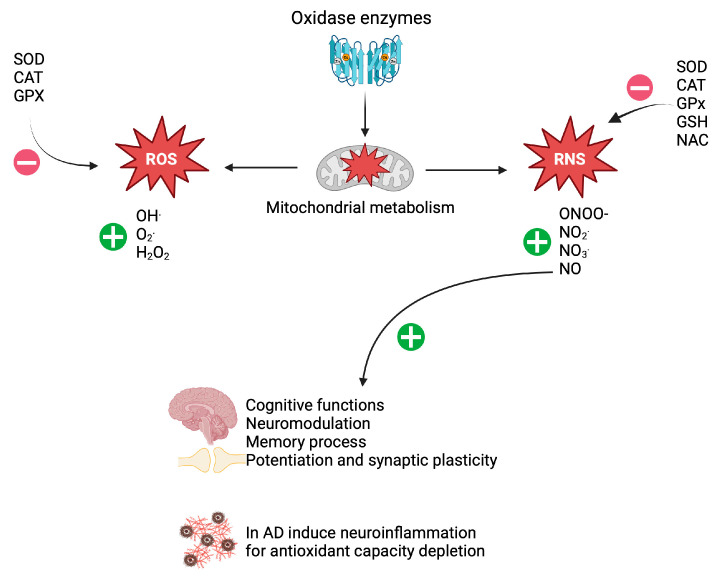
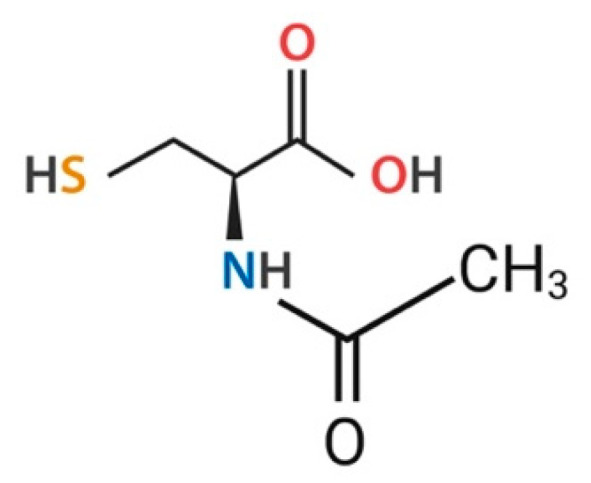
Oxidative stress levels are exacerbated in Alzheimer's disease (AD). This phenomenon feeds back into the overactivation of oxidase enzymes, mitochondrial dysfunction, and the formation of advanced glycation end-products (AGEs), with the stimulation of their receptors (RAGE). These factors stimulate Aβ peptide aggregation and tau hyperphosphorylation through multiple pathways, which are addressed in this paper. The aim of this study was to evaluate the regulatory effect of N-acetyl cysteine (NAC) on oxidant/antioxidant balance as an adjuvant treatment in patients with AD. The results obtained showed that NAC supplementation produced improved cognitive performance, decreased levels of oxidative stress markers, lowered activities of oxidase enzymes, increased antioxidant responses, and attenuated inflammatory and apoptotic markers. Moreover, NAC reversed mitochondrial dysfunction, lowered AGEs-RAGE formation, attenuated Aβ peptide oligomerization, and reduced phosphorylation of tau, thereby halting the formation of neurofibrillary tangles and the progression of AD.
期刊介绍:
Brain Sciences (ISSN 2076-3425) is a peer-reviewed scientific journal that publishes original articles, critical reviews, research notes and short communications in the areas of cognitive neuroscience, developmental neuroscience, molecular and cellular neuroscience, neural engineering, neuroimaging, neurolinguistics, neuropathy, systems neuroscience, and theoretical and computational neuroscience. Our aim is to encourage scientists to publish their experimental and theoretical results in as much detail as possible. There is no restriction on the length of the papers. The full experimental details must be provided so that the results can be reproduced. Electronic files or software regarding the full details of the calculation and experimental procedure, if unable to be published in a normal way, can be deposited as supplementary material.




 京公网安备 11010802042870号
京ICP备2023020795号-1
京公网安备 11010802042870号
京ICP备2023020795号-1

 分享
分享
 求助内容:
求助内容: 应助结果提醒方式:
 扫码关注我们
