Clóvis Colpani Filho, Lucas Melfior, Sthephanie Luiz Ramos, Mateus Santos Oliveira Pizi, Lilian Freitas Taruhn, Margrit Ellis Muller, Thiago Kucera Nunes, Luísa de Oliveira Schmitt, Joana Margarida Gaspar, Miguel de Abreu de Oliveira, Giovanna Tassinari, Luisa Cruz, Alexandra Latini
{"title":"Tetrahydrobiopterin and Autism Spectrum Disorder: A Systematic Review of a Promising Therapeutic Pathway.","authors":"Clóvis Colpani Filho, Lucas Melfior, Sthephanie Luiz Ramos, Mateus Santos Oliveira Pizi, Lilian Freitas Taruhn, Margrit Ellis Muller, Thiago Kucera Nunes, Luísa de Oliveira Schmitt, Joana Margarida Gaspar, Miguel de Abreu de Oliveira, Giovanna Tassinari, Luisa Cruz, Alexandra Latini","doi":"10.3390/brainsci15020151","DOIUrl":null,"url":null,"abstract":"<p><p>Autism Spectrum Disorder (ASD) is a neurodevelopmental condition characterized by persistent deficits in social communication and interaction, along with restricted and repetitive patterns of behavior, interests, or activities. ASD encompasses a wide spectrum of clinical presentations and functional impairments, ranging from mild to severe. Despite its prevalence, the underlying physiopathological mechanisms of ASD remain largely unknown, resulting in a lack of effective targeted therapeutic interventions, contributing to significant financial and emotional burdens on affected families and the healthcare system. Emerging evidence suggests that dysfunction in the tetrahydrobiopterin (BH4) pathway may impair the activity of monoaminergic and nitric oxide (NO)-dependent neurons in individuals with ASD. To explore this potential mechanism, we conducted a systematic review to analyze such impairments to gather information on whether the off-label use of BH4 could represent a novel pharmacological approach for managing ASD. Following the PRISMA 2020 guidelines, we systematically reviewed the literature from four databases: PubMed, Virtual Health Library, Cochrane Library, and SciELO, from January 1967 to December 2021. The quality of the included studies was assessed using the Newcastle-Ottawa scale. The inclusion criteria for this systematic review focused on identifying articles published in English that contained the following keywords, used in various combinations: <i>autism</i>, <i>ASD</i>, <i>autism spectrum disorder</i>, <i>BH4, tetrahydrobiopterin</i>, <i>neopterin</i>, <i>NO</i>, <i>nitric oxide</i>. The analysis was performed between December 2020 and December 2021. The collected data demonstrated that BH4 metabolism was altered in individuals with ASD. Lower levels of BH4 were reported in biological samples from ASD-affected individuals compared to age- and sex-matched controls. Additionally, neopterin levels were elevated in plasma and urine, but decreased in cerebrospinal fluid, while nitric oxide levels were consistently reported to be higher across studies. Treatment with BH4 has shown potential in improving ASD-related symptoms. The reported increase in neopterin in biological fluids indicates inflammation, while the reduction in BH4 levels suggests a potential shift in its metabolic role. Specifically, BH4 may be diverted from its primary role in neurotransmitter synthesis to function as an antioxidant or to perpetuate inflammation through NO production. Given that BH4 is a critical cofactor in monoaminergic neurotransmission, its dysfunction highlights the molecule's therapeutic potential. BH4, already FDA-approved for other conditions, emerges as a promising off-label candidate to alleviate ASD symptomatology.</p>","PeriodicalId":9095,"journal":{"name":"Brain Sciences","volume":"15 2","pages":""},"PeriodicalIF":2.8000,"publicationDate":"2025-02-03","publicationTypes":"Journal Article","fieldsOfStudy":null,"isOpenAccess":false,"openAccessPdf":"https://www.ncbi.nlm.nih.gov/pmc/articles/PMC11853471/pdf/","citationCount":"0","resultStr":null,"platform":"Semanticscholar","paperid":null,"PeriodicalName":"Brain Sciences","FirstCategoryId":"3","ListUrlMain":"https://doi.org/10.3390/brainsci15020151","RegionNum":3,"RegionCategory":"医学","ArticlePicture":[],"TitleCN":null,"AbstractTextCN":null,"PMCID":null,"EPubDate":"","PubModel":"","JCR":"Q3","JCRName":"NEUROSCIENCES","Score":null,"Total":0}
引用次数: 0
Abstract
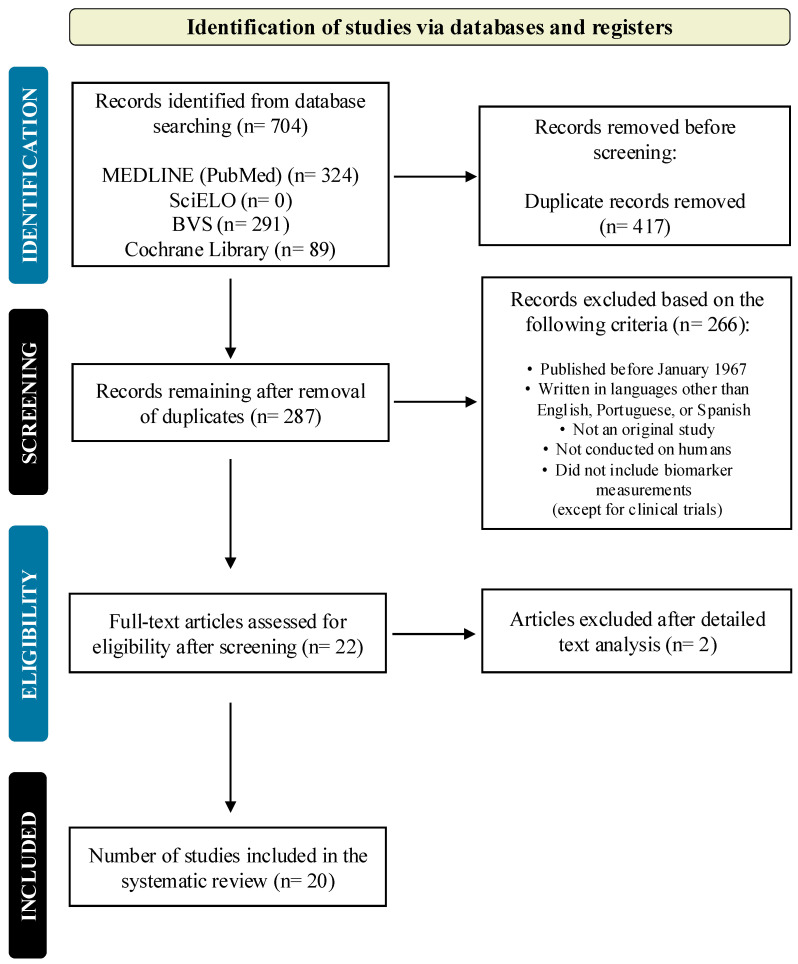
Autism Spectrum Disorder (ASD) is a neurodevelopmental condition characterized by persistent deficits in social communication and interaction, along with restricted and repetitive patterns of behavior, interests, or activities. ASD encompasses a wide spectrum of clinical presentations and functional impairments, ranging from mild to severe. Despite its prevalence, the underlying physiopathological mechanisms of ASD remain largely unknown, resulting in a lack of effective targeted therapeutic interventions, contributing to significant financial and emotional burdens on affected families and the healthcare system. Emerging evidence suggests that dysfunction in the tetrahydrobiopterin (BH4) pathway may impair the activity of monoaminergic and nitric oxide (NO)-dependent neurons in individuals with ASD. To explore this potential mechanism, we conducted a systematic review to analyze such impairments to gather information on whether the off-label use of BH4 could represent a novel pharmacological approach for managing ASD. Following the PRISMA 2020 guidelines, we systematically reviewed the literature from four databases: PubMed, Virtual Health Library, Cochrane Library, and SciELO, from January 1967 to December 2021. The quality of the included studies was assessed using the Newcastle-Ottawa scale. The inclusion criteria for this systematic review focused on identifying articles published in English that contained the following keywords, used in various combinations: autism, ASD, autism spectrum disorder, BH4, tetrahydrobiopterin, neopterin, NO, nitric oxide. The analysis was performed between December 2020 and December 2021. The collected data demonstrated that BH4 metabolism was altered in individuals with ASD. Lower levels of BH4 were reported in biological samples from ASD-affected individuals compared to age- and sex-matched controls. Additionally, neopterin levels were elevated in plasma and urine, but decreased in cerebrospinal fluid, while nitric oxide levels were consistently reported to be higher across studies. Treatment with BH4 has shown potential in improving ASD-related symptoms. The reported increase in neopterin in biological fluids indicates inflammation, while the reduction in BH4 levels suggests a potential shift in its metabolic role. Specifically, BH4 may be diverted from its primary role in neurotransmitter synthesis to function as an antioxidant or to perpetuate inflammation through NO production. Given that BH4 is a critical cofactor in monoaminergic neurotransmission, its dysfunction highlights the molecule's therapeutic potential. BH4, already FDA-approved for other conditions, emerges as a promising off-label candidate to alleviate ASD symptomatology.
自闭症谱系障碍(ASD)是一种神经发育疾病,其特征是社会沟通和互动的持续缺陷,以及限制和重复的行为、兴趣或活动模式。ASD包括广泛的临床表现和功能障碍,从轻度到重度不等。尽管ASD很普遍,但其潜在的生理病理机制在很大程度上仍然未知,导致缺乏有效的靶向治疗干预措施,给受影响的家庭和医疗保健系统带来了巨大的经济和情感负担。新出现的证据表明,四氢生物蝶呤(BH4)通路的功能障碍可能损害ASD患者单胺能和一氧化氮(NO)依赖性神经元的活性。为了探索这种潜在的机制,我们进行了一项系统的综述来分析这些损伤,以收集信息,以确定在说明书外使用BH4是否可以代表一种新的治疗ASD的药理学方法。遵循PRISMA 2020指南,我们系统地回顾了从1967年1月至2021年12月来自四个数据库的文献:PubMed、Virtual Health Library、Cochrane Library和SciELO。纳入研究的质量采用纽卡斯尔-渥太华量表进行评估。本系统综述的纳入标准侧重于识别包含以下关键词的英文发表文章,这些关键词以各种组合使用:自闭症、ASD、自闭症谱系障碍、BH4、四氢生物蝶呤、新蝶呤、NO、一氧化氮。该分析在2020年12月至2021年12月期间进行。收集的数据表明,ASD患者的BH4代谢发生了改变。与年龄和性别匹配的对照组相比,asd患者的生物样本中BH4水平较低。此外,血浆和尿液中的新蝶呤水平升高,但脑脊液中的新蝶呤水平降低,而研究中一致报告的一氧化氮水平较高。用BH4治疗已显示出改善asd相关症状的潜力。据报道,生物体液中新蝶呤的增加表明炎症,而BH4水平的降低表明其代谢作用的潜在转变。具体来说,BH4可能从其在神经递质合成中的主要作用转向作为抗氧化剂或通过NO的产生使炎症持续存在。鉴于BH4是单胺能神经传递的关键辅助因子,其功能障碍突出了该分子的治疗潜力。BH4已经被fda批准用于其他疾病,成为缓解ASD症状的有希望的标签外候选药物。
期刊介绍:
Brain Sciences (ISSN 2076-3425) is a peer-reviewed scientific journal that publishes original articles, critical reviews, research notes and short communications in the areas of cognitive neuroscience, developmental neuroscience, molecular and cellular neuroscience, neural engineering, neuroimaging, neurolinguistics, neuropathy, systems neuroscience, and theoretical and computational neuroscience. Our aim is to encourage scientists to publish their experimental and theoretical results in as much detail as possible. There is no restriction on the length of the papers. The full experimental details must be provided so that the results can be reproduced. Electronic files or software regarding the full details of the calculation and experimental procedure, if unable to be published in a normal way, can be deposited as supplementary material.




 京公网安备 11010802042870号
京ICP备2023020795号-1
京公网安备 11010802042870号
京ICP备2023020795号-1

 分享
分享
 求助内容:
求助内容: 应助结果提醒方式:
 扫码关注我们
