{"title":"Predictive model for sarcopenia in patients with non-small cell lung cancer and malignant pleural effusion.","authors":"Hengxing Gao, Xuexue Zou, Meng Fan, Mingwei Chen","doi":"10.1186/s12885-025-13772-2","DOIUrl":null,"url":null,"abstract":"<p><strong>Background: </strong>Sarcopenia in patients with non-small cell lung cancer (NSCLC) is often indicative of a more aggressive disease course and a poorer prognosis. Nevertheless, there have been limited studies that specifically examined clinical parameters to predict sarcopenia in individuals with malignant pleural effusion (MPE). Our objective is to investigate the potential correlations between commonly utilized clinical variables and reduced muscle mass in NSCLC patients who also have MPE.</p><p><strong>Methods: </strong>This retrospective study examined the clinicopathological data and imaging characteristics of NSCLC patients admitted to the hospital with MPE. The Least Absolute Shrinkage and Selection Operator (LASSO) algorithm was employed to select the most appropriate variables for model creation, effectively reducing the chance of overfitting. Logistic regression analysis was conducted to pinpoint the independent factors predicting sarcopenia in NSCLC patients with MPE. Subsequently, a nomogram was formulated to estimate the sarcopenia risk for individual patient. The efficacy of this nomogram was assessed through various metrics, including the receiver operating characteristic (ROC) curve, calibration curve, and decision curve analysis (DCA).</p><p><strong>Results: </strong>A total of 139 patients, with an average age of 66 years and a majority being male (56.8%), were included in this study. Multivariate logistic regression analysis revealed that age, body mass index (BMI), albumin (Alb), and cytokeratin-19-fragment (CY21-1) were all independent predictors of sarcopenia in NSCLC patients with MPE. A nomogram was developed to facilitate personalized prediction of sarcopenia for individual patient. The ROC curve demonstrated that the nomogram model incorporating these predictive factors achieved an area under the curve (AUC) of 0.889, indicating its discriminatory power in predicting sarcopenia. The calibration curve demonstrated a strong concordance between the actual and the anticipated sarcopenia risk. DCA further confirmed that the nomogram showed good clinical applicability and net benefits in sarcopenia prediction.</p><p><strong>Conclusions: </strong>Certain commonly used clinical characteristics were found to be associated with decreased skeletal muscle mass. Specifically, age, BMI, Alb, and CY21-1 levels emerged as predictive indicators for sarcopenia among NSCLC patients with MPE. These indicators have the potential to serve as effective alternatives to traditional computed tomography (CT) evaluation in assessing sarcopenia.</p>","PeriodicalId":9131,"journal":{"name":"BMC Cancer","volume":"25 1","pages":"350"},"PeriodicalIF":3.4000,"publicationDate":"2025-02-25","publicationTypes":"Journal Article","fieldsOfStudy":null,"isOpenAccess":false,"openAccessPdf":"https://www.ncbi.nlm.nih.gov/pmc/articles/PMC11863707/pdf/","citationCount":"0","resultStr":null,"platform":"Semanticscholar","paperid":null,"PeriodicalName":"BMC Cancer","FirstCategoryId":"3","ListUrlMain":"https://doi.org/10.1186/s12885-025-13772-2","RegionNum":2,"RegionCategory":"医学","ArticlePicture":[],"TitleCN":null,"AbstractTextCN":null,"PMCID":null,"EPubDate":"","PubModel":"","JCR":"Q2","JCRName":"ONCOLOGY","Score":null,"Total":0}
引用次数: 0
Abstract
Background: Sarcopenia in patients with non-small cell lung cancer (NSCLC) is often indicative of a more aggressive disease course and a poorer prognosis. Nevertheless, there have been limited studies that specifically examined clinical parameters to predict sarcopenia in individuals with malignant pleural effusion (MPE). Our objective is to investigate the potential correlations between commonly utilized clinical variables and reduced muscle mass in NSCLC patients who also have MPE.
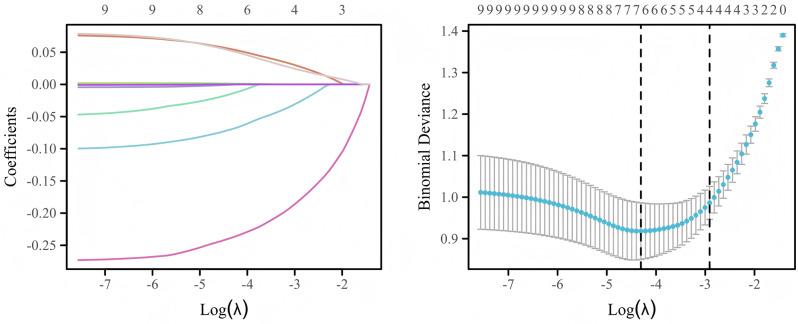
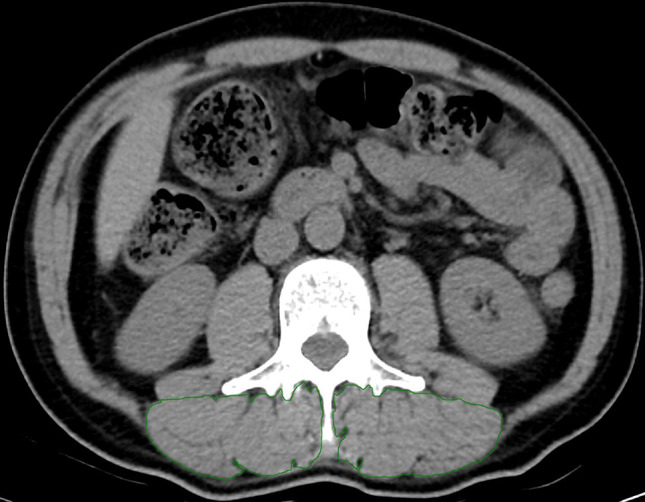
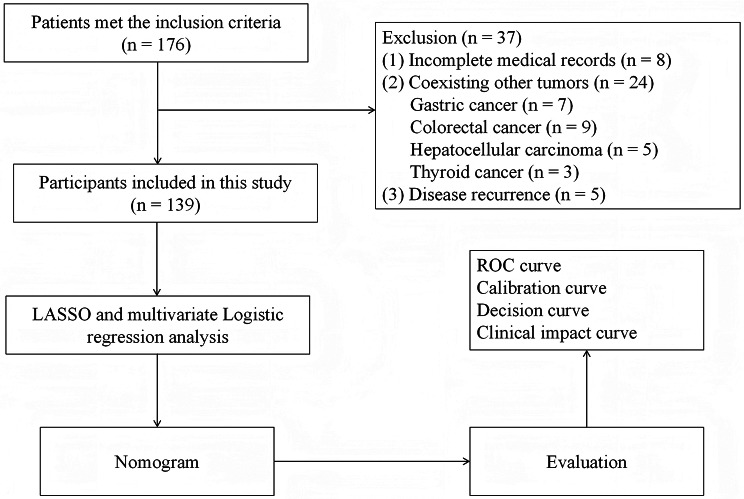
Methods: This retrospective study examined the clinicopathological data and imaging characteristics of NSCLC patients admitted to the hospital with MPE. The Least Absolute Shrinkage and Selection Operator (LASSO) algorithm was employed to select the most appropriate variables for model creation, effectively reducing the chance of overfitting. Logistic regression analysis was conducted to pinpoint the independent factors predicting sarcopenia in NSCLC patients with MPE. Subsequently, a nomogram was formulated to estimate the sarcopenia risk for individual patient. The efficacy of this nomogram was assessed through various metrics, including the receiver operating characteristic (ROC) curve, calibration curve, and decision curve analysis (DCA).
Results: A total of 139 patients, with an average age of 66 years and a majority being male (56.8%), were included in this study. Multivariate logistic regression analysis revealed that age, body mass index (BMI), albumin (Alb), and cytokeratin-19-fragment (CY21-1) were all independent predictors of sarcopenia in NSCLC patients with MPE. A nomogram was developed to facilitate personalized prediction of sarcopenia for individual patient. The ROC curve demonstrated that the nomogram model incorporating these predictive factors achieved an area under the curve (AUC) of 0.889, indicating its discriminatory power in predicting sarcopenia. The calibration curve demonstrated a strong concordance between the actual and the anticipated sarcopenia risk. DCA further confirmed that the nomogram showed good clinical applicability and net benefits in sarcopenia prediction.
Conclusions: Certain commonly used clinical characteristics were found to be associated with decreased skeletal muscle mass. Specifically, age, BMI, Alb, and CY21-1 levels emerged as predictive indicators for sarcopenia among NSCLC patients with MPE. These indicators have the potential to serve as effective alternatives to traditional computed tomography (CT) evaluation in assessing sarcopenia.
期刊介绍:
BMC Cancer is an open access, peer-reviewed journal that considers articles on all aspects of cancer research, including the pathophysiology, prevention, diagnosis and treatment of cancers. The journal welcomes submissions concerning molecular and cellular biology, genetics, epidemiology, and clinical trials.




 京公网安备 11010802042870号
京ICP备2023020795号-1
京公网安备 11010802042870号
京ICP备2023020795号-1

 分享
分享
 求助内容:
求助内容: 应助结果提醒方式:
 扫码关注我们
