Mahasin G Hassan, Afnan M AlOtaibi, Raghad H Altuwaym, Reem H Alnuwaysir, Renad B Alharbi, Lama M Alnajashi, Mayer K Alsaber, Hetaf F Aldakan, Halima M Hawesa, Zohida A Abdelgabar, Asma S Aldahes, Mohammed G Yaqob
{"title":"Exploring the Diagnostic Potential of Video-Based Breathing Control Training: A Sonographic Evaluation of Abdominal Organ Measures.","authors":"Mahasin G Hassan, Afnan M AlOtaibi, Raghad H Altuwaym, Reem H Alnuwaysir, Renad B Alharbi, Lama M Alnajashi, Mayer K Alsaber, Hetaf F Aldakan, Halima M Hawesa, Zohida A Abdelgabar, Asma S Aldahes, Mohammed G Yaqob","doi":"10.2147/IJGM.S483995","DOIUrl":null,"url":null,"abstract":"<p><strong>Background: </strong>Breathing control training programs have gained attention due to their potential to influence diagnostic procedures. However, the role of video-based tools to demonstrate breathing maneuvers during sonographic quantification of abdominal organs needs to be studied more. This study explores the impact of a video-based breathing training program on sonographic examination of abdominal organs.</p><p><strong>Methodology: </strong>This quasi-experimental study recruited 49 healthy volunteers at the ultrasound lab of College of Health and Rehabilitation Sciences in Princess Nourah bint Abdul Rahman University. The study employed a video-based breathing control training program that includes diaphragmatic breathing exercises. Sonographic assessments of abdominal organs were conducted before and after the intervention period using standardized protocols. Data was analyzed using SPSS V 28.</p><p><strong>Results: </strong>The right renal length (p-value <0.001), thickness (p-value 0.025), and volume measured (p-value <0.001) were significantly improved following the video training. Similarly, splenic length (p-value 0.015), width (p-value <0.001), and volume (p-value 0.001). Additionally, the operator time demonstrated a notable decrease from 13.14 ± 3.4 to 8.1 ± 3.5 minutes after the video training intervention (p-value <0.001).</p><p><strong>Conclusion: </strong>The study provides evidence for the beneficial effects of a video-based breathing control training program on sonographic quantification of abdominal organs. These findings suggest potential clinical utility for integrating video-based breathing interventions into practice, although study limitations require further validation and generalization. Nonetheless, the study highlights the promising role of breathing control training in enhancing the diagnostic accuracy of abdominal sonography.</p>","PeriodicalId":14131,"journal":{"name":"International Journal of General Medicine","volume":"18 ","pages":"947-953"},"PeriodicalIF":2.0000,"publicationDate":"2025-02-21","publicationTypes":"Journal Article","fieldsOfStudy":null,"isOpenAccess":false,"openAccessPdf":"https://www.ncbi.nlm.nih.gov/pmc/articles/PMC11853059/pdf/","citationCount":"0","resultStr":null,"platform":"Semanticscholar","paperid":null,"PeriodicalName":"International Journal of General Medicine","FirstCategoryId":"3","ListUrlMain":"https://doi.org/10.2147/IJGM.S483995","RegionNum":4,"RegionCategory":"医学","ArticlePicture":[],"TitleCN":null,"AbstractTextCN":null,"PMCID":null,"EPubDate":"2025/1/1 0:00:00","PubModel":"eCollection","JCR":"Q2","JCRName":"MEDICINE, GENERAL & INTERNAL","Score":null,"Total":0}
引用次数: 0
Abstract
Background: Breathing control training programs have gained attention due to their potential to influence diagnostic procedures. However, the role of video-based tools to demonstrate breathing maneuvers during sonographic quantification of abdominal organs needs to be studied more. This study explores the impact of a video-based breathing training program on sonographic examination of abdominal organs.
Methodology: This quasi-experimental study recruited 49 healthy volunteers at the ultrasound lab of College of Health and Rehabilitation Sciences in Princess Nourah bint Abdul Rahman University. The study employed a video-based breathing control training program that includes diaphragmatic breathing exercises. Sonographic assessments of abdominal organs were conducted before and after the intervention period using standardized protocols. Data was analyzed using SPSS V 28.
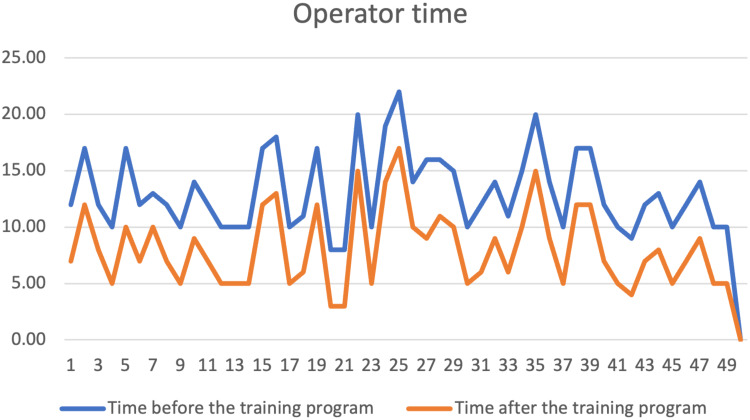
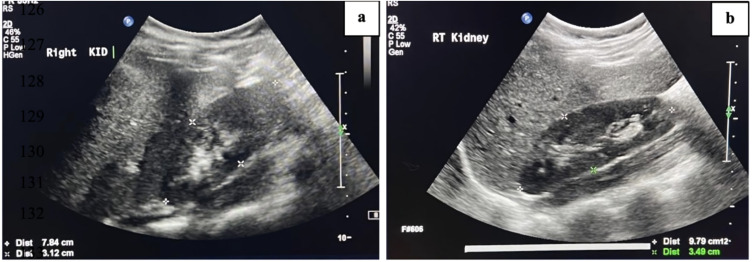
Results: The right renal length (p-value <0.001), thickness (p-value 0.025), and volume measured (p-value <0.001) were significantly improved following the video training. Similarly, splenic length (p-value 0.015), width (p-value <0.001), and volume (p-value 0.001). Additionally, the operator time demonstrated a notable decrease from 13.14 ± 3.4 to 8.1 ± 3.5 minutes after the video training intervention (p-value <0.001).
Conclusion: The study provides evidence for the beneficial effects of a video-based breathing control training program on sonographic quantification of abdominal organs. These findings suggest potential clinical utility for integrating video-based breathing interventions into practice, although study limitations require further validation and generalization. Nonetheless, the study highlights the promising role of breathing control training in enhancing the diagnostic accuracy of abdominal sonography.
背景:呼吸控制训练计划因其可能影响诊断程序而受到关注。然而,基于视频的工具在超声定量腹部器官时演示呼吸动作的作用需要更多的研究。本研究探讨了基于视频的呼吸训练计划对腹部器官超声检查的影响。方法:本准实验研究在诺拉公主宾特阿卜杜勒拉赫曼大学健康与康复科学学院超声实验室招募了49名健康志愿者。这项研究采用了一种基于视频的呼吸控制训练方案,其中包括横膈膜呼吸练习。在干预前后采用标准化方案对腹部器官进行超声评估。数据采用SPSS V 28进行分析。结果:右肾长度(p值)结论:本研究为基于视频的呼吸控制训练方案对腹部器官超声定量的有益效果提供证据。尽管研究的局限性需要进一步的验证和推广,但这些发现表明将基于视频的呼吸干预措施整合到实践中有潜在的临床应用价值。尽管如此,该研究强调了呼吸控制训练在提高腹部超声诊断准确性方面的重要作用。
期刊介绍:
The International Journal of General Medicine is an international, peer-reviewed, open access journal that focuses on general and internal medicine, pathogenesis, epidemiology, diagnosis, monitoring and treatment protocols. The journal is characterized by the rapid reporting of reviews, original research and clinical studies across all disease areas.
A key focus of the journal is the elucidation of disease processes and management protocols resulting in improved outcomes for the patient. Patient perspectives such as satisfaction, quality of life, health literacy and communication and their role in developing new healthcare programs and optimizing clinical outcomes are major areas of interest for the journal.
As of 1st April 2019, the International Journal of General Medicine will no longer consider meta-analyses for publication.



 京公网安备 11010802042870号
京ICP备2023020795号-1
京公网安备 11010802042870号
京ICP备2023020795号-1

 分享
分享
 求助内容:
求助内容: 应助结果提醒方式:
 扫码关注我们
