Naqash Goswami, Lionel Kinkpe, Lun Hua, Yong Zhuo, Zhengfeng Fang, Lianqiang Che, Yan Lin, Shengyu Xu, Xuemei Jiang, Bin Feng, De Wu
{"title":"Farnesol Improves Endoplasmic Reticulum Stress and Hepatic Metabolic Dysfunction Induced by Tunicamycin in Mice.","authors":"Naqash Goswami, Lionel Kinkpe, Lun Hua, Yong Zhuo, Zhengfeng Fang, Lianqiang Che, Yan Lin, Shengyu Xu, Xuemei Jiang, Bin Feng, De Wu","doi":"10.3390/biology14020213","DOIUrl":null,"url":null,"abstract":"<p><p>Endoplasmic reticulum (ER) stress significantly affects liver metabolism, often leading to disorders such as hepatic steatosis. Tunicamycin (TM), a known ER stress inducer, is frequently used to model metabolic stress, but its specific effects on liver energy homeostasis remain unclear. This study investigates how farnesol (FOH), a natural compound with antioxidant and anti-inflammatory properties, counteracts TM-induced ER stress and its associated metabolic disruptions in the liver. Using both primary hepatocytes and a mouse model, this study demonstrates that TM treatment caused upregulation of ER stress markers, including ATF4, and disrupted genes related to lipid metabolism and gluconeogenesis. Co-treatment with FOH reduced these stress markers and restored the expression of metabolic genes. In vivo, FOH treatment alleviated oxidative stress, reduced lipid accumulation, and restored normal glycogen and lipid metabolism. Histological analysis further confirmed that FOH preserved liver architecture and minimized cellular damage. FOH also stabilized serum lipid profiles and modulated key metabolic biomarkers, suggesting its protective role against TM-induced liver injury. These findings suggest that FOH has therapeutic potential in mitigating ER stress-related metabolic dysfunctions, offering promising insights for the treatment of liver diseases linked to metabolic stress.</p>","PeriodicalId":48624,"journal":{"name":"Biology-Basel","volume":"14 2","pages":""},"PeriodicalIF":3.5000,"publicationDate":"2025-02-18","publicationTypes":"Journal Article","fieldsOfStudy":null,"isOpenAccess":false,"openAccessPdf":"https://www.ncbi.nlm.nih.gov/pmc/articles/PMC11851907/pdf/","citationCount":"0","resultStr":null,"platform":"Semanticscholar","paperid":null,"PeriodicalName":"Biology-Basel","FirstCategoryId":"99","ListUrlMain":"https://doi.org/10.3390/biology14020213","RegionNum":3,"RegionCategory":"生物学","ArticlePicture":[],"TitleCN":null,"AbstractTextCN":null,"PMCID":null,"EPubDate":"","PubModel":"","JCR":"Q1","JCRName":"BIOLOGY","Score":null,"Total":0}
引用次数: 0
Abstract
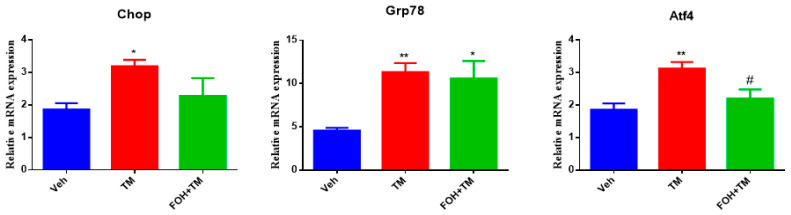
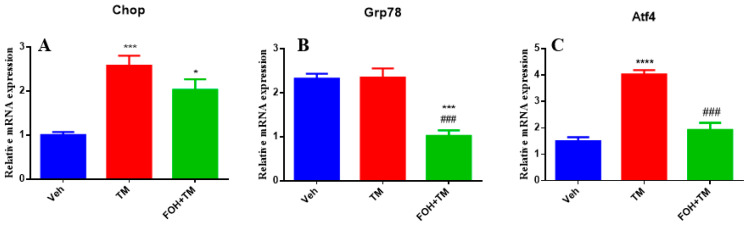
Endoplasmic reticulum (ER) stress significantly affects liver metabolism, often leading to disorders such as hepatic steatosis. Tunicamycin (TM), a known ER stress inducer, is frequently used to model metabolic stress, but its specific effects on liver energy homeostasis remain unclear. This study investigates how farnesol (FOH), a natural compound with antioxidant and anti-inflammatory properties, counteracts TM-induced ER stress and its associated metabolic disruptions in the liver. Using both primary hepatocytes and a mouse model, this study demonstrates that TM treatment caused upregulation of ER stress markers, including ATF4, and disrupted genes related to lipid metabolism and gluconeogenesis. Co-treatment with FOH reduced these stress markers and restored the expression of metabolic genes. In vivo, FOH treatment alleviated oxidative stress, reduced lipid accumulation, and restored normal glycogen and lipid metabolism. Histological analysis further confirmed that FOH preserved liver architecture and minimized cellular damage. FOH also stabilized serum lipid profiles and modulated key metabolic biomarkers, suggesting its protective role against TM-induced liver injury. These findings suggest that FOH has therapeutic potential in mitigating ER stress-related metabolic dysfunctions, offering promising insights for the treatment of liver diseases linked to metabolic stress.
期刊介绍:
Biology (ISSN 2079-7737) is an international, peer-reviewed, quick-refereeing open access journal of Biological Science published by MDPI online. It publishes reviews, research papers and communications in all areas of biology and at the interface of related disciplines. Our aim is to encourage scientists to publish their experimental and theoretical results in as much detail as possible. There is no restriction on the length of the papers. The full experimental details must be provided so that the results can be reproduced. Electronic files regarding the full details of the experimental procedure, if unable to be published in a normal way, can be deposited as supplementary material.





 京公网安备 11010802042870号
京ICP备2023020795号-1
京公网安备 11010802042870号
京ICP备2023020795号-1

 分享
分享
 求助内容:
求助内容: 应助结果提醒方式:
 扫码关注我们
