A study on the willingness and influencing factors of non-EPI vaccines recommendations among Chinese vaccination staff under major infectious disease outbreaks.
Xie Qixin, Yan Liu, Xinren Che, Jian Du, Yuyang Xu, Jiayin Han, Zhaojun Lu, Yingying Yang, Wenwen Gu
{"title":"A study on the willingness and influencing factors of non-EPI vaccines recommendations among Chinese vaccination staff under major infectious disease outbreaks.","authors":"Xie Qixin, Yan Liu, Xinren Che, Jian Du, Yuyang Xu, Jiayin Han, Zhaojun Lu, Yingying Yang, Wenwen Gu","doi":"10.1080/21645515.2025.2469987","DOIUrl":null,"url":null,"abstract":"<p><p>WHO had warned of the impending \"X disease,\" emphasizing the need to quickly establish an immune barrier. The willingness of vaccination staff to recommend vaccines was crucial in such scenarios. This study aimed to investigate willingness and influencing factors of Non-EPI Vaccines recommendations among Chinese vaccination staff in Hangzhou, China. We selected vaccination staff in 191 vaccination clinics from Hangzhou for a questionnaire-based survey using a cross-sectional survey. Descriptive statistics were made on the characteristics of participants. Univariate and multivariable analyses were used to determine the influencing factors of Non-EPI Vaccines recommendations. The overall recommendation rate was 76.2%. Compared to Supplementary and Individual Non-EPI Vaccines, vaccination staff were more willing to recommend Alternative (<math><mrow><msup><mi>x</mi><mn>2</mn></msup></mrow></math> = 215.655, <i>P</i> < 0.05) and Combined Non-EPI Vaccines (<math><mrow><msup><mi>x</mi><mn>2</mn></msup></mrow></math> = 214.998, <i>P</i> < 0.05). Multivariate logistic regression analysis showed that vaccination staff who did not participate in COVID-19 vaccination work (OR = 2.942, 95%CI:1.121 ~ 9.302), believe they had an obligation to recommend Non-EPI Vaccines (OR <sub>disagree</sub> = 7.957, 95%CI:1.238 ~ 87.69; OR <sub>neutrality</sub> = 4.187, 95%CI:1.66 ~ 10.563), and think that the effects of non-routine immunization vaccines were very good (OR <sub>disagree</sub> = 3.133, 95%CI:1.677 ~ 14.495; OR <sub>neutrality</sub> = 2.512, 95%CI:1.164 ~ 5.418) were more willing to recommend Non-EPI Vaccines. On the contrary, vaccination staff who believe that recommending Non-EPI vaccines increased their workload (OR <sub>disagree</sub> = 0.307, 95%CI:0.11 ~ 0.856; OR <sub>neutrality</sub> = 0.642, 95%CI:0.258 ~ 0.986) would decrease willingness to recommend them. The most of vaccination staff were willing to recommend non-EPI vaccines under major infectious disease outbreaks. To further control the pandemic of major infectious diseases, the health management departments should enhance the knowledge of vaccines among vaccination staff and alleviate their workload.</p>","PeriodicalId":49067,"journal":{"name":"Human Vaccines & Immunotherapeutics","volume":"21 1","pages":"2469987"},"PeriodicalIF":3.5000,"publicationDate":"2025-12-01","publicationTypes":"Journal Article","fieldsOfStudy":null,"isOpenAccess":false,"openAccessPdf":"https://www.ncbi.nlm.nih.gov/pmc/articles/PMC11866964/pdf/","citationCount":"0","resultStr":null,"platform":"Semanticscholar","paperid":null,"PeriodicalName":"Human Vaccines & Immunotherapeutics","FirstCategoryId":"3","ListUrlMain":"https://doi.org/10.1080/21645515.2025.2469987","RegionNum":4,"RegionCategory":"医学","ArticlePicture":[],"TitleCN":null,"AbstractTextCN":null,"PMCID":null,"EPubDate":"2025/2/26 0:00:00","PubModel":"Epub","JCR":"Q2","JCRName":"BIOTECHNOLOGY & APPLIED MICROBIOLOGY","Score":null,"Total":0}
引用次数: 0
Abstract
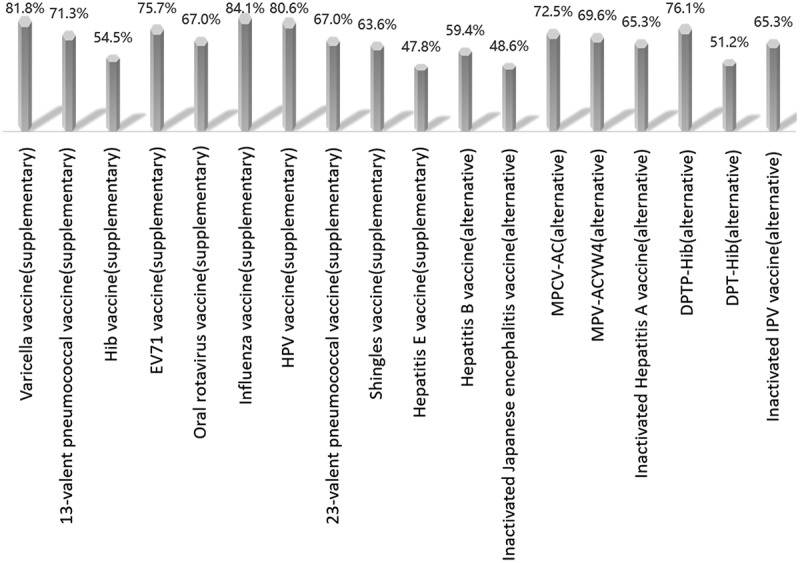
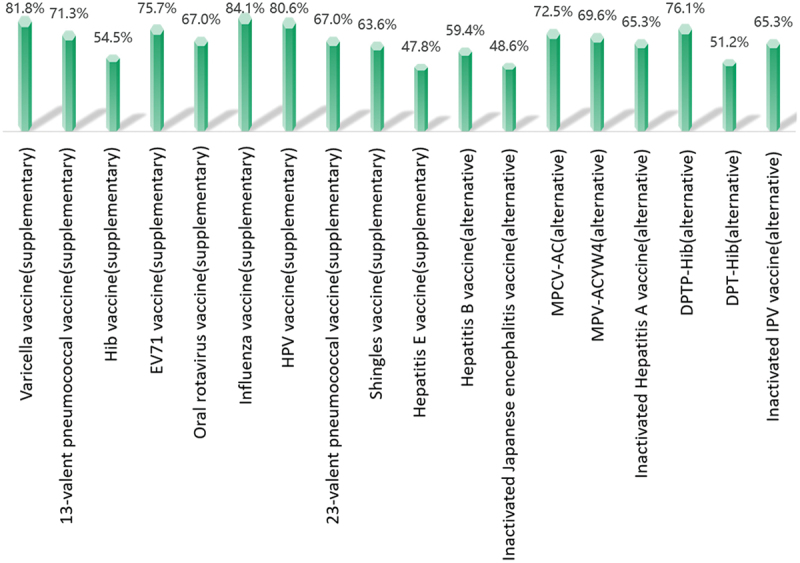
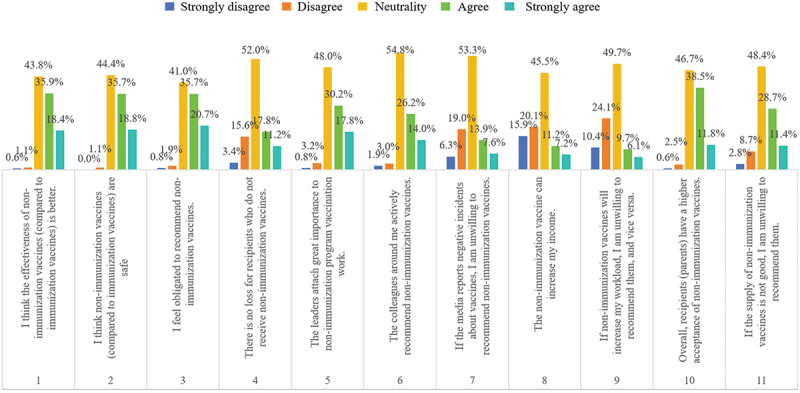
WHO had warned of the impending "X disease," emphasizing the need to quickly establish an immune barrier. The willingness of vaccination staff to recommend vaccines was crucial in such scenarios. This study aimed to investigate willingness and influencing factors of Non-EPI Vaccines recommendations among Chinese vaccination staff in Hangzhou, China. We selected vaccination staff in 191 vaccination clinics from Hangzhou for a questionnaire-based survey using a cross-sectional survey. Descriptive statistics were made on the characteristics of participants. Univariate and multivariable analyses were used to determine the influencing factors of Non-EPI Vaccines recommendations. The overall recommendation rate was 76.2%. Compared to Supplementary and Individual Non-EPI Vaccines, vaccination staff were more willing to recommend Alternative ( = 215.655, P < 0.05) and Combined Non-EPI Vaccines ( = 214.998, P < 0.05). Multivariate logistic regression analysis showed that vaccination staff who did not participate in COVID-19 vaccination work (OR = 2.942, 95%CI:1.121 ~ 9.302), believe they had an obligation to recommend Non-EPI Vaccines (OR disagree = 7.957, 95%CI:1.238 ~ 87.69; OR neutrality = 4.187, 95%CI:1.66 ~ 10.563), and think that the effects of non-routine immunization vaccines were very good (OR disagree = 3.133, 95%CI:1.677 ~ 14.495; OR neutrality = 2.512, 95%CI:1.164 ~ 5.418) were more willing to recommend Non-EPI Vaccines. On the contrary, vaccination staff who believe that recommending Non-EPI vaccines increased their workload (OR disagree = 0.307, 95%CI:0.11 ~ 0.856; OR neutrality = 0.642, 95%CI:0.258 ~ 0.986) would decrease willingness to recommend them. The most of vaccination staff were willing to recommend non-EPI vaccines under major infectious disease outbreaks. To further control the pandemic of major infectious diseases, the health management departments should enhance the knowledge of vaccines among vaccination staff and alleviate their workload.
期刊介绍:
(formerly Human Vaccines; issn 1554-8619)
Vaccine research and development is extending its reach beyond the prevention of bacterial or viral diseases. There are experimental vaccines for immunotherapeutic purposes and for applications outside of infectious diseases, in diverse fields such as cancer, autoimmunity, allergy, Alzheimer’s and addiction. Many of these vaccines and immunotherapeutics should become available in the next two decades, with consequent benefit for human health. Continued advancement in this field will benefit from a forum that can (A) help to promote interest by keeping investigators updated, and (B) enable an exchange of ideas regarding the latest progress in the many topics pertaining to vaccines and immunotherapeutics.
Human Vaccines & Immunotherapeutics provides such a forum. It is published monthly in a format that is accessible to a wide international audience in the academic, industrial and public sectors.



 京公网安备 11010802042870号
京ICP备2023020795号-1
京公网安备 11010802042870号
京ICP备2023020795号-1

 分享
分享
 求助内容:
求助内容: 应助结果提醒方式:
 扫码关注我们
