{"title":"Endoscopic and clinical characteristics of autoimmune atrophic gastritis: Retrospective study.","authors":"Kareem Khalaf, Yusuke Fujiyoshi, Robert Bechara","doi":"10.1055/a-2477-4666","DOIUrl":null,"url":null,"abstract":"<p><strong>Background and study aims: </strong>Autoimmune atrophic gastritis (AIG) is a rare chronic autoimmune disease characterized by gastric mucosa inflammation and atrophy. Limited clinical data exist about AIG, especially in western populations. In addition, there are no western series on the magnifying endoscopic features in AIG. This study presents a cohort of 63 patients with AIG, reporting their clinical, laboratory, and endoscopic findings.</p><p><strong>Patients and methods: </strong>A retrospective analysis was conducted on patients diagnosed with AIG at Kingston Health Sciences Centre, Canada, between January 2016 and December 2023. Data collected from medical records included age, sex, presenting symptoms, laboratory findings, endoscopic features, histopathology reports, and concomitant autoimmune diseases.</p><p><strong>Results: </strong>The study included 63 patients with autoimmune gastritis. Positive anti-parietal cell antibodies were found in the majority of patients (84.13%), whereas positive anti-intrinsic factor antibodies were less prevalent (25.40%). Deficiencies in vitamin B12 (49.21%) and iron (76.19%) were observed, along with a high prevalence of anemia (71.43%) and concomitant autoimmune diseases (58.73%). The dominant magnification pattern of atrophy in the body was oval/slit in 57.14% of patients (n=36), followed by tubular in 30.16% (n=19) and foveolar in 12.70% (n=8). Prevalence of neoplasia in our study was 42.86% (n=27).</p><p><strong>Conclusion: </strong>This study offers insights into the clinical, laboratory, and magnifying endoscopic features of patients with AIG. It demonstrates the three main magnifying endoscopic appearances of AIG and highlights the significant prevalence of gastric neoplasia, even in the low-risk Western population. These findings emphasize the importance of the endoscopic exam in identifying AIG and notably present the key magnifying endoscopy findings in a Western setting for the first time.</p>","PeriodicalId":11671,"journal":{"name":"Endoscopy International Open","volume":"13 ","pages":"a24774666"},"PeriodicalIF":2.3000,"publicationDate":"2025-01-07","publicationTypes":"Journal Article","fieldsOfStudy":null,"isOpenAccess":false,"openAccessPdf":"https://www.ncbi.nlm.nih.gov/pmc/articles/PMC11863545/pdf/","citationCount":"0","resultStr":null,"platform":"Semanticscholar","paperid":null,"PeriodicalName":"Endoscopy International Open","FirstCategoryId":"1085","ListUrlMain":"https://doi.org/10.1055/a-2477-4666","RegionNum":0,"RegionCategory":null,"ArticlePicture":[],"TitleCN":null,"AbstractTextCN":null,"PMCID":null,"EPubDate":"2025/1/1 0:00:00","PubModel":"eCollection","JCR":"Q3","JCRName":"GASTROENTEROLOGY & HEPATOLOGY","Score":null,"Total":0}
引用次数: 0
Abstract
Background and study aims: Autoimmune atrophic gastritis (AIG) is a rare chronic autoimmune disease characterized by gastric mucosa inflammation and atrophy. Limited clinical data exist about AIG, especially in western populations. In addition, there are no western series on the magnifying endoscopic features in AIG. This study presents a cohort of 63 patients with AIG, reporting their clinical, laboratory, and endoscopic findings.
Patients and methods: A retrospective analysis was conducted on patients diagnosed with AIG at Kingston Health Sciences Centre, Canada, between January 2016 and December 2023. Data collected from medical records included age, sex, presenting symptoms, laboratory findings, endoscopic features, histopathology reports, and concomitant autoimmune diseases.
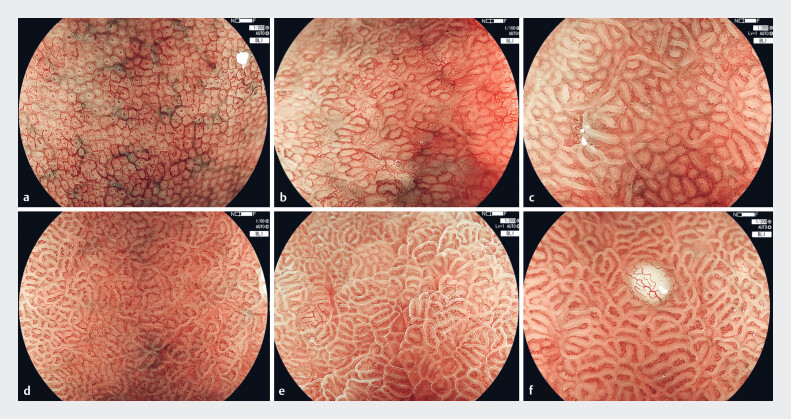
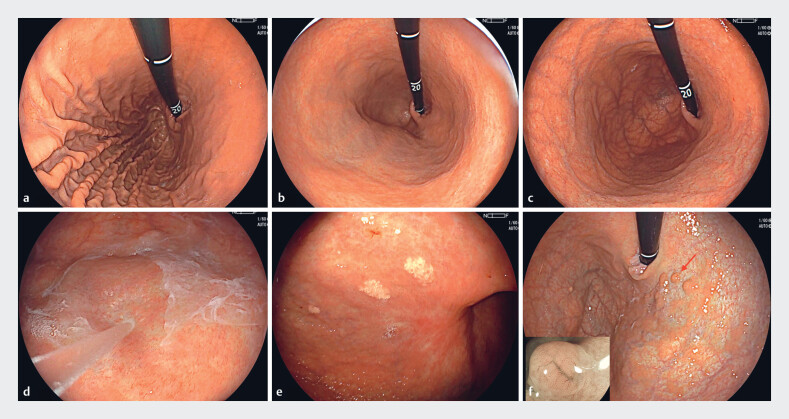
Results: The study included 63 patients with autoimmune gastritis. Positive anti-parietal cell antibodies were found in the majority of patients (84.13%), whereas positive anti-intrinsic factor antibodies were less prevalent (25.40%). Deficiencies in vitamin B12 (49.21%) and iron (76.19%) were observed, along with a high prevalence of anemia (71.43%) and concomitant autoimmune diseases (58.73%). The dominant magnification pattern of atrophy in the body was oval/slit in 57.14% of patients (n=36), followed by tubular in 30.16% (n=19) and foveolar in 12.70% (n=8). Prevalence of neoplasia in our study was 42.86% (n=27).
Conclusion: This study offers insights into the clinical, laboratory, and magnifying endoscopic features of patients with AIG. It demonstrates the three main magnifying endoscopic appearances of AIG and highlights the significant prevalence of gastric neoplasia, even in the low-risk Western population. These findings emphasize the importance of the endoscopic exam in identifying AIG and notably present the key magnifying endoscopy findings in a Western setting for the first time.




 京公网安备 11010802042870号
京ICP备2023020795号-1
京公网安备 11010802042870号
京ICP备2023020795号-1

 分享
分享
 求助内容:
求助内容: 应助结果提醒方式:
 扫码关注我们
