Humanising nanotoxicology: replacement of animal-derived products in the application of integrated approaches to testing and assessment of nanomaterial inhalation hazard.
Roma Fraser, Keira Campbell, Pawel Pokorski, Eve MacKinnon, Katie McAllister, Karla B Neves, Fiona Murphy
{"title":"Humanising nanotoxicology: replacement of animal-derived products in the application of integrated approaches to testing and assessment of nanomaterial inhalation hazard.","authors":"Roma Fraser, Keira Campbell, Pawel Pokorski, Eve MacKinnon, Katie McAllister, Karla B Neves, Fiona Murphy","doi":"10.3389/fbioe.2025.1526808","DOIUrl":null,"url":null,"abstract":"<p><p>Over the past decade, the development of nanomaterials (NMs) has surged, highlighting their potential benefits across multiple industries. However, concerns regarding human and environmental exposure remain significant. Traditional <i>in vivo</i> models for safety assessments are increasingly viewed as unfeasible and unethical due to the diverse forms and biological effects of NMs. This has prompted the design of Novel Approach Methods (NAMs) to streamline risk assessment and predict human hazards without relying on animal testing. A critical aspect of advancing NAMs is the urgent need to replace animal-derived products in assay protocols. Incorporating human or synthetic alternatives can significantly reduce the ethical burden of animal use while enhancing the relevance of toxicity testing. This study evaluates the impact of removing animal-derived products from standard acellular and <i>in vitro</i> assays recommended in a published Integrated Approaches to Testing and Assessment (IATA) for inhaled NMs. We specifically assessed the effects of replacing fetal bovine serum with human platelet lysate in acellular reactivity tests and <i>in vitro</i> toxicity testing using a panel of well-characterized NMs. Significant differences in acellular NM reactivity and dramatic changes in A549 cell growth rates and responses to NMs were observed under different media conditions. Our findings demonstrate that variations in experimental setup can fundamentally impact NM hazard assessment, influencing the interpretation of results within specific assays and across tiered testing strategies. Further investigation is needed to support a shift toward more ethical toxicity testing that does not rely on animal-derived materials.</p>","PeriodicalId":12444,"journal":{"name":"Frontiers in Bioengineering and Biotechnology","volume":"13 ","pages":"1526808"},"PeriodicalIF":4.8000,"publicationDate":"2025-02-12","publicationTypes":"Journal Article","fieldsOfStudy":null,"isOpenAccess":false,"openAccessPdf":"https://www.ncbi.nlm.nih.gov/pmc/articles/PMC11861073/pdf/","citationCount":"0","resultStr":null,"platform":"Semanticscholar","paperid":null,"PeriodicalName":"Frontiers in Bioengineering and Biotechnology","FirstCategoryId":"5","ListUrlMain":"https://doi.org/10.3389/fbioe.2025.1526808","RegionNum":3,"RegionCategory":"工程技术","ArticlePicture":[],"TitleCN":null,"AbstractTextCN":null,"PMCID":null,"EPubDate":"2025/1/1 0:00:00","PubModel":"eCollection","JCR":"Q1","JCRName":"BIOTECHNOLOGY & APPLIED MICROBIOLOGY","Score":null,"Total":0}
引用次数: 0
Abstract
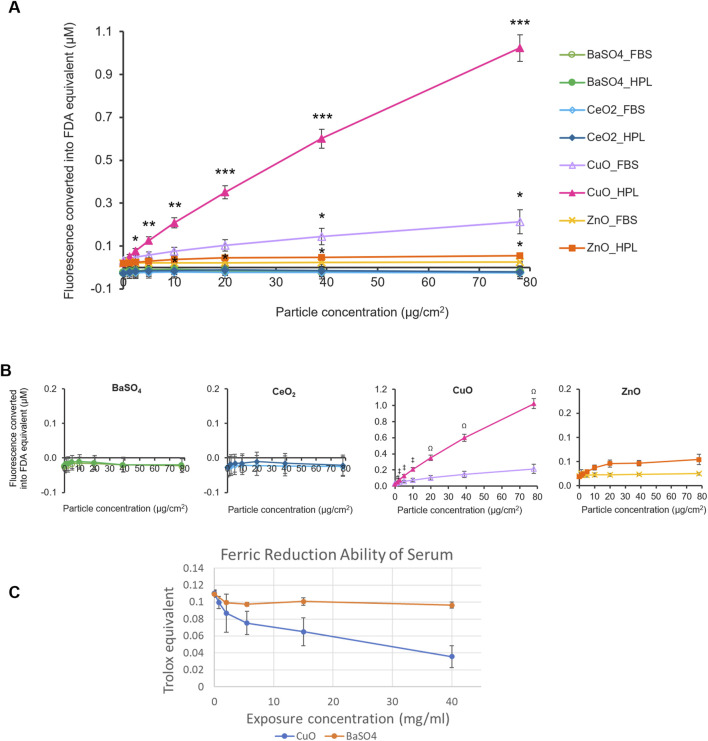
Over the past decade, the development of nanomaterials (NMs) has surged, highlighting their potential benefits across multiple industries. However, concerns regarding human and environmental exposure remain significant. Traditional in vivo models for safety assessments are increasingly viewed as unfeasible and unethical due to the diverse forms and biological effects of NMs. This has prompted the design of Novel Approach Methods (NAMs) to streamline risk assessment and predict human hazards without relying on animal testing. A critical aspect of advancing NAMs is the urgent need to replace animal-derived products in assay protocols. Incorporating human or synthetic alternatives can significantly reduce the ethical burden of animal use while enhancing the relevance of toxicity testing. This study evaluates the impact of removing animal-derived products from standard acellular and in vitro assays recommended in a published Integrated Approaches to Testing and Assessment (IATA) for inhaled NMs. We specifically assessed the effects of replacing fetal bovine serum with human platelet lysate in acellular reactivity tests and in vitro toxicity testing using a panel of well-characterized NMs. Significant differences in acellular NM reactivity and dramatic changes in A549 cell growth rates and responses to NMs were observed under different media conditions. Our findings demonstrate that variations in experimental setup can fundamentally impact NM hazard assessment, influencing the interpretation of results within specific assays and across tiered testing strategies. Further investigation is needed to support a shift toward more ethical toxicity testing that does not rely on animal-derived materials.
期刊介绍:
The translation of new discoveries in medicine to clinical routine has never been easy. During the second half of the last century, thanks to the progress in chemistry, biochemistry and pharmacology, we have seen the development and the application of a large number of drugs and devices aimed at the treatment of symptoms, blocking unwanted pathways and, in the case of infectious diseases, fighting the micro-organisms responsible. However, we are facing, today, a dramatic change in the therapeutic approach to pathologies and diseases. Indeed, the challenge of the present and the next decade is to fully restore the physiological status of the diseased organism and to completely regenerate tissue and organs when they are so seriously affected that treatments cannot be limited to the repression of symptoms or to the repair of damage. This is being made possible thanks to the major developments made in basic cell and molecular biology, including stem cell science, growth factor delivery, gene isolation and transfection, the advances in bioengineering and nanotechnology, including development of new biomaterials, biofabrication technologies and use of bioreactors, and the big improvements in diagnostic tools and imaging of cells, tissues and organs.
In today`s world, an enhancement of communication between multidisciplinary experts, together with the promotion of joint projects and close collaborations among scientists, engineers, industry people, regulatory agencies and physicians are absolute requirements for the success of any attempt to develop and clinically apply a new biological therapy or an innovative device involving the collective use of biomaterials, cells and/or bioactive molecules. “Frontiers in Bioengineering and Biotechnology” aspires to be a forum for all people involved in the process by bridging the gap too often existing between a discovery in the basic sciences and its clinical application.





 京公网安备 11010802042870号
京ICP备2023020795号-1
京公网安备 11010802042870号
京ICP备2023020795号-1

 分享
分享
 求助内容:
求助内容: 应助结果提醒方式:
 扫码关注我们
