Roro Inge Ade Krisanti, Septelia Inawati Wanandi, Puspita Eka Wuyung, Aida S D Hoemardani
{"title":"Effect of narrowband ultraviolet B (311 nm) exposure on skin carcinogenesis in Wistar rats.","authors":"Roro Inge Ade Krisanti, Septelia Inawati Wanandi, Puspita Eka Wuyung, Aida S D Hoemardani","doi":"10.5455/javar.2024.k861","DOIUrl":null,"url":null,"abstract":"<p><strong>Objective: </strong>The aim of this study is to determine narrowband UVB (NB-UVB) irradiation's effect on the promotion of skin cancer, particularly its effect on DNA damage, oxidative stress, inflammation, and histological changes in Wistar rat skin.</p><p><strong>Materials and methods: </strong>Wistar rats were selected for this study and randomly divided into control, dimethylbenzanthracene (DMBA), and DMBA+NB-UVB groups. The rats were given a single dose of DMBA and exposed to NB-UVB 3 times a week for 10 weeks. The radiation dose started with 1 minimal erythema dose, which is equivalent to 3.192 J/cm². In the 11th week, analysis on cyclobutene pyrimidine dimer (CPD), malondialdehyde (MDA), nuclear factor kappa-B (NFκB), inflammatory cytokines, and histopathology examination of the skin tissue was conducted.</p><p><strong>Results: </strong>Higher CPD, MDA, NFκB, tumor necrosis factor a (TNF-a), interleukin (IL)-6, IL-11, IL-10, and IL-12 levels in rats exposed to DMBA+NB-UVB for 10 weeks compared to control and DMBA groups. Macroscopic examination presented erythema, skin thickening, desquamation, ulcer, and crust. Histopathology examination showed hyperkeratosis, acanthosis, atypical keratinocytes, irregular arrangement of the basement membrane, and inflammatory cell infiltration in the DMBA+NB-UVB group.</p><p><strong>Conclusion: </strong>This research has shown that 10 weeks of a combination of DMBA and NB-UVB irradiation induced DNA damage, oxidative stress, inflammation, and histological changes in the Wistar rat skin.</p>","PeriodicalId":14892,"journal":{"name":"Journal of Advanced Veterinary and Animal Research","volume":"11 4","pages":"1105-1113"},"PeriodicalIF":1.5000,"publicationDate":"2024-12-29","publicationTypes":"Journal Article","fieldsOfStudy":null,"isOpenAccess":false,"openAccessPdf":"https://www.ncbi.nlm.nih.gov/pmc/articles/PMC11855443/pdf/","citationCount":"0","resultStr":null,"platform":"Semanticscholar","paperid":null,"PeriodicalName":"Journal of Advanced Veterinary and Animal Research","FirstCategoryId":"1085","ListUrlMain":"https://doi.org/10.5455/javar.2024.k861","RegionNum":0,"RegionCategory":null,"ArticlePicture":[],"TitleCN":null,"AbstractTextCN":null,"PMCID":null,"EPubDate":"2024/12/1 0:00:00","PubModel":"eCollection","JCR":"Q3","JCRName":"AGRICULTURE, DAIRY & ANIMAL SCIENCE","Score":null,"Total":0}
引用次数: 0
Abstract
Objective: The aim of this study is to determine narrowband UVB (NB-UVB) irradiation's effect on the promotion of skin cancer, particularly its effect on DNA damage, oxidative stress, inflammation, and histological changes in Wistar rat skin.
Materials and methods: Wistar rats were selected for this study and randomly divided into control, dimethylbenzanthracene (DMBA), and DMBA+NB-UVB groups. The rats were given a single dose of DMBA and exposed to NB-UVB 3 times a week for 10 weeks. The radiation dose started with 1 minimal erythema dose, which is equivalent to 3.192 J/cm². In the 11th week, analysis on cyclobutene pyrimidine dimer (CPD), malondialdehyde (MDA), nuclear factor kappa-B (NFκB), inflammatory cytokines, and histopathology examination of the skin tissue was conducted.
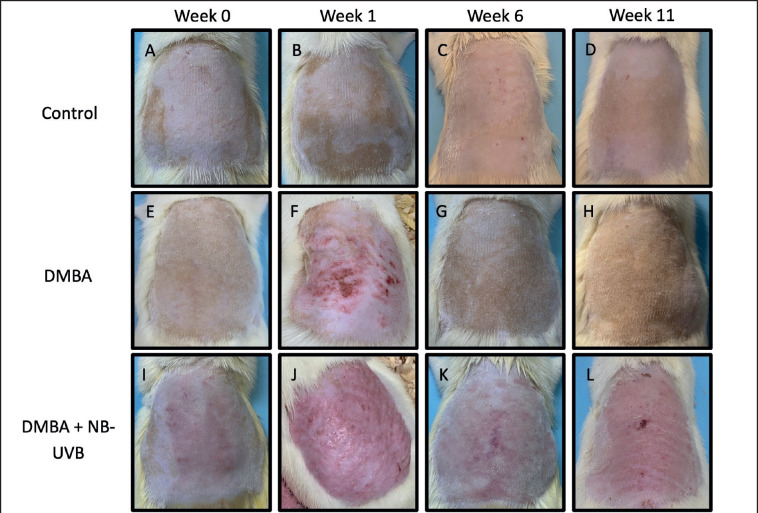
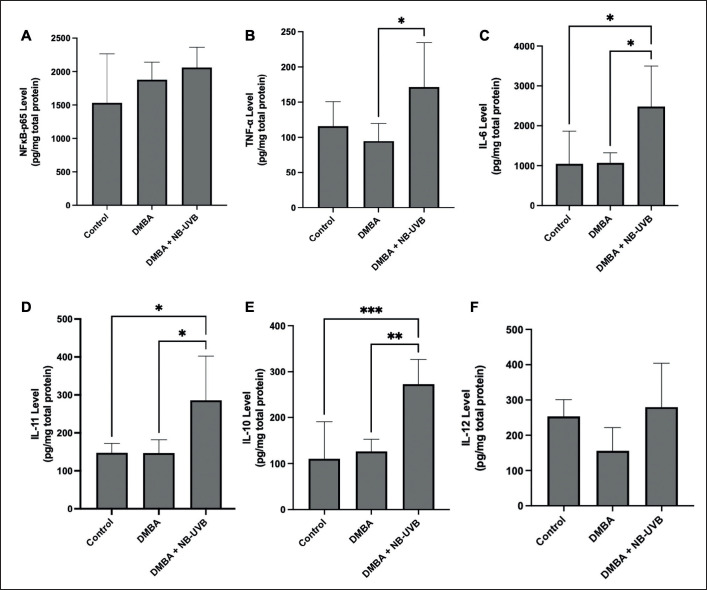
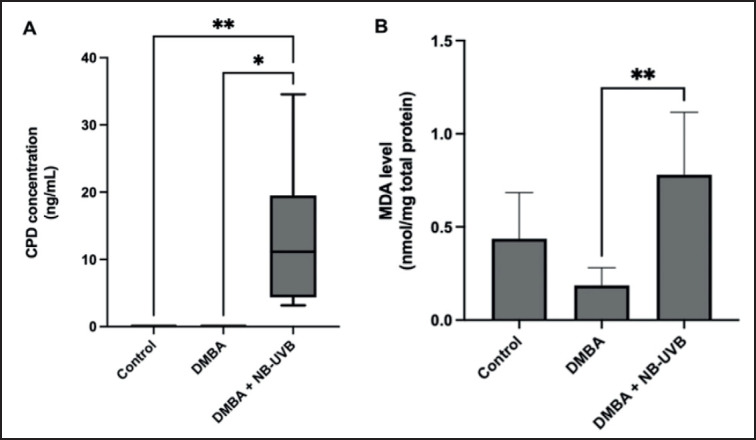
Results: Higher CPD, MDA, NFκB, tumor necrosis factor a (TNF-a), interleukin (IL)-6, IL-11, IL-10, and IL-12 levels in rats exposed to DMBA+NB-UVB for 10 weeks compared to control and DMBA groups. Macroscopic examination presented erythema, skin thickening, desquamation, ulcer, and crust. Histopathology examination showed hyperkeratosis, acanthosis, atypical keratinocytes, irregular arrangement of the basement membrane, and inflammatory cell infiltration in the DMBA+NB-UVB group.
Conclusion: This research has shown that 10 weeks of a combination of DMBA and NB-UVB irradiation induced DNA damage, oxidative stress, inflammation, and histological changes in the Wistar rat skin.




 京公网安备 11010802042870号
京ICP备2023020795号-1
京公网安备 11010802042870号
京ICP备2023020795号-1

 分享
分享
 求助内容:
求助内容: 应助结果提醒方式:
 扫码关注我们
