Nur Haedar, Faisal, Nur Afifah Zhafirah, Riuh Wardhani, Asadi Abdullah, Rustan Lebe, Fuad Gani, Heriadi
{"title":"Carbonatogenic Bacteria in the Maros-Pangkep Karst: Protectors or Threat to Prehistoric Paintings?","authors":"Nur Haedar, Faisal, Nur Afifah Zhafirah, Riuh Wardhani, Asadi Abdullah, Rustan Lebe, Fuad Gani, Heriadi","doi":"10.4014/jmb.2410.10019","DOIUrl":null,"url":null,"abstract":"<p><p>The Maros-Pangkep karst region hosts prehistoric cave paintings recognized by UNESCO as a world cultural heritage site. The presence of calcium carbonate (CaCO<sub>3</sub>) on the surface of these artworks suggests the involvement of carbonatogenic bacteria, which facilitate CaCO<sub>3</sub> production or deposition. While these bacteria have been explored for their potential in stone artwork conservation, their role in either preserving or obscuring prehistoric paintings remains unclear. This study aims to identify carbonatogenic bacteria associated with the Maros-Pangkep cave paintings and evaluate their CaCO<sub>3</sub> precipitation potential. Bacteria were isolated using Calcium Carbonate Precipitation (CCP) medium, and their CaCO<sub>3</sub> precipitation capacity was assessed by measuring precipitate mass and ammonia (NH<sub>3</sub>) levels. Molecular identification was conducted using 16S rRNA gene sequencing. Eighteen bacterial isolates were obtained from swab samples collected in Parewe and Bulu Sipong caves, ten of which were identified as carbonatogenic. Among these, two isolates exhibited the highest CaCO<sub>3</sub> precipitation: Ps1-d produced 2.45 ± 0.07 mg/ml CaCO<sub>3</sub> with 946.3 ± 26.3 mg/l NH<sub>3</sub>, while Ps8-b produced 1.80 ± 0.05 mg/ml CaCO<sub>3</sub> with 763.4 ± 21.2 mg/l NH<sub>3</sub>. Molecular analysis identified Ps1-d as <i>Bacillus</i> cereus strain bk and Ps8-b as <i>Bacillus</i> sp. NCCP-428. These findings have significant implications for both (1) the potential application of carbonatogenic bacteria in the conservation and restoration of stone artworks and (2) the development of strategies to inhibit excessive CaCO<sub>3</sub> deposition to prevent the obscuration of cultural heritage paintings.</p>","PeriodicalId":16481,"journal":{"name":"Journal of microbiology and biotechnology","volume":"35 ","pages":"e2410019"},"PeriodicalIF":3.1000,"publicationDate":"2025-02-20","publicationTypes":"Journal Article","fieldsOfStudy":null,"isOpenAccess":false,"openAccessPdf":"https://www.ncbi.nlm.nih.gov/pmc/articles/PMC11896801/pdf/","citationCount":"0","resultStr":null,"platform":"Semanticscholar","paperid":null,"PeriodicalName":"Journal of microbiology and biotechnology","FirstCategoryId":"5","ListUrlMain":"https://doi.org/10.4014/jmb.2410.10019","RegionNum":4,"RegionCategory":"生物学","ArticlePicture":[],"TitleCN":null,"AbstractTextCN":null,"PMCID":null,"EPubDate":"","PubModel":"","JCR":"Q3","JCRName":"BIOTECHNOLOGY & APPLIED MICROBIOLOGY","Score":null,"Total":0}
引用次数: 0
Abstract
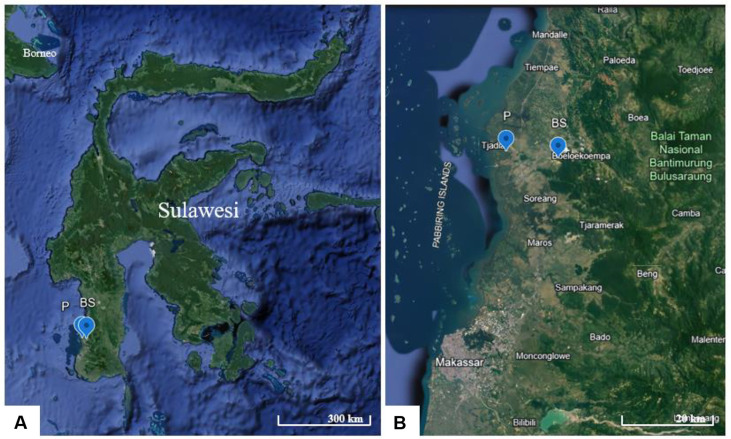
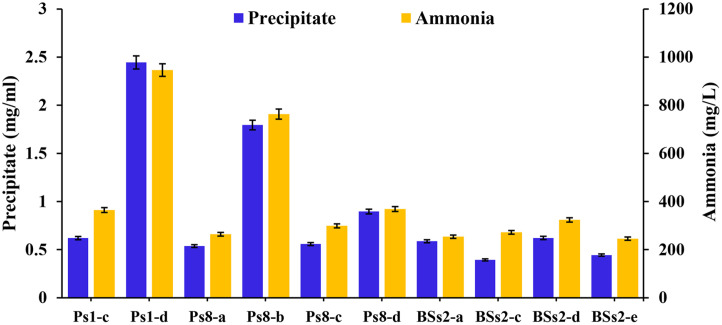
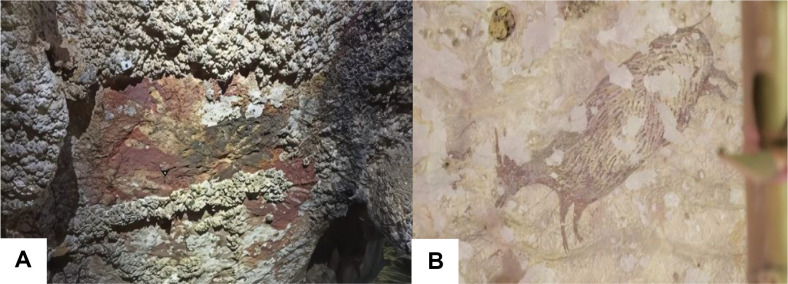
The Maros-Pangkep karst region hosts prehistoric cave paintings recognized by UNESCO as a world cultural heritage site. The presence of calcium carbonate (CaCO3) on the surface of these artworks suggests the involvement of carbonatogenic bacteria, which facilitate CaCO3 production or deposition. While these bacteria have been explored for their potential in stone artwork conservation, their role in either preserving or obscuring prehistoric paintings remains unclear. This study aims to identify carbonatogenic bacteria associated with the Maros-Pangkep cave paintings and evaluate their CaCO3 precipitation potential. Bacteria were isolated using Calcium Carbonate Precipitation (CCP) medium, and their CaCO3 precipitation capacity was assessed by measuring precipitate mass and ammonia (NH3) levels. Molecular identification was conducted using 16S rRNA gene sequencing. Eighteen bacterial isolates were obtained from swab samples collected in Parewe and Bulu Sipong caves, ten of which were identified as carbonatogenic. Among these, two isolates exhibited the highest CaCO3 precipitation: Ps1-d produced 2.45 ± 0.07 mg/ml CaCO3 with 946.3 ± 26.3 mg/l NH3, while Ps8-b produced 1.80 ± 0.05 mg/ml CaCO3 with 763.4 ± 21.2 mg/l NH3. Molecular analysis identified Ps1-d as Bacillus cereus strain bk and Ps8-b as Bacillus sp. NCCP-428. These findings have significant implications for both (1) the potential application of carbonatogenic bacteria in the conservation and restoration of stone artworks and (2) the development of strategies to inhibit excessive CaCO3 deposition to prevent the obscuration of cultural heritage paintings.
期刊介绍:
The Journal of Microbiology and Biotechnology (JMB) is a monthly international journal devoted to the advancement and dissemination of scientific knowledge pertaining to microbiology, biotechnology, and related academic disciplines. It covers various scientific and technological aspects of Molecular and Cellular Microbiology, Environmental Microbiology and Biotechnology, Food Biotechnology, and Biotechnology and Bioengineering (subcategories are listed below). Launched in March 1991, the JMB is published by the Korean Society for Microbiology and Biotechnology (KMB) and distributed worldwide.



 京公网安备 11010802042870号
京ICP备2023020795号-1
京公网安备 11010802042870号
京ICP备2023020795号-1

 分享
分享
 求助内容:
求助内容: 应助结果提醒方式:
 扫码关注我们
