Brady E Hanson, Joshua F Lee, Ryan S Garten, Zachary Barrett-O'Keefe, Gwenael Layec, Bradley A Ruple, D Walter Wray, Russell S Richardson, Joel D Trinity
{"title":"Acute sympathetic activation blunts the hyperemic and vasodilatory response to passive leg movement in young healthy males.","authors":"Brady E Hanson, Joshua F Lee, Ryan S Garten, Zachary Barrett-O'Keefe, Gwenael Layec, Bradley A Ruple, D Walter Wray, Russell S Richardson, Joel D Trinity","doi":"10.14814/phy2.70180","DOIUrl":null,"url":null,"abstract":"<p><p>Heightened muscle sympathetic nerve activity (MSNA) contributes to impaired vasodilatory capacity and vascular dysfunction associated with aging and cardiovascular disease. The contribution of elevated MSNA to the vasodilatory response during passive leg movement (PLM) is not fully understood. This study tested the hypothesis that elevated MSNA diminishes the vasodilatory response to PLM in healthy young males (n = 11, 25 ± 2 yr). Post exercise circulatory occlusion (PECO) following 2 min of isometric handgrip (HG) exercise performed at 25% (ExPECO 25%) and 40% (ExPECO 40%) maximum voluntary contraction was used to incrementally engage the metaboreceptors and augment MSNA. Control trials were performed without PECO (ExCON 25% and ExCON 40%) to account for changes due to HG exercise. PLM was performed 2 min after exercise and hemodynamics were assessed. MSNA was recorded by microneurography in the peroneal nerve (n = 8). Measures of MSNA (i.e., burst incidences) increased during ExPECO 25% (+15 ± 5 burst/100 bpm) and ExPECO 40% (+22 ± 4 burst/100 bpm) and returned to pre-HG levels during ExCON trials. Leg vascular conductance (vasodilation) during PLM was reduced by 16% and 44% during ExPECO 25% and ExPECO 40%, respectively. These findings indicate elevated MSNA attenuates the vasodilatory response to PLM and the magnitude of reduction in vasodilation during PLM is graded with the degree of sympathoexcitation.</p>","PeriodicalId":20083,"journal":{"name":"Physiological Reports","volume":"13 5","pages":"e70180"},"PeriodicalIF":2.2000,"publicationDate":"2025-03-01","publicationTypes":"Journal Article","fieldsOfStudy":null,"isOpenAccess":false,"openAccessPdf":"https://www.ncbi.nlm.nih.gov/pmc/articles/PMC11868438/pdf/","citationCount":"0","resultStr":null,"platform":"Semanticscholar","paperid":null,"PeriodicalName":"Physiological Reports","FirstCategoryId":"1085","ListUrlMain":"https://doi.org/10.14814/phy2.70180","RegionNum":0,"RegionCategory":null,"ArticlePicture":[],"TitleCN":null,"AbstractTextCN":null,"PMCID":null,"EPubDate":"","PubModel":"","JCR":"Q3","JCRName":"PHYSIOLOGY","Score":null,"Total":0}
引用次数: 0
Abstract
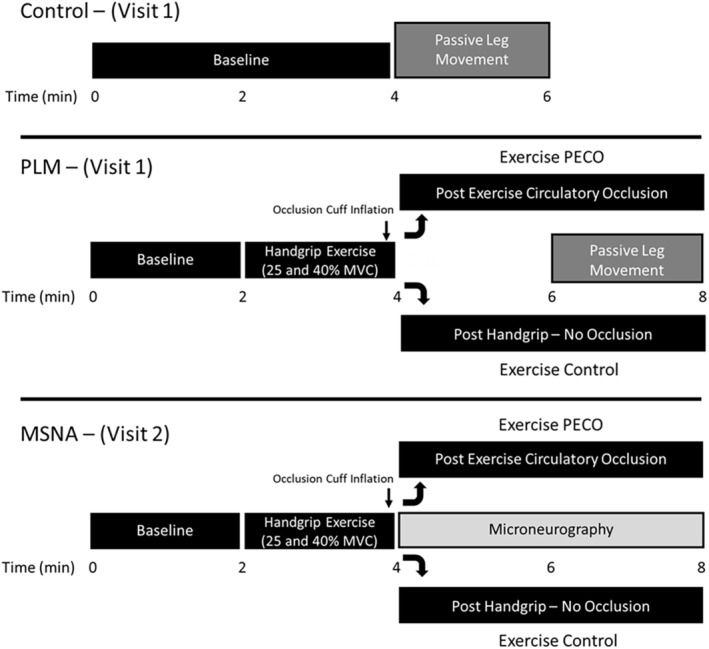
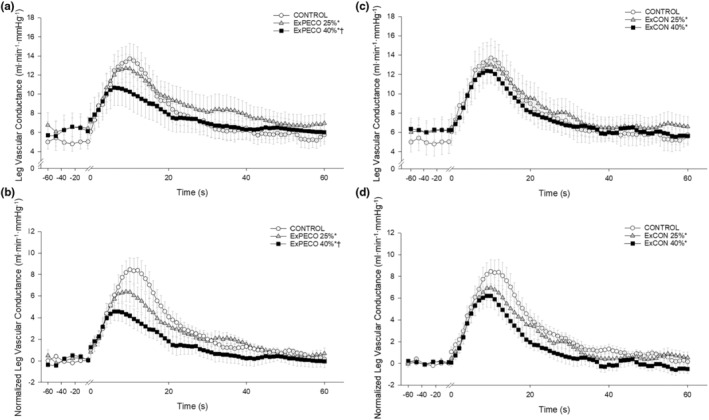
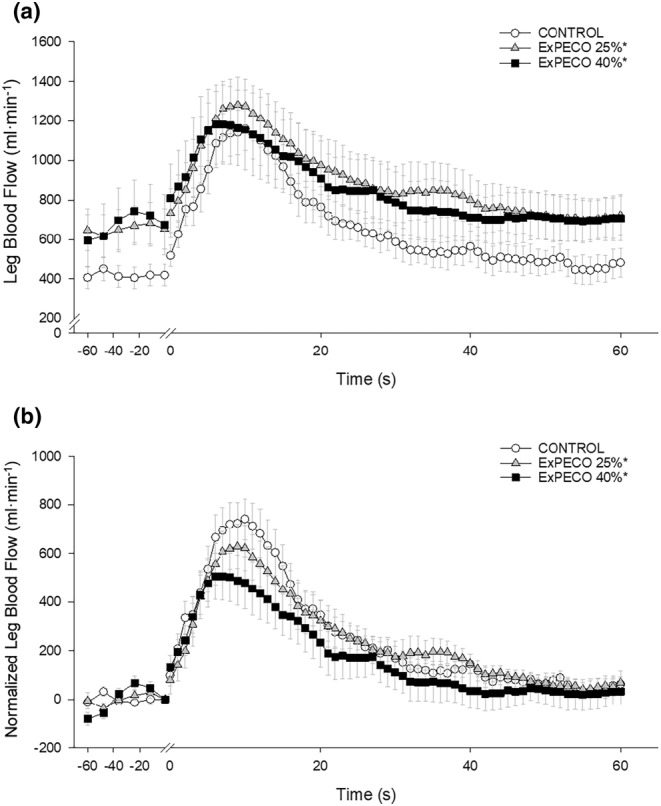
Heightened muscle sympathetic nerve activity (MSNA) contributes to impaired vasodilatory capacity and vascular dysfunction associated with aging and cardiovascular disease. The contribution of elevated MSNA to the vasodilatory response during passive leg movement (PLM) is not fully understood. This study tested the hypothesis that elevated MSNA diminishes the vasodilatory response to PLM in healthy young males (n = 11, 25 ± 2 yr). Post exercise circulatory occlusion (PECO) following 2 min of isometric handgrip (HG) exercise performed at 25% (ExPECO 25%) and 40% (ExPECO 40%) maximum voluntary contraction was used to incrementally engage the metaboreceptors and augment MSNA. Control trials were performed without PECO (ExCON 25% and ExCON 40%) to account for changes due to HG exercise. PLM was performed 2 min after exercise and hemodynamics were assessed. MSNA was recorded by microneurography in the peroneal nerve (n = 8). Measures of MSNA (i.e., burst incidences) increased during ExPECO 25% (+15 ± 5 burst/100 bpm) and ExPECO 40% (+22 ± 4 burst/100 bpm) and returned to pre-HG levels during ExCON trials. Leg vascular conductance (vasodilation) during PLM was reduced by 16% and 44% during ExPECO 25% and ExPECO 40%, respectively. These findings indicate elevated MSNA attenuates the vasodilatory response to PLM and the magnitude of reduction in vasodilation during PLM is graded with the degree of sympathoexcitation.
期刊介绍:
Physiological Reports is an online only, open access journal that will publish peer reviewed research across all areas of basic, translational, and clinical physiology and allied disciplines. Physiological Reports is a collaboration between The Physiological Society and the American Physiological Society, and is therefore in a unique position to serve the international physiology community through quick time to publication while upholding a quality standard of sound research that constitutes a useful contribution to the field.





 京公网安备 11010802042870号
京ICP备2023020795号-1
京公网安备 11010802042870号
京ICP备2023020795号-1

 分享
分享
 求助内容:
求助内容: 应助结果提醒方式:
 扫码关注我们
