{"title":"Unraveling Gender Differences in Obsessive-Compulsive Disorder: A Focus on Key Micronutrients.","authors":"Sultana Algin, Mohammad Waliul Hasnat Sajib, Sumaiya Nausheen Ahmed, Md Raihan Siddique, Md Munim Reza, Nusrat Jahan Tanzilla, Tanbir Ahmed, Md Kamrul Islam, Pratiksha Patel, Mainul Haque","doi":"10.7759/cureus.79667","DOIUrl":null,"url":null,"abstract":"<p><p>Introduction Obsessive-compulsive disorder (OCD) is a persistent psychiatric condition that causes significant clinical and functional impairments. Recent research suggests a link between deficiencies in micronutrients, particularly vitamin B<sub>12</sub>, folic acid, and elevated homocysteine, and the development of OCD. This study investigates the blood levels of these micronutrients and their relationship to OCD severity, with an emphasis on potential gender differences. Methods This cross-sectional study included 300 drug-free OCD patients. Serum levels of vitamin B<sub>12</sub>, folic acid, and homocysteine were measured using established biochemical methods. The Yale-Brown Obsessive Compulsive Scale (Y-BOCS) was used to assess clinical severity. Data were examined to determine relationships between micronutrient levels and OCD severity and differences between male and female patients. Results This study found that women had higher levels of vitamin B<sub>12</sub> (405.3 ± 15.1 vs. 360.4 ± 14.3) and folic acid (7.18 ± 0.27 vs. 5.76 ± 0.25) but lower levels of homocysteine (9.35 ± 0.64 vs. 14.4 ± 0.60) compared to men. Higher folic acid levels were linked to study participants having higher levels of education (at a college or university, where subjects are studied at an advanced level) compared to those with primary-level education. Lower vitamin B<sub>12</sub> levels were linked to family mental health history and noncommunicable diseases. Women exhibited lower levels of substance use but higher rates of self-harm and suicide attempts. Elevated homocysteine levels were linked to longer illness duration and more severe OCD symptoms. Conclusion These findings suggest that imbalances in micronutrients, particularly vitamin B<sub>12</sub>, folic acid, and homocysteine, may contribute to OCD severity and treatment resistance. Gender-specific variations in micronutrient levels could provide valuable insights into personalized OCD therapy choices. Further longitudinal studies are needed to understand these relationships and their potential as therapeutic targets.</p>","PeriodicalId":93960,"journal":{"name":"Cureus","volume":"17 2","pages":"e79667"},"PeriodicalIF":1.3000,"publicationDate":"2025-02-25","publicationTypes":"Journal Article","fieldsOfStudy":null,"isOpenAccess":false,"openAccessPdf":"https://www.ncbi.nlm.nih.gov/pmc/articles/PMC11865865/pdf/","citationCount":"0","resultStr":null,"platform":"Semanticscholar","paperid":null,"PeriodicalName":"Cureus","FirstCategoryId":"1085","ListUrlMain":"https://doi.org/10.7759/cureus.79667","RegionNum":0,"RegionCategory":null,"ArticlePicture":[],"TitleCN":null,"AbstractTextCN":null,"PMCID":null,"EPubDate":"2025/2/1 0:00:00","PubModel":"eCollection","JCR":"Q3","JCRName":"MEDICINE, GENERAL & INTERNAL","Score":null,"Total":0}
引用次数: 0
Abstract
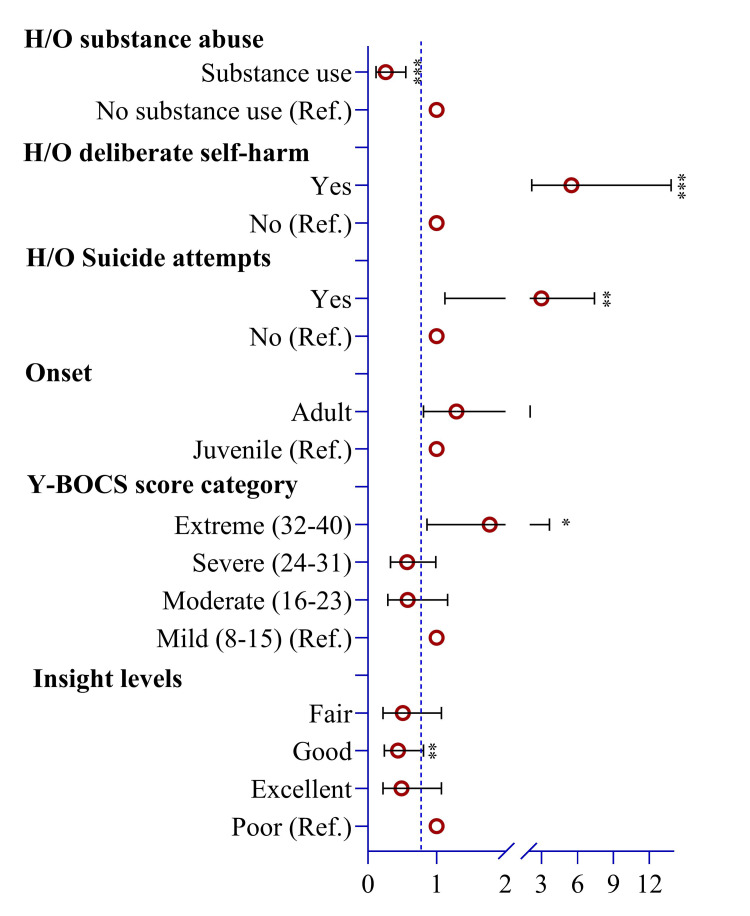
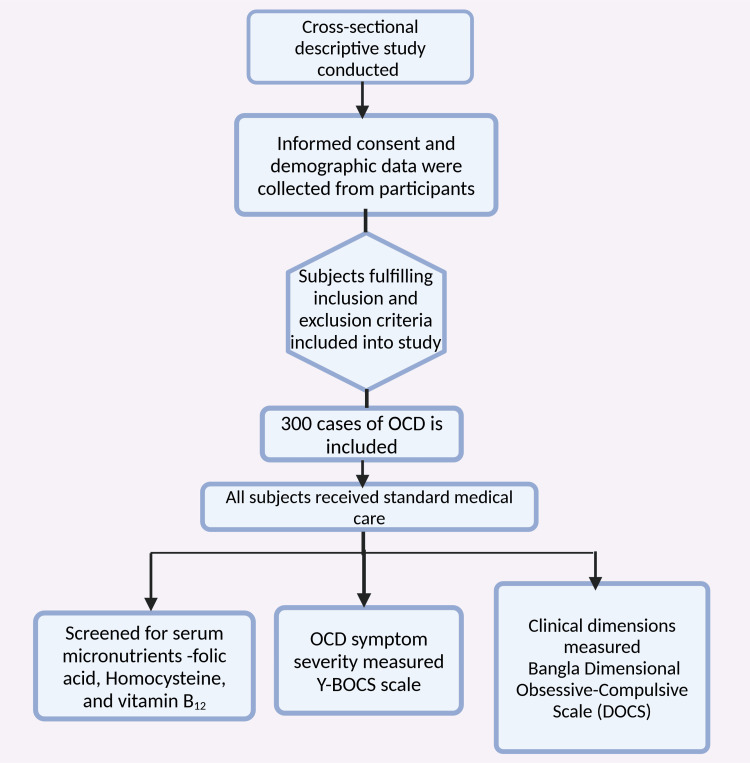
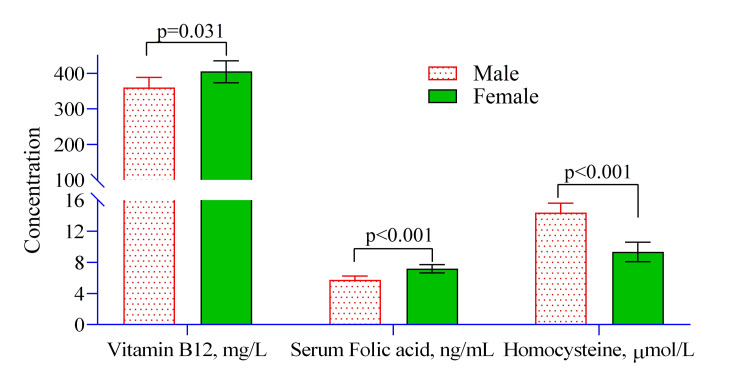
Introduction Obsessive-compulsive disorder (OCD) is a persistent psychiatric condition that causes significant clinical and functional impairments. Recent research suggests a link between deficiencies in micronutrients, particularly vitamin B12, folic acid, and elevated homocysteine, and the development of OCD. This study investigates the blood levels of these micronutrients and their relationship to OCD severity, with an emphasis on potential gender differences. Methods This cross-sectional study included 300 drug-free OCD patients. Serum levels of vitamin B12, folic acid, and homocysteine were measured using established biochemical methods. The Yale-Brown Obsessive Compulsive Scale (Y-BOCS) was used to assess clinical severity. Data were examined to determine relationships between micronutrient levels and OCD severity and differences between male and female patients. Results This study found that women had higher levels of vitamin B12 (405.3 ± 15.1 vs. 360.4 ± 14.3) and folic acid (7.18 ± 0.27 vs. 5.76 ± 0.25) but lower levels of homocysteine (9.35 ± 0.64 vs. 14.4 ± 0.60) compared to men. Higher folic acid levels were linked to study participants having higher levels of education (at a college or university, where subjects are studied at an advanced level) compared to those with primary-level education. Lower vitamin B12 levels were linked to family mental health history and noncommunicable diseases. Women exhibited lower levels of substance use but higher rates of self-harm and suicide attempts. Elevated homocysteine levels were linked to longer illness duration and more severe OCD symptoms. Conclusion These findings suggest that imbalances in micronutrients, particularly vitamin B12, folic acid, and homocysteine, may contribute to OCD severity and treatment resistance. Gender-specific variations in micronutrient levels could provide valuable insights into personalized OCD therapy choices. Further longitudinal studies are needed to understand these relationships and their potential as therapeutic targets.



 京公网安备 11010802042870号
京ICP备2023020795号-1
京公网安备 11010802042870号
京ICP备2023020795号-1

 分享
分享

 求助内容:
求助内容: 应助结果提醒方式:
 扫码关注我们
