Wenyue Gao, Xinping Han, Ling Li, Yan Xu, Min Xu, Zhu Gao and Cuijuan Wang
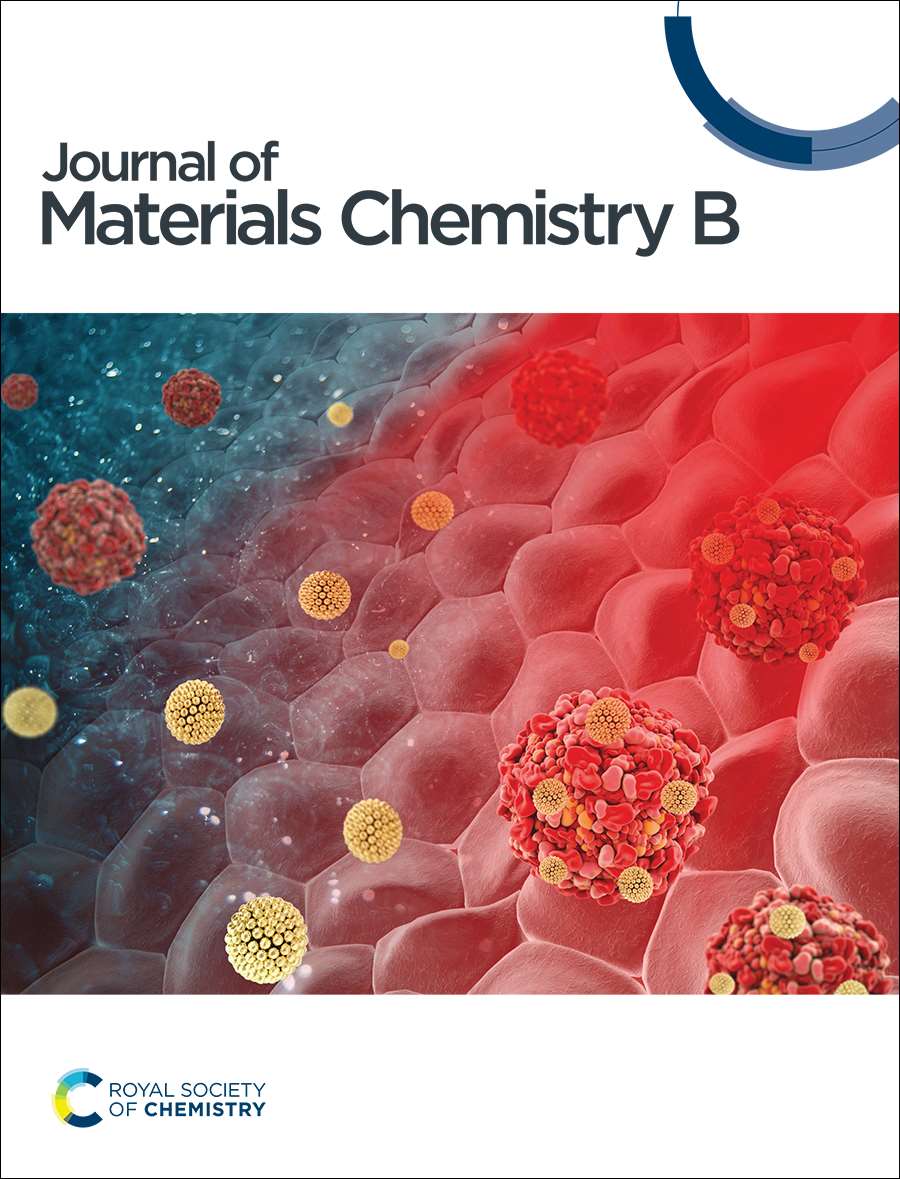
{"title":"Functionalized ZIF-8 as a versatile platform for drug delivery and cancer therapy: strategies, challenges and prospects","authors":"Wenyue Gao, Xinping Han, Ling Li, Yan Xu, Min Xu, Zhu Gao and Cuijuan Wang","doi":"10.1039/D4TB02289K","DOIUrl":null,"url":null,"abstract":"<p >This review discusses the functionalization strategies of ZIF-8 and challenges and future developments in ZIF-8-based platforms for drug delivery and cancer therapy. We systematically evaluate a series of innovative ZIF-8 functionalization methods, including atomic doping, introduction of targeting molecules, and biomimetic mineralization technology, to achieve precise drug release. These functionalization strategies significantly enhance the targeted delivery and controlled release properties of ZIF-8, broaden the diversity of drug delivery systems, maximize therapeutic effects, and minimize systemic toxicity. In addition, this review explores the important role of ZIF-8 in tumor therapy. Its ability to encapsulate multiple therapeutic agents and its responsiveness to the tumor microenvironment significantly improve the therapeutic effect and reduce the side effects of traditional treatments. By integrating multiple therapeutic agents and performing surface modification, ZIF-8-based platforms may provide personalized and efficient treatment options for drug-resistant or recurrent cancers. This review also comprehensively discusses the synthesis methods, drug loading capacity, and potential clinical applications of ZIF-8, emphasizing the need to optimize its large-scale production and reproducibility. In addition, further studies on the long-term biocompatibility and biodegradability of ZIF-8-based systems are essential to ensure their safety in long-term treatment. In summary, this review highlights the structural advantages and significant therapeutic potential of ZIF-8 and calls for the transition of ZIF-8 from laboratory research to clinical application to provide more targeted, efficient, and friendly cancer treatment options.</p>","PeriodicalId":83,"journal":{"name":"Journal of Materials Chemistry B","volume":" 12","pages":" 3758-3785"},"PeriodicalIF":6.1000,"publicationDate":"2025-02-28","publicationTypes":"Journal Article","fieldsOfStudy":null,"isOpenAccess":false,"openAccessPdf":"","citationCount":"0","resultStr":null,"platform":"Semanticscholar","paperid":null,"PeriodicalName":"Journal of Materials Chemistry B","FirstCategoryId":"1","ListUrlMain":"https://pubs.rsc.org/en/content/articlelanding/2025/tb/d4tb02289k","RegionNum":3,"RegionCategory":"医学","ArticlePicture":[],"TitleCN":null,"AbstractTextCN":null,"PMCID":null,"EPubDate":"","PubModel":"","JCR":"Q1","JCRName":"MATERIALS SCIENCE, BIOMATERIALS","Score":null,"Total":0}
引用次数: 0
Abstract
This review discusses the functionalization strategies of ZIF-8 and challenges and future developments in ZIF-8-based platforms for drug delivery and cancer therapy. We systematically evaluate a series of innovative ZIF-8 functionalization methods, including atomic doping, introduction of targeting molecules, and biomimetic mineralization technology, to achieve precise drug release. These functionalization strategies significantly enhance the targeted delivery and controlled release properties of ZIF-8, broaden the diversity of drug delivery systems, maximize therapeutic effects, and minimize systemic toxicity. In addition, this review explores the important role of ZIF-8 in tumor therapy. Its ability to encapsulate multiple therapeutic agents and its responsiveness to the tumor microenvironment significantly improve the therapeutic effect and reduce the side effects of traditional treatments. By integrating multiple therapeutic agents and performing surface modification, ZIF-8-based platforms may provide personalized and efficient treatment options for drug-resistant or recurrent cancers. This review also comprehensively discusses the synthesis methods, drug loading capacity, and potential clinical applications of ZIF-8, emphasizing the need to optimize its large-scale production and reproducibility. In addition, further studies on the long-term biocompatibility and biodegradability of ZIF-8-based systems are essential to ensure their safety in long-term treatment. In summary, this review highlights the structural advantages and significant therapeutic potential of ZIF-8 and calls for the transition of ZIF-8 from laboratory research to clinical application to provide more targeted, efficient, and friendly cancer treatment options.
期刊介绍:
Journal of Materials Chemistry A, B & C cover high quality studies across all fields of materials chemistry. The journals focus on those theoretical or experimental studies that report new understanding, applications, properties and synthesis of materials. Journal of Materials Chemistry A, B & C are separated by the intended application of the material studied. Broadly, applications in energy and sustainability are of interest to Journal of Materials Chemistry A, applications in biology and medicine are of interest to Journal of Materials Chemistry B, and applications in optical, magnetic and electronic devices are of interest to Journal of Materials Chemistry C.Journal of Materials Chemistry B is a Transformative Journal and Plan S compliant. Example topic areas within the scope of Journal of Materials Chemistry B are listed below. This list is neither exhaustive nor exclusive:
Antifouling coatings
Biocompatible materials
Bioelectronics
Bioimaging
Biomimetics
Biomineralisation
Bionics
Biosensors
Diagnostics
Drug delivery
Gene delivery
Immunobiology
Nanomedicine
Regenerative medicine & Tissue engineering
Scaffolds
Soft robotics
Stem cells
Therapeutic devices




 京公网安备 11010802042870号
京ICP备2023020795号-1
京公网安备 11010802042870号
京ICP备2023020795号-1

 分享
分享
 求助内容:
求助内容: 应助结果提醒方式:
 扫码关注我们
