Seobin Kim, Jiyeon Kang, Danbi An, Jinho Seo, Doo-Byoung Oh
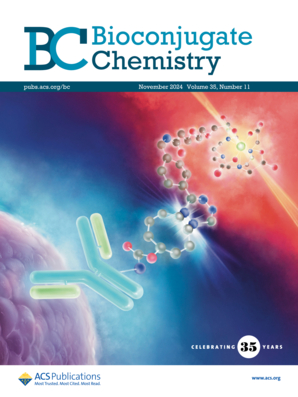
{"title":"Lysosome-Targeting Chimera Using Mannose-6-Phosphate Glycans Derived from Glyco-Engineered Yeast.","authors":"Seobin Kim, Jiyeon Kang, Danbi An, Jinho Seo, Doo-Byoung Oh","doi":"10.1021/acs.bioconjchem.4c00512","DOIUrl":null,"url":null,"abstract":"<p><p>Lysosome-targeting chimeras (LYTACs) harness the cell's lysosomal degradation machinery to break down extracellular and membrane proteins. Previous methods used a synthetic glycopeptide containing multiple serine-O-mannose-6-phosphate (poly-M6Pn), which presented challenges such as synthetic complexity and potential immunogenicity associated with poly-M6Pn. This study introduced a LYTAC formulation, LYTAC<sup>gyM6pG</sup>, which uses glyco-engineered yeast-derived mannose-6-phosphate glycans (gyM6pGs) for lysosomal transport, overcoming synthetic complexities and immunogenic risks. The gyM6pGs used in LYTAC<sup>gyM6pG</sup> are human-compatible (identical to the structures found in humans) and are efficiently produced through yeast fermentation, followed by the preparation of cell wall glycans and their <i>in vitro</i> modifications. We employed copper-free click chemistry (azide and dibenzocyclooctyne reactions) for the robust conjugation of gyM6pGs to a nanobody targeting the immune checkpoint protein PD-L1, thereby streamlining the assembly of LYTAC<sup>gyM6pG</sup>. We demonstrated that LYTAC<sup>gyM6pG</sup> effectively degraded endogenous and recombinant PD-L1 proteins on the cell surface by directing them to the lysosome via the cation-independent mannose-6-phosphate receptor pathway. Furthermore, LYTAC<sup>gyM6pG</sup> significantly enhanced T cell-mediated cytotoxicity against cancer cells, surpassing the efficacy of nanobodies alone. The successful application of gyM6pGs in the development of LYTAC<sup>gyM6pG</sup> highlights the potential for a more viable and scalable therapeutic production of LYTACs, paving the way for broader therapeutic applications, including cancer treatment.</p>","PeriodicalId":29,"journal":{"name":"Bioconjugate Chemistry","volume":" ","pages":"424-436"},"PeriodicalIF":3.9000,"publicationDate":"2025-03-19","publicationTypes":"Journal Article","fieldsOfStudy":null,"isOpenAccess":false,"openAccessPdf":"","citationCount":"0","resultStr":null,"platform":"Semanticscholar","paperid":null,"PeriodicalName":"Bioconjugate Chemistry","FirstCategoryId":"1","ListUrlMain":"https://doi.org/10.1021/acs.bioconjchem.4c00512","RegionNum":2,"RegionCategory":"化学","ArticlePicture":[],"TitleCN":null,"AbstractTextCN":null,"PMCID":null,"EPubDate":"2025/3/1 0:00:00","PubModel":"Epub","JCR":"Q1","JCRName":"BIOCHEMICAL RESEARCH METHODS","Score":null,"Total":0}
引用次数: 0
Abstract
Lysosome-targeting chimeras (LYTACs) harness the cell's lysosomal degradation machinery to break down extracellular and membrane proteins. Previous methods used a synthetic glycopeptide containing multiple serine-O-mannose-6-phosphate (poly-M6Pn), which presented challenges such as synthetic complexity and potential immunogenicity associated with poly-M6Pn. This study introduced a LYTAC formulation, LYTACgyM6pG, which uses glyco-engineered yeast-derived mannose-6-phosphate glycans (gyM6pGs) for lysosomal transport, overcoming synthetic complexities and immunogenic risks. The gyM6pGs used in LYTACgyM6pG are human-compatible (identical to the structures found in humans) and are efficiently produced through yeast fermentation, followed by the preparation of cell wall glycans and their in vitro modifications. We employed copper-free click chemistry (azide and dibenzocyclooctyne reactions) for the robust conjugation of gyM6pGs to a nanobody targeting the immune checkpoint protein PD-L1, thereby streamlining the assembly of LYTACgyM6pG. We demonstrated that LYTACgyM6pG effectively degraded endogenous and recombinant PD-L1 proteins on the cell surface by directing them to the lysosome via the cation-independent mannose-6-phosphate receptor pathway. Furthermore, LYTACgyM6pG significantly enhanced T cell-mediated cytotoxicity against cancer cells, surpassing the efficacy of nanobodies alone. The successful application of gyM6pGs in the development of LYTACgyM6pG highlights the potential for a more viable and scalable therapeutic production of LYTACs, paving the way for broader therapeutic applications, including cancer treatment.
溶酶体靶向嵌合体(LYTACs)利用细胞的溶酶体降解机制来分解细胞外和膜蛋白。以前的方法使用含有多个丝氨酸- o -甘露糖-6-磷酸(多聚m6pn)的合成糖肽,这带来了合成复杂性和与多聚m6pn相关的潜在免疫原性等挑战。本研究介绍了LYTAC制剂LYTACgyM6pG,该制剂使用糖工程酵母衍生的甘露糖-6-磷酸聚糖(gym6pg)进行溶酶体转运,克服了合成复杂性和免疫原性风险。LYTACgyM6pG中使用的gym6pg是人类相容的(与人类发现的结构相同),并且通过酵母发酵,然后制备细胞壁聚糖及其体外修饰有效地产生。我们采用无铜点击化学(叠氮化物和二苯并环胱氨酸反应)将gym6pg与靶向免疫检查点蛋白PD-L1的纳米体结合,从而简化了LYTACgyM6pG的组装。我们证明了LYTACgyM6pG通过不依赖阳离子的甘露糖-6-磷酸受体途径将细胞表面的内源性和重组PD-L1蛋白引导到溶酶体中,从而有效地降解了细胞表面的PD-L1蛋白。此外,LYTACgyM6pG显著增强了T细胞介导的对癌细胞的细胞毒性,超过了纳米体的单独作用。gym6pg在LYTACgyM6pG开发中的成功应用凸显了LYTACs更可行和可扩展的治疗性生产的潜力,为更广泛的治疗应用铺平了道路,包括癌症治疗。
期刊介绍:
Bioconjugate Chemistry invites original contributions on all research at the interface between man-made and biological materials. The mission of the journal is to communicate to advances in fields including therapeutic delivery, imaging, bionanotechnology, and synthetic biology. Bioconjugate Chemistry is intended to provide a forum for presentation of research relevant to all aspects of bioconjugates, including the preparation, properties and applications of biomolecular conjugates.



 京公网安备 11010802042870号
京ICP备2023020795号-1
京公网安备 11010802042870号
京ICP备2023020795号-1

 分享
分享
 求助内容:
求助内容: 应助结果提醒方式:
 扫码关注我们
