John Perna, Justin Trop, Roman Palitsky, Zachary Bosshardt, Helen Vantine, Boadie W Dunlop, Ali J Zarrabi
{"title":"Prolonged adverse effects from repeated psilocybin use in an underground psychedelic therapy training program: a case report.","authors":"John Perna, Justin Trop, Roman Palitsky, Zachary Bosshardt, Helen Vantine, Boadie W Dunlop, Ali J Zarrabi","doi":"10.1186/s12888-024-06303-z","DOIUrl":null,"url":null,"abstract":"<p><strong>Background: </strong>Psychedelic-assisted therapy has gained growing interest to improve a range of mental health outcomes. In response, numerous training programs have formed to train the necessary workforce to deliver psychedelic therapy. These include both legal and 'underground' (i.e., unregulated) programs that use psychedelics as part of their training. Prolonged adverse experiences (PAEs) may arise from psychedelic use, though they are poorly characterized in the clinical literature. Thus, understanding the potential harms related to psychedelic use is critical as psychedelic therapy training programs consider strategies to potentially integrate psychedelic use into therapy training.</p><p><strong>Case presentation: </strong>We present the case of a psychologist who underwent psychedelic therapy training that involved repeated high doses of psilocybin-containing mushrooms and subsequently developed prolonged adverse effects including severe sleep impairment, anhedonia, and suicidal ideation requiring hospitalization. Despite worsening symptoms, her psychedelic therapy trainers advised her against seeking psychiatric support, delaying treatment. Ultimately, the patient's symptoms resolved after a course of electroconvulsive therapy (ECT).</p><p><strong>Conclusions: </strong>This case highlights the tensions between legal and underground psychedelic use within psychedelic therapy training programs, psychiatry and neo-shamanism, and the use of psychiatric interventions (i.e., ECT) and energy medicine to address prolonged adverse effects from psychedelics. Clinicians should be aware of these potential conflicts between psychiatric conceptualizations of PAEs and frameworks maintained in psychedelic community practices and their impacts on patients' presenting symptoms, decision making, and emotional challenges.</p>","PeriodicalId":9029,"journal":{"name":"BMC Psychiatry","volume":"25 1","pages":"184"},"PeriodicalIF":3.4000,"publicationDate":"2025-02-28","publicationTypes":"Journal Article","fieldsOfStudy":null,"isOpenAccess":false,"openAccessPdf":"https://www.ncbi.nlm.nih.gov/pmc/articles/PMC11869617/pdf/","citationCount":"0","resultStr":null,"platform":"Semanticscholar","paperid":null,"PeriodicalName":"BMC Psychiatry","FirstCategoryId":"3","ListUrlMain":"https://doi.org/10.1186/s12888-024-06303-z","RegionNum":2,"RegionCategory":"医学","ArticlePicture":[],"TitleCN":null,"AbstractTextCN":null,"PMCID":null,"EPubDate":"","PubModel":"","JCR":"Q2","JCRName":"PSYCHIATRY","Score":null,"Total":0}
引用次数: 0
Abstract
Background: Psychedelic-assisted therapy has gained growing interest to improve a range of mental health outcomes. In response, numerous training programs have formed to train the necessary workforce to deliver psychedelic therapy. These include both legal and 'underground' (i.e., unregulated) programs that use psychedelics as part of their training. Prolonged adverse experiences (PAEs) may arise from psychedelic use, though they are poorly characterized in the clinical literature. Thus, understanding the potential harms related to psychedelic use is critical as psychedelic therapy training programs consider strategies to potentially integrate psychedelic use into therapy training.
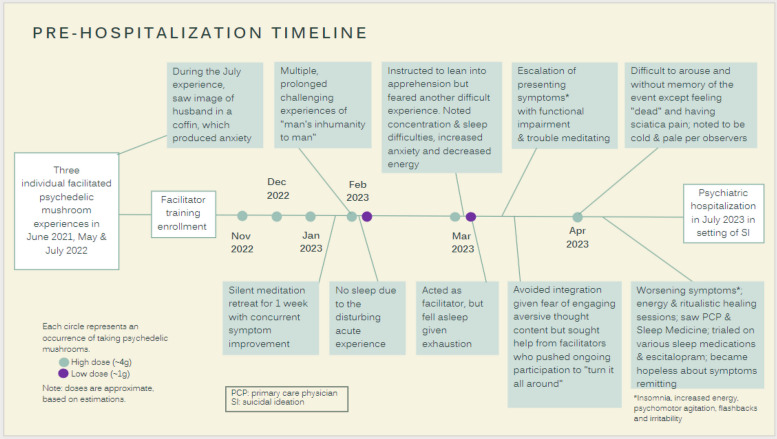
Case presentation: We present the case of a psychologist who underwent psychedelic therapy training that involved repeated high doses of psilocybin-containing mushrooms and subsequently developed prolonged adverse effects including severe sleep impairment, anhedonia, and suicidal ideation requiring hospitalization. Despite worsening symptoms, her psychedelic therapy trainers advised her against seeking psychiatric support, delaying treatment. Ultimately, the patient's symptoms resolved after a course of electroconvulsive therapy (ECT).
Conclusions: This case highlights the tensions between legal and underground psychedelic use within psychedelic therapy training programs, psychiatry and neo-shamanism, and the use of psychiatric interventions (i.e., ECT) and energy medicine to address prolonged adverse effects from psychedelics. Clinicians should be aware of these potential conflicts between psychiatric conceptualizations of PAEs and frameworks maintained in psychedelic community practices and their impacts on patients' presenting symptoms, decision making, and emotional challenges.
期刊介绍:
BMC Psychiatry is an open access, peer-reviewed journal that considers articles on all aspects of the prevention, diagnosis and management of psychiatric disorders, as well as related molecular genetics, pathophysiology, and epidemiology.




 京公网安备 11010802042870号
京ICP备2023020795号-1
京公网安备 11010802042870号
京ICP备2023020795号-1

 分享
分享
 求助内容:
求助内容: 应助结果提醒方式:
 扫码关注我们
