{"title":"Impact of simulated animated video education on patients' disease uncertainty, anxiety, and sleep quality in digestive endoscopy examination.","authors":"Xiaoqing Qian, Lixin Wu, Shuguang Xu","doi":"10.1186/s12876-025-03718-0","DOIUrl":null,"url":null,"abstract":"<p><strong>Background: </strong>Gastrointestinal endoscopy examinations were commonly associated with patient uncertainty, anxiety, and sleep disturbances. Simulated animated video education has emerged as a potential intervention to address these psychosocial aspects in the healthcare setting. This study explores the impact of simulated animated video education on patients' disease uncertainty, anxiety, and sleep quality in the context of digestive endoscopy examinations.</p><p><strong>Methods: </strong>A total 166 patients who underwent digestive endoscopy examinations were conducted and divided into the conventional education group (n = 77) and the simulated animated video education group (n = 89). Disease uncertainty was assessed using the Mishel's Uncertainty in Illness Scale (MUIS), anxiety was evaluated using the Hamilton Anxiety Rating Scale (HAMA), and sleep quality was measured using the Pittsburgh Sleep Quality Index (PSQI).</p><p><strong>Results: </strong>Both conventional and simulated animated video education interventions led to a reduction in disease uncertainty, anxiety levels, and improvement in sleep quality post-education and at the one-month follow-up. However, the simulated animated video education group exhibited greater reductions in disease uncertainty (post-education: 86.69 ± 2.65 vs. 85.65 ± 3.46, P = 0.031; follow-up: 82.57 ± 4.57 vs. 81.21 ± 3.69, P = 0.038), anxiety (post-education: 19.88 ± 3.78 vs.18.75 ± 3.42, P = 0.046; follow-up: 18.59 ± 3.4 vs. 17.54 ± 3.25, P = 0.046), and improvement in sleep quality (post-education: 5.57 ± 1.25 vs. 5.15 ± 1.1, P = 0.023; follow-up: 5.22 ± 1.13 vs. 4.89 ± 0.86, P = 0.038) compared to the conventional education group.</p><p><strong>Conclusion: </strong>The study findings suggest that simulated animated video education was associated with reduced disease uncertainty, alleviated anxiety, and improved sleep quality among patients undergoing gastrointestinal endoscopy.</p>","PeriodicalId":9129,"journal":{"name":"BMC Gastroenterology","volume":"25 1","pages":"124"},"PeriodicalIF":2.5000,"publicationDate":"2025-02-28","publicationTypes":"Journal Article","fieldsOfStudy":null,"isOpenAccess":false,"openAccessPdf":"https://www.ncbi.nlm.nih.gov/pmc/articles/PMC11871668/pdf/","citationCount":"0","resultStr":null,"platform":"Semanticscholar","paperid":null,"PeriodicalName":"BMC Gastroenterology","FirstCategoryId":"3","ListUrlMain":"https://doi.org/10.1186/s12876-025-03718-0","RegionNum":3,"RegionCategory":"医学","ArticlePicture":[],"TitleCN":null,"AbstractTextCN":null,"PMCID":null,"EPubDate":"","PubModel":"","JCR":"Q2","JCRName":"GASTROENTEROLOGY & HEPATOLOGY","Score":null,"Total":0}
引用次数: 0
Abstract
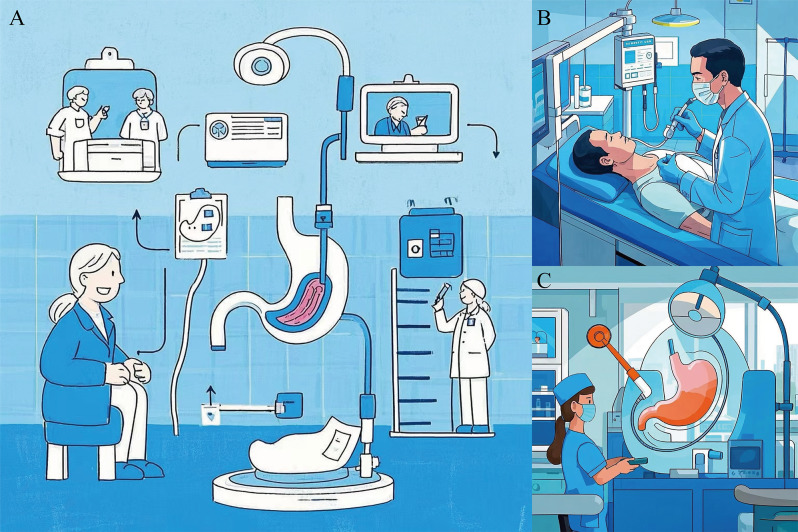
Background: Gastrointestinal endoscopy examinations were commonly associated with patient uncertainty, anxiety, and sleep disturbances. Simulated animated video education has emerged as a potential intervention to address these psychosocial aspects in the healthcare setting. This study explores the impact of simulated animated video education on patients' disease uncertainty, anxiety, and sleep quality in the context of digestive endoscopy examinations.
Methods: A total 166 patients who underwent digestive endoscopy examinations were conducted and divided into the conventional education group (n = 77) and the simulated animated video education group (n = 89). Disease uncertainty was assessed using the Mishel's Uncertainty in Illness Scale (MUIS), anxiety was evaluated using the Hamilton Anxiety Rating Scale (HAMA), and sleep quality was measured using the Pittsburgh Sleep Quality Index (PSQI).
Results: Both conventional and simulated animated video education interventions led to a reduction in disease uncertainty, anxiety levels, and improvement in sleep quality post-education and at the one-month follow-up. However, the simulated animated video education group exhibited greater reductions in disease uncertainty (post-education: 86.69 ± 2.65 vs. 85.65 ± 3.46, P = 0.031; follow-up: 82.57 ± 4.57 vs. 81.21 ± 3.69, P = 0.038), anxiety (post-education: 19.88 ± 3.78 vs.18.75 ± 3.42, P = 0.046; follow-up: 18.59 ± 3.4 vs. 17.54 ± 3.25, P = 0.046), and improvement in sleep quality (post-education: 5.57 ± 1.25 vs. 5.15 ± 1.1, P = 0.023; follow-up: 5.22 ± 1.13 vs. 4.89 ± 0.86, P = 0.038) compared to the conventional education group.
Conclusion: The study findings suggest that simulated animated video education was associated with reduced disease uncertainty, alleviated anxiety, and improved sleep quality among patients undergoing gastrointestinal endoscopy.
期刊介绍:
BMC Gastroenterology is an open access, peer-reviewed journal that considers articles on all aspects of the prevention, diagnosis and management of gastrointestinal and hepatobiliary disorders, as well as related molecular genetics, pathophysiology, and epidemiology.




 京公网安备 11010802042870号
京ICP备2023020795号-1
京公网安备 11010802042870号
京ICP备2023020795号-1

 分享
分享
 求助内容:
求助内容: 应助结果提醒方式:
 扫码关注我们
