{"title":"Targeting the MDM2-MDM4 interaction interface reveals an otherwise therapeutically active wild-type p53 in colorectal cancer.","authors":"Sonia Valentini, Giada Mele, Marika Attili, Maria Rita Assenza, Fulvio Saccoccia, Francesca Sardina, Cinzia Rinaldo, Roberto Massari, Nicola Tirelli, Alfredo Pontecorvi, Fabiola Moretti","doi":"10.1002/1878-0261.70006","DOIUrl":null,"url":null,"abstract":"<p><p>Targeting the heterodimer MDM2/MDM4 is a novel and effective route for the reactivation of wild-type p53 in human tumors with reduced toxicity in nontransformed cells. To improve the therapeutic potential of peptides that interfere with MDM4 binding to MDM2, we demonstrated the tumor-suppressive activity of a short peptide (Pep3S), which is composed of the last five amino acids of the MDM4 protein. Compared to longer peptides (previously identified), Pep3S binds MDM2 with high affinity, increases p53-dependent cell death in 2D and 3D colorectal cancer models, and is more efficacious in suppressing xenograft tumor growth. Furthermore, its encapsulation in poly (lactic-co-glycolic acid) (PLGA) nanoparticles potentiated and prolonged its activity. A p53-specific target gene array revealed an uncommon p53 signature, with Pep3S leading to p53-mediated repression of a subset of p53 targets. Comparative analysis indicated that this repression is driven by p53-mediated activation of miR-34a, which is functional in Pep3S-induced cell death. Of note, unlike other p53-reactivating molecules, Pep3S led to significant downregulation of the cell cycle inhibitor CDKN1A/p21, one of the best-characterized p53-targets. Genetic manipulation of MDM4 demonstrated the requirement of the dissociated protein for p21 downregulation, whereas the miR-34a signature was not altered. At odds with Nutlin-3a, the proliferation status of nontumor muscle and lymphoblastoid cells was not altered by Pep3S. These data indicate that targeting the MDM2/MDM4 interaction region provides a different route for wild-type p53 reactivation in human tumors, potentially reducing toxicity to proliferating nontumor tissue. The development of a PLGA/Pep3S formulation represents a promising approach for therapeutic purposes.</p>","PeriodicalId":18764,"journal":{"name":"Molecular Oncology","volume":" ","pages":"2412-2430"},"PeriodicalIF":4.5000,"publicationDate":"2025-08-01","publicationTypes":"Journal Article","fieldsOfStudy":null,"isOpenAccess":false,"openAccessPdf":"https://www.ncbi.nlm.nih.gov/pmc/articles/PMC12330940/pdf/","citationCount":"0","resultStr":null,"platform":"Semanticscholar","paperid":null,"PeriodicalName":"Molecular Oncology","FirstCategoryId":"3","ListUrlMain":"https://doi.org/10.1002/1878-0261.70006","RegionNum":2,"RegionCategory":"医学","ArticlePicture":[],"TitleCN":null,"AbstractTextCN":null,"PMCID":null,"EPubDate":"2025/2/28 0:00:00","PubModel":"Epub","JCR":"Q1","JCRName":"Biochemistry, Genetics and Molecular Biology","Score":null,"Total":0}
引用次数: 0
Abstract
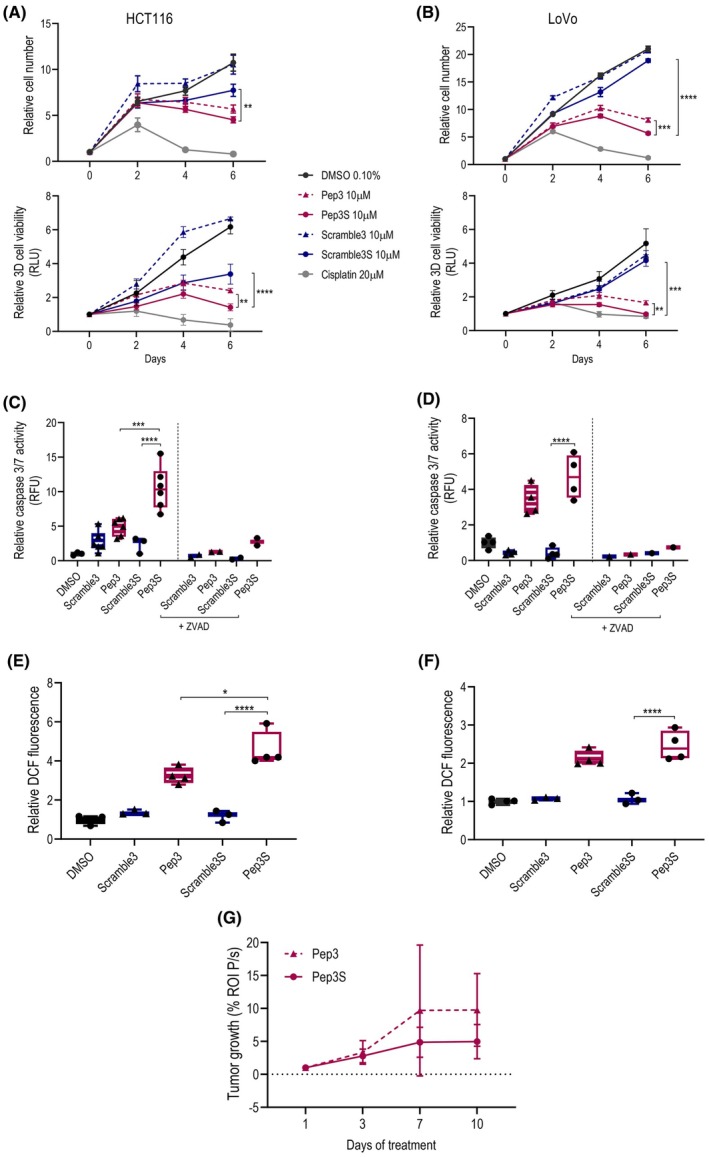
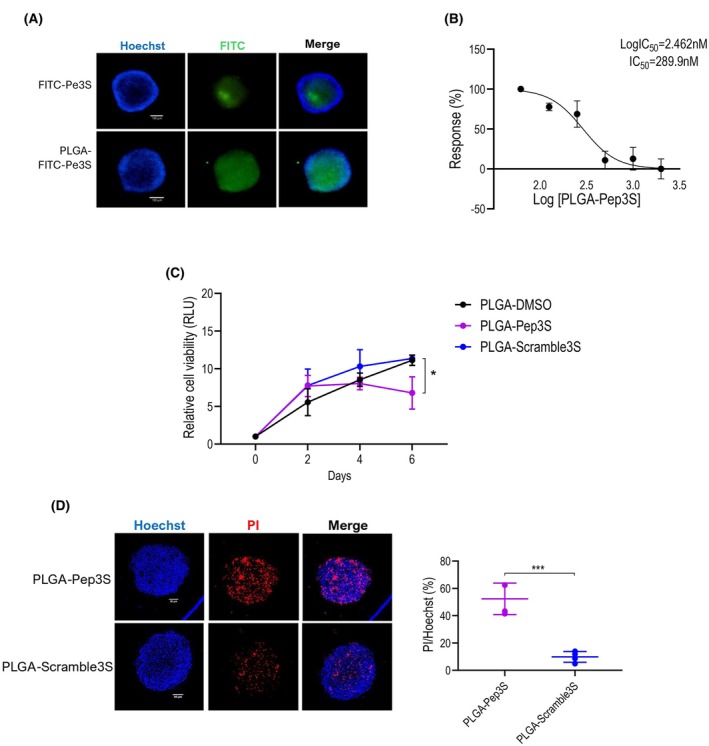
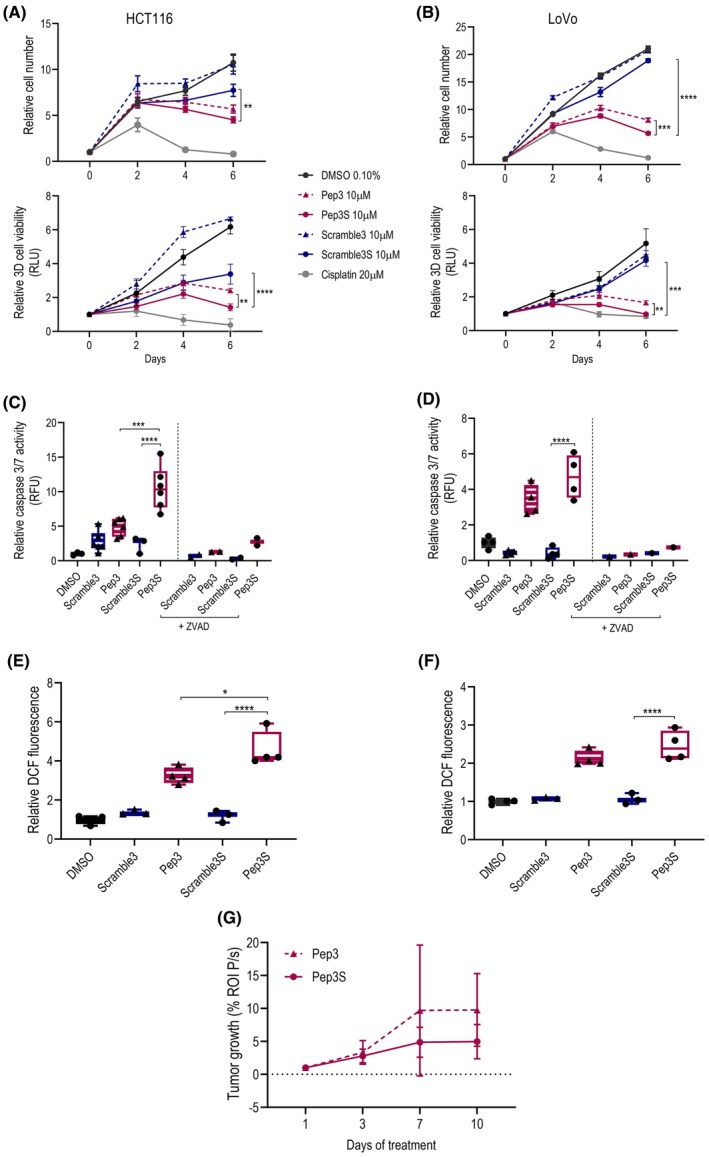
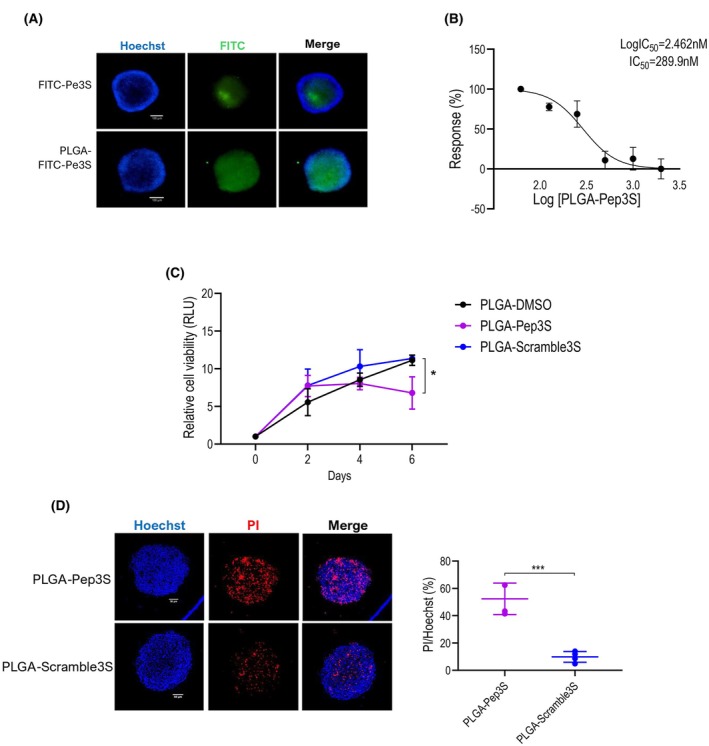
Targeting the heterodimer MDM2/MDM4 is a novel and effective route for the reactivation of wild-type p53 in human tumors with reduced toxicity in nontransformed cells. To improve the therapeutic potential of peptides that interfere with MDM4 binding to MDM2, we demonstrated the tumor-suppressive activity of a short peptide (Pep3S), which is composed of the last five amino acids of the MDM4 protein. Compared to longer peptides (previously identified), Pep3S binds MDM2 with high affinity, increases p53-dependent cell death in 2D and 3D colorectal cancer models, and is more efficacious in suppressing xenograft tumor growth. Furthermore, its encapsulation in poly (lactic-co-glycolic acid) (PLGA) nanoparticles potentiated and prolonged its activity. A p53-specific target gene array revealed an uncommon p53 signature, with Pep3S leading to p53-mediated repression of a subset of p53 targets. Comparative analysis indicated that this repression is driven by p53-mediated activation of miR-34a, which is functional in Pep3S-induced cell death. Of note, unlike other p53-reactivating molecules, Pep3S led to significant downregulation of the cell cycle inhibitor CDKN1A/p21, one of the best-characterized p53-targets. Genetic manipulation of MDM4 demonstrated the requirement of the dissociated protein for p21 downregulation, whereas the miR-34a signature was not altered. At odds with Nutlin-3a, the proliferation status of nontumor muscle and lymphoblastoid cells was not altered by Pep3S. These data indicate that targeting the MDM2/MDM4 interaction region provides a different route for wild-type p53 reactivation in human tumors, potentially reducing toxicity to proliferating nontumor tissue. The development of a PLGA/Pep3S formulation represents a promising approach for therapeutic purposes.
Molecular OncologyBiochemistry, Genetics and Molecular Biology-Molecular Medicine
CiteScore
11.80
自引率
1.50%
发文量
203
审稿时长
10 weeks
期刊介绍:
Molecular Oncology highlights new discoveries, approaches, and technical developments, in basic, clinical and discovery-driven translational cancer research. It publishes research articles, reviews (by invitation only), and timely science policy articles.
The journal is now fully Open Access with all articles published over the past 10 years freely available.




 京公网安备 11010802042870号
京ICP备2023020795号-1
京公网安备 11010802042870号
京ICP备2023020795号-1

 分享
分享
 求助内容:
求助内容: 应助结果提醒方式:
 扫码关注我们
