Precision Errors of Lower Leg Measurement by pQCT in Children With Medical Conditions: Bone Density, Mass, Dimensions, Mechanostat Parameters and Soft Tissue Composition.
{"title":"Precision Errors of Lower Leg Measurement by pQCT in Children With Medical Conditions: Bone Density, Mass, Dimensions, Mechanostat Parameters and Soft Tissue Composition.","authors":"Maciej Jaworski, Maria Kobylińska","doi":"10.22540/JMNI-25-018","DOIUrl":null,"url":null,"abstract":"<p><strong>Objectives: </strong>The one of the developing methods in paediatric densitometry field is peripheral quantitative computed tomography (pQCT), however, very little is known about its precision in children. The aim of presented study was to evaluate the precision errors for bone density, mass, dimensions, strength and mechanostat parameters as well as for soft tissue composition in children with medical conditions.</p><p><strong>Methods: </strong>Stratec XCT 2000L apparatus was used. The measurement sites were 4%, 14%, 38% and 66% of the lower leg length. The study group comprised of 60 patients (30 girls) aged 5,0-18,0 yrs.</p><p><strong>Results: </strong>Relative precision errors (CV%RMS) were from 0,25% for tibia 38% cortical bone density to 5,49% for fat cross-sectional area to muscle cross-sectional area ratio. Least significant change (LSC) was from 0,70% to 15,20%, respectively. Weak to moderate correlations between precision errors and body size, with r from -0,43 to 0,71, have been observed.</p><p><strong>Conclusion: </strong>Presented study revealed pQCT method at the lower leg in children with medical conditions as relatively precise technique. Obtained results provides an attainable basis for design and interpretation of pQCT studies in children with medical conditions.</p>","PeriodicalId":16430,"journal":{"name":"Journal of musculoskeletal & neuronal interactions","volume":"25 1","pages":"18-28"},"PeriodicalIF":1.6000,"publicationDate":"2025-03-01","publicationTypes":"Journal Article","fieldsOfStudy":null,"isOpenAccess":false,"openAccessPdf":"https://www.ncbi.nlm.nih.gov/pmc/articles/PMC11880848/pdf/","citationCount":"0","resultStr":null,"platform":"Semanticscholar","paperid":null,"PeriodicalName":"Journal of musculoskeletal & neuronal interactions","FirstCategoryId":"3","ListUrlMain":"https://doi.org/10.22540/JMNI-25-018","RegionNum":4,"RegionCategory":"医学","ArticlePicture":[],"TitleCN":null,"AbstractTextCN":null,"PMCID":null,"EPubDate":"","PubModel":"","JCR":"Q4","JCRName":"NEUROSCIENCES","Score":null,"Total":0}
引用次数: 0
Abstract
Objectives: The one of the developing methods in paediatric densitometry field is peripheral quantitative computed tomography (pQCT), however, very little is known about its precision in children. The aim of presented study was to evaluate the precision errors for bone density, mass, dimensions, strength and mechanostat parameters as well as for soft tissue composition in children with medical conditions.
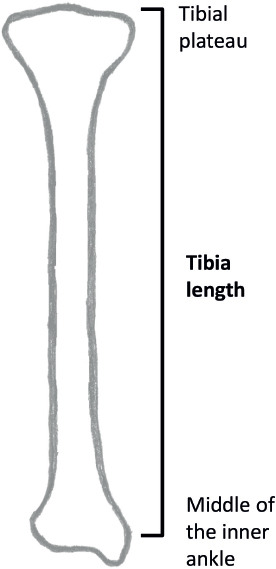
Methods: Stratec XCT 2000L apparatus was used. The measurement sites were 4%, 14%, 38% and 66% of the lower leg length. The study group comprised of 60 patients (30 girls) aged 5,0-18,0 yrs.
Results: Relative precision errors (CV%RMS) were from 0,25% for tibia 38% cortical bone density to 5,49% for fat cross-sectional area to muscle cross-sectional area ratio. Least significant change (LSC) was from 0,70% to 15,20%, respectively. Weak to moderate correlations between precision errors and body size, with r from -0,43 to 0,71, have been observed.
Conclusion: Presented study revealed pQCT method at the lower leg in children with medical conditions as relatively precise technique. Obtained results provides an attainable basis for design and interpretation of pQCT studies in children with medical conditions.
期刊介绍:
The Journal of Musculoskeletal and Neuronal Interactions (JMNI) is an academic journal dealing with the pathophysiology and treatment of musculoskeletal disorders. It is published quarterly (months of issue March, June, September, December). Its purpose is to publish original, peer-reviewed papers of research and clinical experience in all areas of the musculoskeletal system and its interactions with the nervous system, especially metabolic bone diseases, with particular emphasis on osteoporosis. Additionally, JMNI publishes the Abstracts from the biannual meetings of the International Society of Musculoskeletal and Neuronal Interactions, and hosts Abstracts of other meetings on topics related to the aims and scope of JMNI.




 京公网安备 11010802042870号
京ICP备2023020795号-1
京公网安备 11010802042870号
京ICP备2023020795号-1

 分享
分享
 求助内容:
求助内容: 应助结果提醒方式:
 扫码关注我们
