Tesfaye H Tufa, Fiona Stewart, Karen Meckstroth, Justin T Diedrich, Sara J Newmann
{"title":"Cervical preparation for dilation and evacuation at 12 to 24 weeks gestation.","authors":"Tesfaye H Tufa, Fiona Stewart, Karen Meckstroth, Justin T Diedrich, Sara J Newmann","doi":"10.1002/14651858.CD007310.pub3","DOIUrl":null,"url":null,"abstract":"<p><strong>Background: </strong>Abortion is a common procedure. Complications associated with abortion increase as gestational age increases. Cervical preparation is recommended prior to second trimester surgical abortion. Evidence is lacking as to the most effective methods of cervical preparation.</p><p><strong>Objectives: </strong>To assess the effectiveness of cervical preparation methods for people undergoing second trimester surgical abortion at gestational age between 12 and 24 0/7 weeks.</p><p><strong>Search methods: </strong>We searched CENTRAL, MEDLINE ALL, Embase.com, Global Index Medicus, Scopus, and Google Scholar on 20 December 2021. We also searched reference lists, review articles, books, and conference proceedings. We contacted experts for information on other published or unpublished research. The COVID-19 pandemic greatly disrupted the writing and publication of this review; the search is outdated, but an updated search will be performed prior to the next update.</p><p><strong>Selection criteria: </strong>We included randomized controlled trials (RCTs) investigating any cervical preparation method for second trimester surgical abortion from 12 to 24 weeks gestation.</p><p><strong>Data collection and analysis: </strong>We used standard Cochrane methods.</p><p><strong>Main results: </strong>We identified 21 RCTs (3029 participants). Some trials were at high risk of detection and reporting bias. Prostaglandin versus osmotic dilators (4 studies, 373 participants; 12 6/7 to 20 weeks) Prostaglandin may result in little to no difference in ability to complete procedure (risk ratio [RR] 0.99, 95% confidence interval [CI] 0.95 to 1.03; low-certainty evidence), but probably leads to less dilation achieved (mean difference [MD] -3.58 mm, 95% CI -4.58 to -2.58; moderate-certainty evidence) when compared to osmotic dilators. Mifepristone plus 400 μg buccal misoprostol versus osmotic dilators (1 study, 49 participants; 15 0/7 to 18 0/7 weeks) Mifepristone plus misoprostol may have little to no effect on ability to complete procedure (RR 1.00, 95% CI 0.92 to 1.08; low-certainty evidence) and procedure time (MD -0.30, 95% CI -3.46 to 2.86) when compared to osmotic dilators. The combination may lead to less dilation achieved (MD -1.67 mm, 95% CI -3.19 to -0.15; low-certainty evidence) and increased need for additional dilation (RR 1.92, 95% CI 1.16 to 3.18; low-certainty evidence) compared to osmotic dilators. 400 μg buccal misoprostol plus osmotic dilators versus placebo plus osmotic dilators (4 studies, 545 participants; 13 to 23 6/7 weeks) Misoprostol plus osmotic dilators probably has no effect on ability to complete procedure (RR 0.99, 95% CI 0.96 to 1.02; moderate-certainty evidence), but probably increases dilation achieved (MD 1.83 mm, 95% CI 0.27 to 3.39; moderate-certainty evidence) and reduces need for additional dilation (RR 0.65, 95% CI 0.50 to 0.84; moderate-certainty evidence) and procedure time (MD -0.99 min, 95% CI -2.05 to 0.06; moderate-certainty evidence) compared to placebo plus osmotic dilators. Mifepristone plus osmotic dilators versus placebo plus osmotic dilators (1 study, 198 participants; 16 0/7 to 23 6/7 weeks) Mifepristone plus osmotic dilators probably has little to no effect on ability to complete procedure when compared to placebo plus osmotic dilators (RR 1.00, 95% CI 0.97 to 1.03; moderate-certainty evidence). Mifepristone plus osmotic dilators may reduce procedure time (2.46 min shorter: median, interquartile range, 9.12 min, 7.7 to 10.6; compared to 11.58 minutes, 10.0 to 13.1; low-certainty evidence) and probably increases dilation achieved (MD 2.00 mm, 95% CI 0.60 to 3.40; moderate-certainty evidence). There appears to be no effect on need for additional dilation. 400 μg buccal misoprostol plus osmotic dilators versus mifepristone plus osmotic dilators (1 study, 199 participants; 16 0/7 to 23 6/7 weeks) There is likely no difference in ability to complete procedure between groups (RR 0.99, 95% CI 0.96 to 1.02; moderate-certainty evidence). Misoprostol plus osmotic dilators does not appear to affect procedure time, dilation achieved, and need for additional dilation compared with mifepristone plus osmotic dilators. Mifepristone plus 400 μg buccal misoprostol plus osmotic dilators compared to 400 μg buccal misoprostol plus osmotic dilators (1 study, 96 participants; 19 to 23 6/7 weeks) Mifepristone plus misoprostol plus osmotic dilators may have little to no effect on procedure time, dilation achieved, or need for additional dilation compared with misoprostol plus osmotic dilators. 400 μg buccal or vaginal misoprostol plus osmotic dilators versus 400 μg buccal or vaginal misoprostol (1 study, 163 participants; 14 to 19 6/7 weeks) There is probably no difference between groups in ability to complete procedure (RR 1.00, 95% CI 0.98 to 1.02; moderate-certainty evidence). Misoprostol plus osmotic dilators likely increases dilation (MD 3.9 mm, 95% CI 3.1 to 4.7; moderate-certainty evidence) and reduces need for additional dilation (RR 0.77, 95% CI 0.63 to 0.93; moderate-certainty evidence). Laminaria versus synthetic osmotic dilators (1 study, 219 participants; 13 6/7 to 24 0/7 weeks) Laminaria japonica may reduce ability to complete procedure at first attempt compared with synthetic osmotic dilators (RR 0.85, 95% CI 0.75 to 0.96; low-certainty evidence). It is uncertain if there is a difference in procedure time between groups. Laminaria likely does not effect dilation achieved (RR 1.0, 95% CI 0.8 to 1.3; moderate-certainty evidence). Same-day Dilapan-S versus overnight laminaria (1 study, 69 participants; 13 6/7 to 17 6/7 weeks) Same-day Dilapan-S may increase procedure time (MD 2.20 min, 95% CI 0.10 to 4.30; low-certainty evidence); reduce dilation achieved (MD -11.70 mm, 95% CI -16.74 to -6.66; low-certainty evidence); and increase need for additional dilation (RR 2.83, 95% CI 1.47 to 5.46; low-certainty evidence) compared with laminaria. There appears to be no difference in ability to complete procedure.</p><p><strong>Authors' conclusions: </strong>We identified a heterogeneous body of evidence comparing different cervical priming approaches. Compared with osmotic dilators plus placebo, misoprostol plus osmotic dilators probably reduces procedure time, increases pre-procedure cervical dilation, and reduces the number of people who need additional dilation. Compared with osmotic dilators plus placebo, mifepristone plus osmotic dilators may reduce procedure time and probably increases pre-procedure cervical dilation. Overnight laminaria may reduce procedure time, increase pre-procedure dilation, and reduce need for additional dilation compared to same-day Dilapan-S. Further studies are needed that focus on both provider and patient acceptability and satisfaction.</p>","PeriodicalId":10473,"journal":{"name":"Cochrane Database of Systematic Reviews","volume":"3 ","pages":"CD007310"},"PeriodicalIF":8.8000,"publicationDate":"2025-03-03","publicationTypes":"Journal Article","fieldsOfStudy":null,"isOpenAccess":false,"openAccessPdf":"https://www.ncbi.nlm.nih.gov/pmc/articles/PMC11873992/pdf/","citationCount":"0","resultStr":null,"platform":"Semanticscholar","paperid":null,"PeriodicalName":"Cochrane Database of Systematic Reviews","FirstCategoryId":"3","ListUrlMain":"https://doi.org/10.1002/14651858.CD007310.pub3","RegionNum":2,"RegionCategory":"医学","ArticlePicture":[],"TitleCN":null,"AbstractTextCN":null,"PMCID":null,"EPubDate":"","PubModel":"","JCR":"Q1","JCRName":"MEDICINE, GENERAL & INTERNAL","Score":null,"Total":0}
引用次数: 0
Abstract
Background: Abortion is a common procedure. Complications associated with abortion increase as gestational age increases. Cervical preparation is recommended prior to second trimester surgical abortion. Evidence is lacking as to the most effective methods of cervical preparation.
Objectives: To assess the effectiveness of cervical preparation methods for people undergoing second trimester surgical abortion at gestational age between 12 and 24 0/7 weeks.
Search methods: We searched CENTRAL, MEDLINE ALL, Embase.com, Global Index Medicus, Scopus, and Google Scholar on 20 December 2021. We also searched reference lists, review articles, books, and conference proceedings. We contacted experts for information on other published or unpublished research. The COVID-19 pandemic greatly disrupted the writing and publication of this review; the search is outdated, but an updated search will be performed prior to the next update.
Selection criteria: We included randomized controlled trials (RCTs) investigating any cervical preparation method for second trimester surgical abortion from 12 to 24 weeks gestation.
Data collection and analysis: We used standard Cochrane methods.
Main results: We identified 21 RCTs (3029 participants). Some trials were at high risk of detection and reporting bias. Prostaglandin versus osmotic dilators (4 studies, 373 participants; 12 6/7 to 20 weeks) Prostaglandin may result in little to no difference in ability to complete procedure (risk ratio [RR] 0.99, 95% confidence interval [CI] 0.95 to 1.03; low-certainty evidence), but probably leads to less dilation achieved (mean difference [MD] -3.58 mm, 95% CI -4.58 to -2.58; moderate-certainty evidence) when compared to osmotic dilators. Mifepristone plus 400 μg buccal misoprostol versus osmotic dilators (1 study, 49 participants; 15 0/7 to 18 0/7 weeks) Mifepristone plus misoprostol may have little to no effect on ability to complete procedure (RR 1.00, 95% CI 0.92 to 1.08; low-certainty evidence) and procedure time (MD -0.30, 95% CI -3.46 to 2.86) when compared to osmotic dilators. The combination may lead to less dilation achieved (MD -1.67 mm, 95% CI -3.19 to -0.15; low-certainty evidence) and increased need for additional dilation (RR 1.92, 95% CI 1.16 to 3.18; low-certainty evidence) compared to osmotic dilators. 400 μg buccal misoprostol plus osmotic dilators versus placebo plus osmotic dilators (4 studies, 545 participants; 13 to 23 6/7 weeks) Misoprostol plus osmotic dilators probably has no effect on ability to complete procedure (RR 0.99, 95% CI 0.96 to 1.02; moderate-certainty evidence), but probably increases dilation achieved (MD 1.83 mm, 95% CI 0.27 to 3.39; moderate-certainty evidence) and reduces need for additional dilation (RR 0.65, 95% CI 0.50 to 0.84; moderate-certainty evidence) and procedure time (MD -0.99 min, 95% CI -2.05 to 0.06; moderate-certainty evidence) compared to placebo plus osmotic dilators. Mifepristone plus osmotic dilators versus placebo plus osmotic dilators (1 study, 198 participants; 16 0/7 to 23 6/7 weeks) Mifepristone plus osmotic dilators probably has little to no effect on ability to complete procedure when compared to placebo plus osmotic dilators (RR 1.00, 95% CI 0.97 to 1.03; moderate-certainty evidence). Mifepristone plus osmotic dilators may reduce procedure time (2.46 min shorter: median, interquartile range, 9.12 min, 7.7 to 10.6; compared to 11.58 minutes, 10.0 to 13.1; low-certainty evidence) and probably increases dilation achieved (MD 2.00 mm, 95% CI 0.60 to 3.40; moderate-certainty evidence). There appears to be no effect on need for additional dilation. 400 μg buccal misoprostol plus osmotic dilators versus mifepristone plus osmotic dilators (1 study, 199 participants; 16 0/7 to 23 6/7 weeks) There is likely no difference in ability to complete procedure between groups (RR 0.99, 95% CI 0.96 to 1.02; moderate-certainty evidence). Misoprostol plus osmotic dilators does not appear to affect procedure time, dilation achieved, and need for additional dilation compared with mifepristone plus osmotic dilators. Mifepristone plus 400 μg buccal misoprostol plus osmotic dilators compared to 400 μg buccal misoprostol plus osmotic dilators (1 study, 96 participants; 19 to 23 6/7 weeks) Mifepristone plus misoprostol plus osmotic dilators may have little to no effect on procedure time, dilation achieved, or need for additional dilation compared with misoprostol plus osmotic dilators. 400 μg buccal or vaginal misoprostol plus osmotic dilators versus 400 μg buccal or vaginal misoprostol (1 study, 163 participants; 14 to 19 6/7 weeks) There is probably no difference between groups in ability to complete procedure (RR 1.00, 95% CI 0.98 to 1.02; moderate-certainty evidence). Misoprostol plus osmotic dilators likely increases dilation (MD 3.9 mm, 95% CI 3.1 to 4.7; moderate-certainty evidence) and reduces need for additional dilation (RR 0.77, 95% CI 0.63 to 0.93; moderate-certainty evidence). Laminaria versus synthetic osmotic dilators (1 study, 219 participants; 13 6/7 to 24 0/7 weeks) Laminaria japonica may reduce ability to complete procedure at first attempt compared with synthetic osmotic dilators (RR 0.85, 95% CI 0.75 to 0.96; low-certainty evidence). It is uncertain if there is a difference in procedure time between groups. Laminaria likely does not effect dilation achieved (RR 1.0, 95% CI 0.8 to 1.3; moderate-certainty evidence). Same-day Dilapan-S versus overnight laminaria (1 study, 69 participants; 13 6/7 to 17 6/7 weeks) Same-day Dilapan-S may increase procedure time (MD 2.20 min, 95% CI 0.10 to 4.30; low-certainty evidence); reduce dilation achieved (MD -11.70 mm, 95% CI -16.74 to -6.66; low-certainty evidence); and increase need for additional dilation (RR 2.83, 95% CI 1.47 to 5.46; low-certainty evidence) compared with laminaria. There appears to be no difference in ability to complete procedure.
Authors' conclusions: We identified a heterogeneous body of evidence comparing different cervical priming approaches. Compared with osmotic dilators plus placebo, misoprostol plus osmotic dilators probably reduces procedure time, increases pre-procedure cervical dilation, and reduces the number of people who need additional dilation. Compared with osmotic dilators plus placebo, mifepristone plus osmotic dilators may reduce procedure time and probably increases pre-procedure cervical dilation. Overnight laminaria may reduce procedure time, increase pre-procedure dilation, and reduce need for additional dilation compared to same-day Dilapan-S. Further studies are needed that focus on both provider and patient acceptability and satisfaction.
背景:流产是一种常见的手术。流产并发症随着胎龄的增加而增加。建议在妊娠中期手术流产前进行宫颈准备。关于最有效的宫颈准备方法缺乏证据。目的:评估宫颈准备方法对孕周12 ~ 24 /7周中期手术流产患者的有效性。检索方法:我们于2021年12月20日检索了CENTRAL、MEDLINE ALL、Embase.com、Global Index Medicus、Scopus和谷歌Scholar。我们还检索了参考文献列表、综述文章、书籍和会议记录。我们联系了专家以获取其他已发表或未发表的研究的信息。COVID-19大流行极大地扰乱了这篇综述的写作和发表;搜索已过时,但将在下一次更新之前执行更新后的搜索。选择标准:我们纳入随机对照试验(RCTs),研究妊娠12至24周中期手术流产的宫颈准备方法。资料收集与分析:采用标准Cochrane方法。主要结果:我们纳入了21项随机对照试验(3029名受试者)。一些试验存在检测和报告偏倚的高风险。前列腺素与渗透性扩张剂(4项研究,373名受试者;12 6/7至20周)前列腺素可能导致完成手术的能力几乎没有差异(风险比[RR] 0.99, 95%可信区间[CI] 0.95至1.03;低确定性证据),但可能导致较少的扩张(平均差[MD] -3.58 mm, 95% CI -4.58至-2.58;中等确定性证据)与渗透扩张器相比。米非司酮加400 μg颊部米索前列醇与渗透性扩张剂(1项研究,49名受试者;15 /7至18 /7周)米非司酮加米索前列醇可能对完成手术的能力几乎没有影响(RR 1.00, 95% CI 0.92至1.08;低确定性证据)和手术时间(MD -0.30, 95% CI -3.46至2.86)。该组合可能导致较小的膨胀(MD -1.67 mm, 95% CI -3.19至-0.15;低确定性证据)和额外扩张需求增加(RR 1.92, 95% CI 1.16至3.18;低确定性证据)与渗透性扩张剂相比。400 μg口腔米索前列醇加渗透扩张剂与安慰剂加渗透扩张剂对比(4项研究,545名受试者;13至23 6/7周)米索前列醇加渗透性扩张剂可能对完成手术的能力没有影响(RR 0.99, 95% CI 0.96至1.02;中度确定性证据),但可能增加扩张(MD 1.83 mm, 95% CI 0.27至3.39;中等确定性证据)并减少了额外扩张的需要(RR 0.65, 95% CI 0.50至0.84;中等确定性证据)和手术时间(MD -0.99 min, 95% CI -2.05 ~ 0.06;中等确定性证据)与安慰剂加渗透性扩张剂相比。米非司酮加渗透扩张剂vs安慰剂加渗透扩张剂(1项研究,198名受试者;16 0/7至23 6/7周)与安慰剂加渗透性扩张剂相比,米非司酮加渗透性扩张剂可能对完成手术的能力几乎没有影响(RR 1.00, 95% CI 0.97至1.03;moderate-certainty证据)。米非司酮加渗透扩张剂可缩短手术时间(缩短2.46分钟:中位数,四分位数范围,9.12分钟,7.7至10.6;相比11.58分钟,10.0到13.1分钟;低确定性证据)并可能增加扩张(MD 2.00 mm, 95% CI 0.60至3.40;moderate-certainty证据)。这似乎对需要额外的扩张没有影响。400 μg口腔米索前列醇加渗透性扩张剂对比米非司酮加渗透性扩张剂(1项研究,199名受试者;16 0/7至23 6/7周)两组之间完成手术的能力可能没有差异(RR 0.99, 95% CI 0.96至1.02;moderate-certainty证据)。与米非司酮加渗透性扩张剂相比,米索前列醇加渗透性扩张剂似乎不影响手术时间、达到的扩张和需要额外的扩张。米非司酮加400 μg颊米索前列醇加渗透性扩张剂与400 μg颊米索前列醇加渗透性扩张剂比较(1项研究,96名参与者;19 ~ 23 6/7周)米非司酮+米索前列醇+渗透性扩张剂与米索前列醇+渗透性扩张剂相比,对手术时间、达到的扩张或需要额外的扩张几乎没有影响。400 μg口腔或阴道米索前列醇加渗透扩张剂vs 400 μg口腔或阴道米索前列醇(1项研究,163名参与者;14至19 6/7周)各组之间完成手术的能力可能没有差异(RR 1.00, 95% CI 0.98至1.02;moderate-certainty证据)。米索前列醇加渗透性扩张剂可能增加舒张(MD 3.9 mm, 95% CI 3.1 ~ 4.7;中等确定性证据)并减少了额外扩张的需要(RR 0.77, 95% CI 0.63至0.93;moderate-certainty证据)。 海带与合成渗透扩张剂(1项研究,219名受试者;13 6/7至24 0/7周)与合成渗透扩张剂相比,海带可能降低首次尝试完成手术的能力(RR 0.85, 95% CI 0.75至0.96;确定性的证据)。不确定两组之间的手术时间是否有差异。海带可能不会影响扩张(RR 1.0, 95% CI 0.8 - 1.3;moderate-certainty证据)。当日破旧s与过夜laminaria(1项研究,69名参与者;13 6/7至17 6/7周)当天的坍毁- s可能会增加处理时间(MD 2.20分钟,95% CI 0.10至4.30;确定性的证据);减小膨胀(MD -11.70 mm, 95% CI -16.74 ~ -6.66;确定性的证据);并增加对额外扩张的需求(RR 2.83, 95% CI 1.47 - 5.46;低确定性证据)与海带相比。完成手术的能力似乎没有差别。作者的结论:我们确定了一个异质体的证据比较不同的宫颈启动方法。与渗透性扩张剂加安慰剂相比,米索前列醇加渗透性扩张剂可能缩短手术时间,增加术前宫颈扩张,并减少需要额外扩张的人数。与渗透性扩张剂加安慰剂相比,米非司酮加渗透性扩张剂可缩短手术时间,并可能增加手术前宫颈扩张。与同日的破损- s相比,过夜海带可以缩短手术时间,增加手术前扩张,减少额外扩张的需要。需要进一步的研究来关注提供者和患者的可接受性和满意度。
期刊介绍:
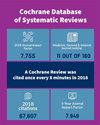
The Cochrane Database of Systematic Reviews (CDSR) stands as the premier database for systematic reviews in healthcare. It comprises Cochrane Reviews, along with protocols for these reviews, editorials, and supplements. Owned and operated by Cochrane, a worldwide independent network of healthcare stakeholders, the CDSR (ISSN 1469-493X) encompasses a broad spectrum of health-related topics, including health services.



 京公网安备 11010802042870号
京ICP备2023020795号-1
京公网安备 11010802042870号
京ICP备2023020795号-1

 分享
分享
 求助内容:
求助内容: 应助结果提醒方式:
 扫码关注我们
