Hiromu Kiba, Hiroichi Miaki, Masami Yokogawa, Hitoshi Asai
{"title":"Lower-limb asymmetry in healthy male athletes.","authors":"Hiromu Kiba, Hiroichi Miaki, Masami Yokogawa, Hitoshi Asai","doi":"10.1589/jpts.37.118","DOIUrl":null,"url":null,"abstract":"<p><p>[Purpose] This study aimed to determine lower extremity asymmetry in healthy males when participating in sports where non-contact injuries are common by comparing lower extremity muscle strength, jumping distance, and change of direction speed between the dominant and non-dominant legs. [Participants and Methods] Study participants included 16 healthy males who had been playing a specific sport for at least four years at the time of measurement. We measured the maximal isometric strength of five muscle groups and conducted six performance tests. The lower-limb symmetry index was calculated as follows: (non-dominant leg/dominant leg) × 100. [Results] Significant differences were found in the strength levels of hip flexors, hip abductors, knee flexors, and knee extensor muscles. The lower-limb symmetry index for all muscles, except for the hip flexors, ranged from 91% to 98%. In the performance tests, significant differences were found in the crossover hop test and the 90° change of direction test. The lower-limb symmetry index ranged from 96% to 103% in all the performance tests. [Conclusion] We suggest that leg dominance be considered in assessments for determining return to sports based on the type of tests employed.</p>","PeriodicalId":16834,"journal":{"name":"Journal of Physical Therapy Science","volume":"37 3","pages":"118-125"},"PeriodicalIF":0.0000,"publicationDate":"2025-03-01","publicationTypes":"Journal Article","fieldsOfStudy":null,"isOpenAccess":false,"openAccessPdf":"https://www.ncbi.nlm.nih.gov/pmc/articles/PMC11872179/pdf/","citationCount":"0","resultStr":null,"platform":"Semanticscholar","paperid":null,"PeriodicalName":"Journal of Physical Therapy Science","FirstCategoryId":"1085","ListUrlMain":"https://doi.org/10.1589/jpts.37.118","RegionNum":0,"RegionCategory":null,"ArticlePicture":[],"TitleCN":null,"AbstractTextCN":null,"PMCID":null,"EPubDate":"","PubModel":"","JCR":"","JCRName":"","Score":null,"Total":0}
引用次数: 0
Abstract
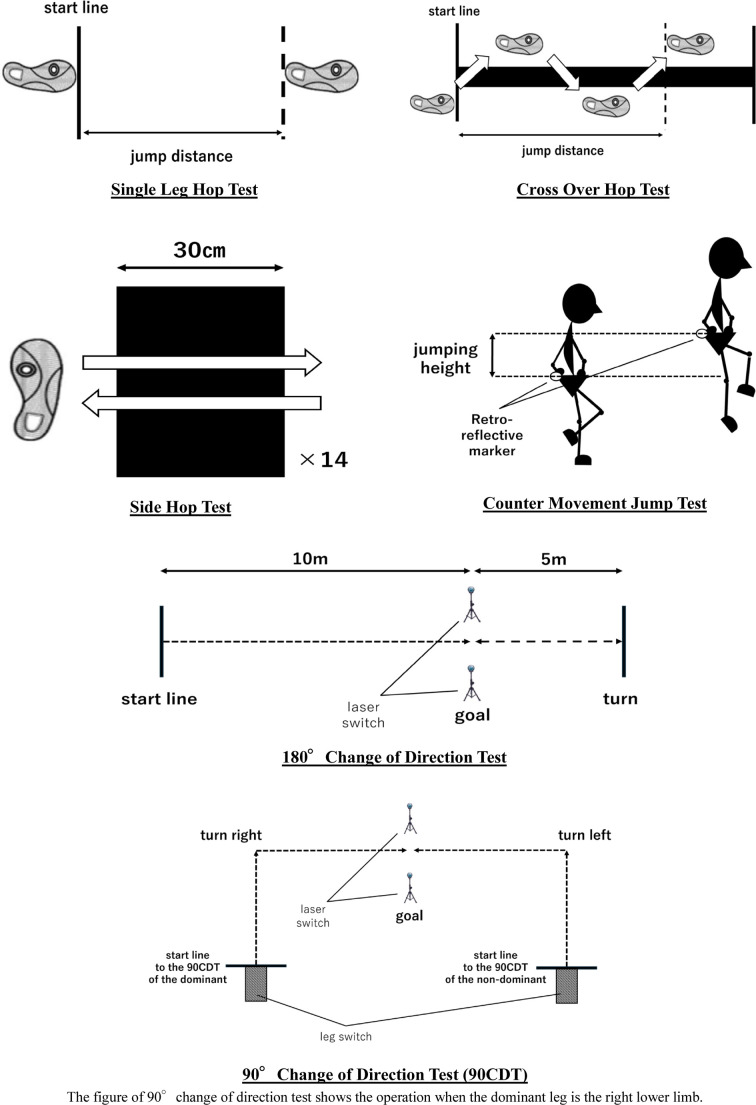
[Purpose] This study aimed to determine lower extremity asymmetry in healthy males when participating in sports where non-contact injuries are common by comparing lower extremity muscle strength, jumping distance, and change of direction speed between the dominant and non-dominant legs. [Participants and Methods] Study participants included 16 healthy males who had been playing a specific sport for at least four years at the time of measurement. We measured the maximal isometric strength of five muscle groups and conducted six performance tests. The lower-limb symmetry index was calculated as follows: (non-dominant leg/dominant leg) × 100. [Results] Significant differences were found in the strength levels of hip flexors, hip abductors, knee flexors, and knee extensor muscles. The lower-limb symmetry index for all muscles, except for the hip flexors, ranged from 91% to 98%. In the performance tests, significant differences were found in the crossover hop test and the 90° change of direction test. The lower-limb symmetry index ranged from 96% to 103% in all the performance tests. [Conclusion] We suggest that leg dominance be considered in assessments for determining return to sports based on the type of tests employed.




 京公网安备 11010802042870号
京ICP备2023020795号-1
京公网安备 11010802042870号
京ICP备2023020795号-1

 分享
分享
 求助内容:
求助内容: 应助结果提醒方式:
 扫码关注我们
