Naeem Goussous, Karima Alghannam, Peter A Than, Aileen X Wang, Ling-Xin Chen, Sophoclis P Alexopoulos, Junichiro Sageshima, Richard V Perez
{"title":"Outcomes of Kidney Transplantation From Donors on Renal Replacement Therapy.","authors":"Naeem Goussous, Karima Alghannam, Peter A Than, Aileen X Wang, Ling-Xin Chen, Sophoclis P Alexopoulos, Junichiro Sageshima, Richard V Perez","doi":"10.1097/TXD.0000000000001771","DOIUrl":null,"url":null,"abstract":"<p><strong>Background: </strong>The increasing demand for organs has pushed transplant providers to expand kidney acceptance criteria. The use of kidneys from donors with AKI has been shown to provide good long-term graft survival. We aim to evaluate and compare the outcomes of deceased donor kidney transplantation from donors with acute kidney injury (AKI), either with or without renal replacement therapy (AKI-RRT) before donation.</p><p><strong>Methods: </strong>A single-center retrospective review of all patients who underwent deceased donor kidney transplantation from AKI donors between 2009 and 2020 was performed. AKI donors were defined on the basis of donor terminal creatinine ≥2.0 mg/dL or use of RRT before donation. We compared the outcomes of recipients receiving a kidney from a donor with AKI versus AKI-RRT. Data are presented as medians (interquartile ranges) and numbers (percentages).</p><p><strong>Results: </strong>Four hundred ninety-six patients were identified, of whom 300 (60.4%) were men with a median age of 57 y at transplantation. Thirty-nine patients received an AKI-RRT, whereas 457 received an AKI kidney. Donors in the AKI-RRT group were younger (28 versus 40), had less incidence of hypertension (15.3% versus 31.9%), and were more likely to be imported (94.9% versus 76.8%). There was a higher incidence of delayed graft function (72% versus 44%, <i>P</i> < 0.001) in the AKI-RRT group. Recipients in both groups had similar 90-d (100% versus 95.2%) and 1-y (100% versus 91.9%) graft survival. With a median follow-up of 5 y, there was no difference in death-censored graft survival in both groups (<i>P</i> = 0.83).</p><p><strong>Conclusions: </strong>Careful selection of kidneys from donors with AKI on RRT can be safely used for kidney transplantation with favorable clinical outcomes.</p>","PeriodicalId":23225,"journal":{"name":"Transplantation Direct","volume":"11 3","pages":"e1771"},"PeriodicalIF":1.9000,"publicationDate":"2025-02-28","publicationTypes":"Journal Article","fieldsOfStudy":null,"isOpenAccess":false,"openAccessPdf":"https://www.ncbi.nlm.nih.gov/pmc/articles/PMC11875594/pdf/","citationCount":"0","resultStr":null,"platform":"Semanticscholar","paperid":null,"PeriodicalName":"Transplantation Direct","FirstCategoryId":"1085","ListUrlMain":"https://doi.org/10.1097/TXD.0000000000001771","RegionNum":0,"RegionCategory":null,"ArticlePicture":[],"TitleCN":null,"AbstractTextCN":null,"PMCID":null,"EPubDate":"2025/3/1 0:00:00","PubModel":"eCollection","JCR":"Q3","JCRName":"TRANSPLANTATION","Score":null,"Total":0}
引用次数: 0
Abstract
Background: The increasing demand for organs has pushed transplant providers to expand kidney acceptance criteria. The use of kidneys from donors with AKI has been shown to provide good long-term graft survival. We aim to evaluate and compare the outcomes of deceased donor kidney transplantation from donors with acute kidney injury (AKI), either with or without renal replacement therapy (AKI-RRT) before donation.
Methods: A single-center retrospective review of all patients who underwent deceased donor kidney transplantation from AKI donors between 2009 and 2020 was performed. AKI donors were defined on the basis of donor terminal creatinine ≥2.0 mg/dL or use of RRT before donation. We compared the outcomes of recipients receiving a kidney from a donor with AKI versus AKI-RRT. Data are presented as medians (interquartile ranges) and numbers (percentages).
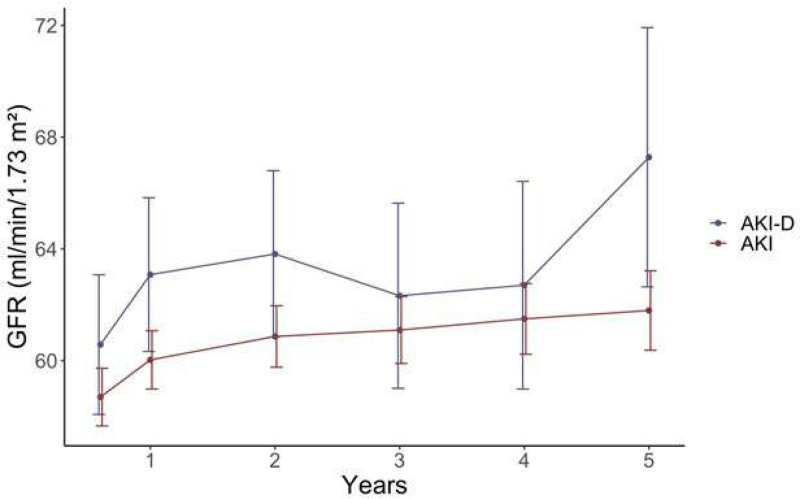
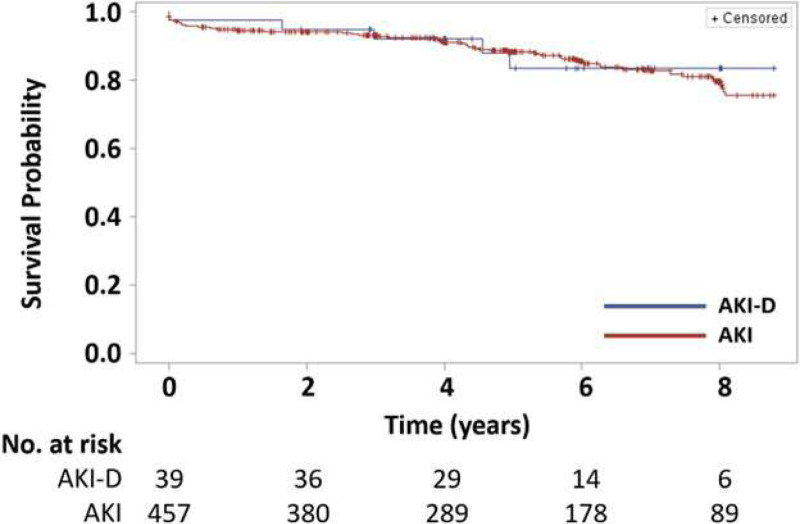
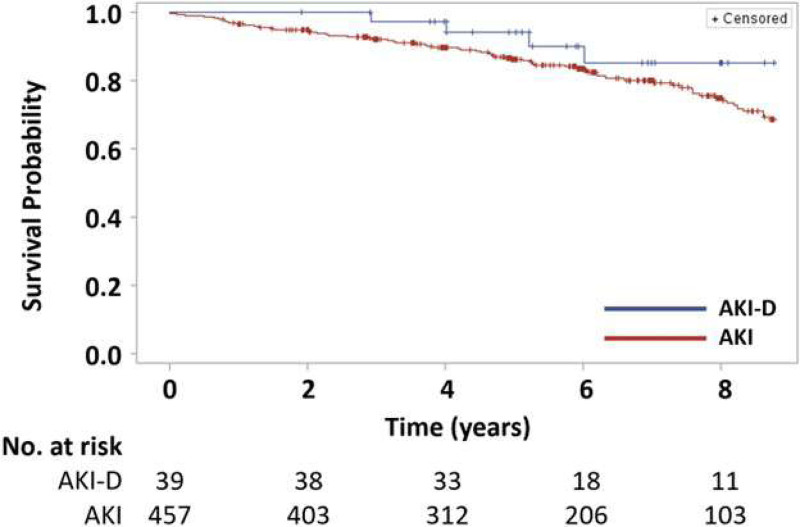
Results: Four hundred ninety-six patients were identified, of whom 300 (60.4%) were men with a median age of 57 y at transplantation. Thirty-nine patients received an AKI-RRT, whereas 457 received an AKI kidney. Donors in the AKI-RRT group were younger (28 versus 40), had less incidence of hypertension (15.3% versus 31.9%), and were more likely to be imported (94.9% versus 76.8%). There was a higher incidence of delayed graft function (72% versus 44%, P < 0.001) in the AKI-RRT group. Recipients in both groups had similar 90-d (100% versus 95.2%) and 1-y (100% versus 91.9%) graft survival. With a median follow-up of 5 y, there was no difference in death-censored graft survival in both groups (P = 0.83).
Conclusions: Careful selection of kidneys from donors with AKI on RRT can be safely used for kidney transplantation with favorable clinical outcomes.




 京公网安备 11010802042870号
京ICP备2023020795号-1
京公网安备 11010802042870号
京ICP备2023020795号-1

 分享
分享
 求助内容:
求助内容: 应助结果提醒方式:
 扫码关注我们
