Jacob R. Sorensen, Daniel B. Hoffman, Christiana J. Raymond-Pope, Thomas J. Lillquist, Amanda M. Russell, Benjamin T. Corona, Sarah M. Greising
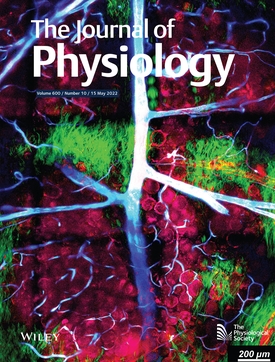
{"title":"Inhibition of ErbB2 mitigates secondary denervation after traumatic muscle injury","authors":"Jacob R. Sorensen, Daniel B. Hoffman, Christiana J. Raymond-Pope, Thomas J. Lillquist, Amanda M. Russell, Benjamin T. Corona, Sarah M. Greising","doi":"10.1113/JP287435","DOIUrl":null,"url":null,"abstract":"<div>\n \n <section>\n \n \n <div>Secondary denervation has recently been described as part of the sequela of volumetric muscle loss (VML) injury, occurring along with a significantly elevated neurotrophic response, specifically neuregulin-1 (NRG1). This may contribute to chronic functional impairments associated with the injury, representing an overlooked treatment target. Thus, though paradoxical, the goal of this study was to pharmacologically reduce neurotrophic signalling after VML using a monoclonal antibody (Herceptin) that inhibits ErbB2 receptors. We also assessed whether ErbB2 inhibition combined with a myogenic treatment (i.e. minced muscle graft) would have a synergistically beneficial effect on function. Adult male Lewis rats underwent surgical induction of tibialis anterior muscle VML injury and were randomized into one of four groups: VML untreated, VML Herceptin, VML muscle graft and VML muscle graft + Herceptin, with comparisons to the contralateral (uninjured) control muscle. Rats receiving Herceptin were administered the drug (8 mg/kg <span>i.p.</span>) at the time of surgery and thrice per week for the duration of the study (48 days). Terminally individual NMJs were quantitatively evaluated, and maximal <i>in vivo</i> torque was tested. ErbB2 inhibition fully restored the normal rates of NMJ innervation and morphology after VML injury, and improved innervation of <i>de novo</i> myofibres after a muscle-graft treatment. However ErbB2 inhibition did not improve skeletal muscle function alone or in combination with a muscle-graft treatment. We conclude that ErbB2 inhibition is a promising therapeutic option for treating VML injury, yet more work is needed to optimize the translation of improved NMJ characteristics to recover function.\n\n <figure>\n <div><picture>\n <source></source></picture><p></p>\n </div>\n </figure>\n </div>\n </section>\n \n <section>\n \n <h3> Key points</h3>\n \n <div>\n <ul>\n \n <li>In cases of complex traumatic musculoskeletal injury, such as volumetric muscle loss (VML), the endogenous ability of skeletal muscle to regenerate and recover function is lost.</li>\n \n <li>Innervation, or the connection of a motor axon to each individual myofibre, is a necessary component of myofibre survival and contractile function, which is disrupted after VML.</li>\n \n <li>Paradoxically a monocolonal antibody inhibitor of neurotrophic signalling (receptor tyrosine kinase ErbB2; Herceptin) has been shown to improve regeneration in rodent models of nerve injury.</li>\n \n <li>Here we show that pharmaceutical ErbB2 inhibition following a rat model of VML improves muscle innervation; however it did not correspondingly recover muscle function.</li>\n \n <li>Although ErbB2 inhibition alone is an ineffective treatment for VML injury, its ability to improve innervation is noteworthy and should be considered as an adjunctive or combinatorial therapy option.</li>\n </ul>\n </div>\n </section>\n </div>","PeriodicalId":50088,"journal":{"name":"Journal of Physiology-London","volume":"603 23","pages":"7531-7548"},"PeriodicalIF":4.4000,"publicationDate":"2025-03-03","publicationTypes":"Journal Article","fieldsOfStudy":null,"isOpenAccess":false,"openAccessPdf":"https://physoc.onlinelibrary.wiley.com/doi/epdf/10.1113/JP287435","citationCount":"0","resultStr":null,"platform":"Semanticscholar","paperid":null,"PeriodicalName":"Journal of Physiology-London","FirstCategoryId":"3","ListUrlMain":"https://physoc.onlinelibrary.wiley.com/doi/10.1113/JP287435","RegionNum":2,"RegionCategory":"医学","ArticlePicture":[],"TitleCN":null,"AbstractTextCN":null,"PMCID":null,"EPubDate":"","PubModel":"","JCR":"Q1","JCRName":"NEUROSCIENCES","Score":null,"Total":0}
引用次数: 0
Abstract
Secondary denervation has recently been described as part of the sequela of volumetric muscle loss (VML) injury, occurring along with a significantly elevated neurotrophic response, specifically neuregulin-1 (NRG1). This may contribute to chronic functional impairments associated with the injury, representing an overlooked treatment target. Thus, though paradoxical, the goal of this study was to pharmacologically reduce neurotrophic signalling after VML using a monoclonal antibody (Herceptin) that inhibits ErbB2 receptors. We also assessed whether ErbB2 inhibition combined with a myogenic treatment (i.e. minced muscle graft) would have a synergistically beneficial effect on function. Adult male Lewis rats underwent surgical induction of tibialis anterior muscle VML injury and were randomized into one of four groups: VML untreated, VML Herceptin, VML muscle graft and VML muscle graft + Herceptin, with comparisons to the contralateral (uninjured) control muscle. Rats receiving Herceptin were administered the drug (8 mg/kg i.p.) at the time of surgery and thrice per week for the duration of the study (48 days). Terminally individual NMJs were quantitatively evaluated, and maximal in vivo torque was tested. ErbB2 inhibition fully restored the normal rates of NMJ innervation and morphology after VML injury, and improved innervation of de novo myofibres after a muscle-graft treatment. However ErbB2 inhibition did not improve skeletal muscle function alone or in combination with a muscle-graft treatment. We conclude that ErbB2 inhibition is a promising therapeutic option for treating VML injury, yet more work is needed to optimize the translation of improved NMJ characteristics to recover function.
Key points
In cases of complex traumatic musculoskeletal injury, such as volumetric muscle loss (VML), the endogenous ability of skeletal muscle to regenerate and recover function is lost.
Innervation, or the connection of a motor axon to each individual myofibre, is a necessary component of myofibre survival and contractile function, which is disrupted after VML.
Paradoxically a monocolonal antibody inhibitor of neurotrophic signalling (receptor tyrosine kinase ErbB2; Herceptin) has been shown to improve regeneration in rodent models of nerve injury.
Here we show that pharmaceutical ErbB2 inhibition following a rat model of VML improves muscle innervation; however it did not correspondingly recover muscle function.
Although ErbB2 inhibition alone is an ineffective treatment for VML injury, its ability to improve innervation is noteworthy and should be considered as an adjunctive or combinatorial therapy option.
期刊介绍:
The Journal of Physiology publishes full-length original Research Papers and Techniques for Physiology, which are short papers aimed at disseminating new techniques for physiological research. Articles solicited by the Editorial Board include Perspectives, Symposium Reports and Topical Reviews, which highlight areas of special physiological interest. CrossTalk articles are short editorial-style invited articles framing a debate between experts in the field on controversial topics. Letters to the Editor and Journal Club articles are also published. All categories of papers are subjected to peer reivew.
The Journal of Physiology welcomes submitted research papers in all areas of physiology. Authors should present original work that illustrates new physiological principles or mechanisms. Papers on work at the molecular level, at the level of the cell membrane, single cells, tissues or organs and on systems physiology are all acceptable. Theoretical papers and papers that use computational models to further our understanding of physiological processes will be considered if based on experimentally derived data and if the hypothesis advanced is directly amenable to experimental testing. While emphasis is on human and mammalian physiology, work on lower vertebrate or invertebrate preparations may be suitable if it furthers the understanding of the functioning of other organisms including mammals.




 京公网安备 11010802042870号
京ICP备2023020795号-1
京公网安备 11010802042870号
京ICP备2023020795号-1

 分享
分享
 求助内容:
求助内容: 应助结果提醒方式:
 扫码关注我们
