Impact of China's Diagnosis-Intervention Packet Policy on Hospitalization Costs for Patients With Malignant Tumors: A 2019-2022 Interrupted Time Series Analysis.
{"title":"Impact of China's Diagnosis-Intervention Packet Policy on Hospitalization Costs for Patients With Malignant Tumors: A 2019-2022 Interrupted Time Series Analysis.","authors":"Mingmin Zhang, Guoping Wang, Hairong Liu, Yufeng Wen, Lingling Chen","doi":"10.2147/RMHP.S502474","DOIUrl":null,"url":null,"abstract":"<p><strong>Purpose: </strong>China's diagnosis-intervention packet (DIP) policy, a medical insurance payment system leveraging big data, was implemented in Wuhu, China, in January 2021. Studies have proven that the DIP has been effective in reducing medication costs for elderly hospital patients with hypertension. However, research on hospitalization costs for other patients remains limited. As the incidence of malignant tumors has increased dramatically in China, this study assesses the system's impact on hospitalization costs for patients with malignant tumors to confirm its broader effects.</p><p><strong>Patients and methods: </strong>Data on patients with malignant tumors (ICD codes C00-C97) were collected from a tertiary medical institution in Wuhu, using the policy's implementation in January 2021 as the beginning timepoint. Outcome indicators included average monthly hospitalization expenses and sub-expenses for hospitalized patients with malignant tumors. A 48-month time-series database was constructed and the interruption time series model used to evaluate the changing trends in expenses before and after the DIP implementation.</p><p><strong>Results: </strong>After DIP implementation, average hospitalization costs for patients with malignant tumors showed a statistically significant downward trend. Subgroup analysis revealed that patients with shorter hospital stays (1-5 days) and cured outcomes saw the biggest expense drop from hospital cost-control effects. The DIP policy also affected cost structures, initially increasing diagnostic fees and consumable costs, but significantly reducing treatment fees, medication costs, and other related costs.</p><p><strong>Conclusion: </strong>The study confirmed the effectiveness of the DIP policy in controlling hospitalization costs for patients with malignant tumors. Going forward, the government should optimize DIP rules to clarify cost calculation methods and prevent excessive use of high-cost diagnostics and consumables. Continued monitoring and evaluation are essential to ensure that the policy's benefits are maintained over time. Medical institutions should improve resource allocation, diagnosis, and treatment efficiency; reduce unnecessary stays; and provide tailored treatment plans and cost support for patients with poor prognosis.</p>","PeriodicalId":56009,"journal":{"name":"Risk Management and Healthcare Policy","volume":"18 ","pages":"655-665"},"PeriodicalIF":2.0000,"publicationDate":"2025-02-27","publicationTypes":"Journal Article","fieldsOfStudy":null,"isOpenAccess":false,"openAccessPdf":"https://www.ncbi.nlm.nih.gov/pmc/articles/PMC11874756/pdf/","citationCount":"0","resultStr":null,"platform":"Semanticscholar","paperid":null,"PeriodicalName":"Risk Management and Healthcare Policy","FirstCategoryId":"3","ListUrlMain":"https://doi.org/10.2147/RMHP.S502474","RegionNum":4,"RegionCategory":"医学","ArticlePicture":[],"TitleCN":null,"AbstractTextCN":null,"PMCID":null,"EPubDate":"2025/1/1 0:00:00","PubModel":"eCollection","JCR":"Q2","JCRName":"HEALTH CARE SCIENCES & SERVICES","Score":null,"Total":0}
引用次数: 0
Abstract
Purpose: China's diagnosis-intervention packet (DIP) policy, a medical insurance payment system leveraging big data, was implemented in Wuhu, China, in January 2021. Studies have proven that the DIP has been effective in reducing medication costs for elderly hospital patients with hypertension. However, research on hospitalization costs for other patients remains limited. As the incidence of malignant tumors has increased dramatically in China, this study assesses the system's impact on hospitalization costs for patients with malignant tumors to confirm its broader effects.
Patients and methods: Data on patients with malignant tumors (ICD codes C00-C97) were collected from a tertiary medical institution in Wuhu, using the policy's implementation in January 2021 as the beginning timepoint. Outcome indicators included average monthly hospitalization expenses and sub-expenses for hospitalized patients with malignant tumors. A 48-month time-series database was constructed and the interruption time series model used to evaluate the changing trends in expenses before and after the DIP implementation.
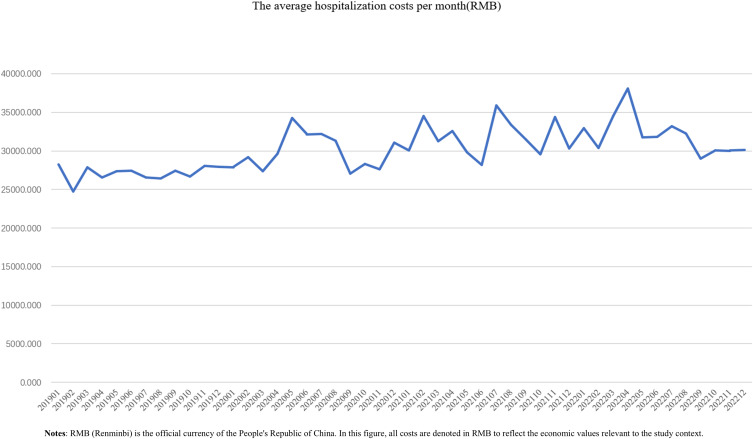
Results: After DIP implementation, average hospitalization costs for patients with malignant tumors showed a statistically significant downward trend. Subgroup analysis revealed that patients with shorter hospital stays (1-5 days) and cured outcomes saw the biggest expense drop from hospital cost-control effects. The DIP policy also affected cost structures, initially increasing diagnostic fees and consumable costs, but significantly reducing treatment fees, medication costs, and other related costs.
Conclusion: The study confirmed the effectiveness of the DIP policy in controlling hospitalization costs for patients with malignant tumors. Going forward, the government should optimize DIP rules to clarify cost calculation methods and prevent excessive use of high-cost diagnostics and consumables. Continued monitoring and evaluation are essential to ensure that the policy's benefits are maintained over time. Medical institutions should improve resource allocation, diagnosis, and treatment efficiency; reduce unnecessary stays; and provide tailored treatment plans and cost support for patients with poor prognosis.
期刊介绍:
Risk Management and Healthcare Policy is an international, peer-reviewed, open access journal focusing on all aspects of public health, policy and preventative measures to promote good health and improve morbidity and mortality in the population. Specific topics covered in the journal include:
Public and community health
Policy and law
Preventative and predictive healthcare
Risk and hazard management
Epidemiology, detection and screening
Lifestyle and diet modification
Vaccination and disease transmission/modification programs
Health and safety and occupational health
Healthcare services provision
Health literacy and education
Advertising and promotion of health issues
Health economic evaluations and resource management
Risk Management and Healthcare Policy focuses on human interventional and observational research. The journal welcomes submitted papers covering original research, clinical and epidemiological studies, reviews and evaluations, guidelines, expert opinion and commentary, and extended reports. Case reports will only be considered if they make a valuable and original contribution to the literature. The journal does not accept study protocols, animal-based or cell line-based studies.



 京公网安备 11010802042870号
京ICP备2023020795号-1
京公网安备 11010802042870号
京ICP备2023020795号-1

 分享
分享
 求助内容:
求助内容: 应助结果提醒方式:
 扫码关注我们
