Field efficacy of a bioherbicide mimic (DiS-NH2) in a nanoparticle formulation for weed control in durum wheat

IF 4.2 1区 农林科学 Q1 AGRONOMY Pest Management Science Pub Date : 2025-03-04 DOI:10.1002/ps.8749
Aurelio Scavo, Francisco J Rodríguez-Mejías, Nuria Chinchilla, José MG Molinillo, Stefan Schwaiger, Alexander KH Weiss, Giovanni Mauromicale, Francisco A Macías
{"title":"Field efficacy of a bioherbicide mimic (DiS-NH2) in a nanoparticle formulation for weed control in durum wheat","authors":"Aurelio Scavo,&nbsp;Francisco J Rodríguez-Mejías,&nbsp;Nuria Chinchilla,&nbsp;José MG Molinillo,&nbsp;Stefan Schwaiger,&nbsp;Alexander KH Weiss,&nbsp;Giovanni Mauromicale,&nbsp;Francisco A Macías","doi":"10.1002/ps.8749","DOIUrl":null,"url":null,"abstract":"<div>\n \n \n <section>\n \n <h3> BACKGROUND</h3>\n \n <p>Weed-resistance phenomena have increased dramatically in recent years. Bioherbicides can offer a sustainable alternative to chemical weed control but they often have low water solubility and therefore low efficacy in the field. The research reported here represents the first study on the field efficacy against weeds of a nanoencapsulated bioherbicide mimic of aminophenoxazinones, namely DiS-NH<sub>2</sub> (2,2′-disulphanediyldianiline). Field experiments were carried out across three different locations to evaluate the bioherbicide disulphide mimic at standard (T1, 0.75 g m<sup>−2</sup>) and double (T2, 1.5 g m<sup>−2</sup>) doses when compared to no weed control (NC) and chemical weed controlled (PC) in durum wheat.</p>\n </section>\n \n <section>\n \n <h3> RESULTS</h3>\n \n <p>The nanoencapsulated bioherbicide displayed better soil permeability than the free compound and also showed lower ecotoxicity on comparing the toxic doses on the <i>Caenorhabditis elegans</i> nematode model. It was found that T2 gave the best performance in terms of phytotoxicity (−57% weed biomass when compared with NC) and crop yield enhancement (3.2 <i>versus</i> 2.2 Mg ha<sup>−1</sup> grain yield), while T1 showed comparable results to PC. T1 and T2 did not cause shifts in weed communities and this is consistent with a broad spectrum of phytotoxicity. Moreover, the nanoparticle formulation tested in this study provided stable results across all three locations.</p>\n </section>\n \n <section>\n \n <h3> CONCLUSION</h3>\n \n <p>It is reported here for the first time that a nanoencapsulated DiS-NH<sub>2</sub> bioherbicide mimic provided an efficient post-emergence and contact bioherbicide that can control a wide range of weed species in durum wheat without damaging the crop. The mimic also has low ecotoxicity and improved soil permeability. © 2025 The Author(s). <i>Pest Management Science</i> published by John Wiley &amp; Sons Ltd on behalf of Society of Chemical Industry.</p>\n </section>\n </div>","PeriodicalId":218,"journal":{"name":"Pest Management Science","volume":"81 7","pages":"3796-3810"},"PeriodicalIF":4.2000,"publicationDate":"2025-03-04","publicationTypes":"Journal Article","fieldsOfStudy":null,"isOpenAccess":false,"openAccessPdf":"https://onlinelibrary.wiley.com/doi/epdf/10.1002/ps.8749","citationCount":"0","resultStr":null,"platform":"Semanticscholar","paperid":null,"PeriodicalName":"Pest Management Science","FirstCategoryId":"97","ListUrlMain":"https://scijournals.onlinelibrary.wiley.com/doi/10.1002/ps.8749","RegionNum":1,"RegionCategory":"农林科学","ArticlePicture":[],"TitleCN":null,"AbstractTextCN":null,"PMCID":null,"EPubDate":"","PubModel":"","JCR":"Q1","JCRName":"AGRONOMY","Score":null,"Total":0}
引用次数: 0

Abstract

BACKGROUND

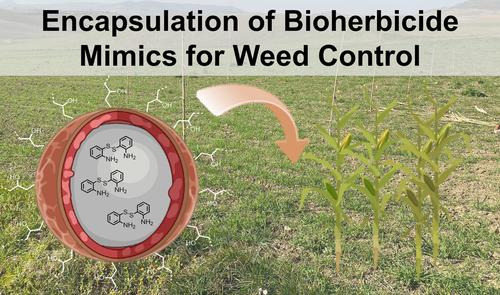
Weed-resistance phenomena have increased dramatically in recent years. Bioherbicides can offer a sustainable alternative to chemical weed control but they often have low water solubility and therefore low efficacy in the field. The research reported here represents the first study on the field efficacy against weeds of a nanoencapsulated bioherbicide mimic of aminophenoxazinones, namely DiS-NH2 (2,2′-disulphanediyldianiline). Field experiments were carried out across three different locations to evaluate the bioherbicide disulphide mimic at standard (T1, 0.75 g m−2) and double (T2, 1.5 g m−2) doses when compared to no weed control (NC) and chemical weed controlled (PC) in durum wheat.

RESULTS

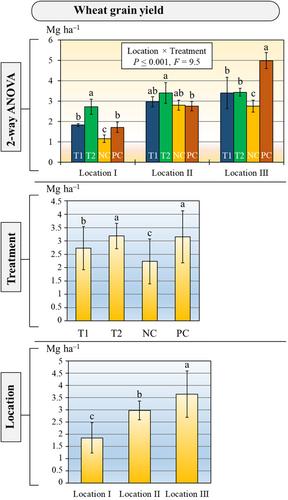
The nanoencapsulated bioherbicide displayed better soil permeability than the free compound and also showed lower ecotoxicity on comparing the toxic doses on the Caenorhabditis elegans nematode model. It was found that T2 gave the best performance in terms of phytotoxicity (−57% weed biomass when compared with NC) and crop yield enhancement (3.2 versus 2.2 Mg ha−1 grain yield), while T1 showed comparable results to PC. T1 and T2 did not cause shifts in weed communities and this is consistent with a broad spectrum of phytotoxicity. Moreover, the nanoparticle formulation tested in this study provided stable results across all three locations.

CONCLUSION

It is reported here for the first time that a nanoencapsulated DiS-NH2 bioherbicide mimic provided an efficient post-emergence and contact bioherbicide that can control a wide range of weed species in durum wheat without damaging the crop. The mimic also has low ecotoxicity and improved soil permeability. © 2025 The Author(s). Pest Management Science published by John Wiley & Sons Ltd on behalf of Society of Chemical Industry.
Abstract Image

Abstract Image

Abstract Image

Abstract Image

Abstract Image

查看原文
分享 分享
微信好友 朋友圈 QQ好友 复制链接
本刊更多论文
一种生物除草剂模拟物(DiS-NH2)在纳米颗粒配方中防治硬粒小麦杂草的田间效果
近年来,杂草抗性现象急剧增加。生物除草剂是化学除草的可持续替代品,但其水溶性较低,田间药效较低。本研究首次对氨基苯恶嗪类纳米生物除草剂DiS-NH2(2,2′-二硫二苯基二苯胺)的田间药效进行了研究。在三个不同的地点进行了田间试验,以评估标准剂量(T1, 0.75 g m−2)和双倍剂量(T2, 1.5 g m−2)的生物除草剂二硫模拟剂与无杂草控制(NC)和化学杂草控制(PC)在硬粒小麦上的效果。
本文章由计算机程序翻译,如有差异,请以英文原文为准。
求助全文
约1分钟内获得全文 去求助
来源期刊
Pest Management Science
Pest Management Science 农林科学-昆虫学
CiteScore
7.90
自引率
9.80%
发文量
553
审稿时长
4.8 months
期刊介绍: Pest Management Science is the international journal of research and development in crop protection and pest control. Since its launch in 1970, the journal has become the premier forum for papers on the discovery, application, and impact on the environment of products and strategies designed for pest management. Published for SCI by John Wiley & Sons Ltd.
期刊最新文献
RETRACTED: Revealing pest patterns: A comparative spatial distribution analysis of insect threats in Kharif rice across the key agricultural regions in the Eastern India. Discovery of the microtubule-severing protein as the target of antifungal compound heat-stable antifungal factor in Fusarium graminearum and rational design of novel inhibitors. Leaf penetration by endophytic Metarhizium brunneum enables infection of Phthorimaea absoluta in tomato mines while inducing the crop defense system. Geographic structure and human-mediated gene flow in driving genetic diversity of Heterodera glycines: A mitochondrial COI-based cross-regional analysis. Testing optimal defense theory: Root resistance selection in chicory (Cichorium intybus) reduces foliar defense and alters aphid performance and feeding behavior.
×
引用
GB/T 7714-2015
复制
MLA
复制
APA
复制
导出至
BibTeX EndNote RefMan NoteFirst NoteExpress
×
×
提示
您的信息不完整,为了账户安全,请先补充。
现在去补充
×
提示
您因"违规操作"
具体请查看互助需知
我知道了
×
提示
现在去查看 取消
×
提示
确定
0
微信
客服QQ
Book学术公众号 扫码关注我们
反馈
×
意见反馈
请填写您的意见或建议
请填写您的手机或邮箱
已复制链接
已复制链接
快去分享给好友吧!
我知道了
×
扫码分享
扫码分享
Book学术官方微信
Book学术官方微信
Book学术文献互助
Book学术文献互助群
群 号:604180095
Book学术
文献互助 智能选刊 最新文献 互助须知 联系我们:info@booksci.cn
Book学术提供免费学术资源搜索服务,方便国内外学者检索中英文文献。致力于提供最便捷和优质的服务体验。
Copyright © 2023 Book学术 All rights reserved.
ghs 京公网安备 11010802042870号 京ICP备2023020795号-1