Flexibility, Resistance, Aerobic, Movement Execution (FRAME) training program to improve gait capacity in adults with Hereditary Spastic Paraplegia: protocol for a single-cohort feasibility trial.
Leonardo Boccuni, Marco Bortolini, Cristina Stefan, Valentina Dal Molin, Giacomo Dalla Valle, Andrea Martinuzzi
{"title":"Flexibility, Resistance, Aerobic, Movement Execution (FRAME) training program to improve gait capacity in adults with Hereditary Spastic Paraplegia: protocol for a single-cohort feasibility trial.","authors":"Leonardo Boccuni, Marco Bortolini, Cristina Stefan, Valentina Dal Molin, Giacomo Dalla Valle, Andrea Martinuzzi","doi":"10.3389/fneur.2025.1441512","DOIUrl":null,"url":null,"abstract":"<p><strong>Background: </strong>Hereditary Spastic Paraplegia (HSP) is a heterogeneous group of inherited neurological disorders characterized by progressive weakness and spasticity in the lower limbs, significantly affecting gait capacity (endurance and speed). Although specific interventions have been already investigated, there is currently a lack of comprehensive, structured neurorehabilitation programs to improve gait capacity in adults with HSP. Thus, this protocol aims to explore the feasibility and effectiveness of a composite training targeting flexibility, muscle strength, motor control, balance, and aerobic capacity.</p><p><strong>Methods: </strong>20 adults diagnosed with HSP will participate in 10 to 16 therapist-guided sessions (intervention), lasting 60 to 120 minutes each, occurring once or twice weekly based on individual preferences. Depending on the number and frequency of sessions, the intervention period may vary in between five to 10 weeks. Upon completion, participants will receive a transfer package (manual, video tutorials) to stimulate long-term exercise at home. Assessments will take place before intervention (T0), at the end of the intervention (T1), and 12 weeks post-T1 (T2). Primary outcomes will focus on feasibility (recruitment, retention, adherence, absence of adverse events, and patient's satisfaction). Secondary outcomes will evaluate improvements in gait capacity and specific contributing factors such as reduced spasticity, increased muscle strength, and improved balance.</p><p><strong>Relevance: </strong>The significance of this protocol is to provide valuable insights for clinicians regarding the feasibility and potential efficacy of a comprehensive, clinical-oriented program to improve gait capacity in adults with HSP, and inform future translational research studies in the field.</p><p><strong>Clinical trial registration: </strong>ClinicalTrials.gov, identifier NCT06742697.</p>","PeriodicalId":12575,"journal":{"name":"Frontiers in Neurology","volume":"16 ","pages":"1441512"},"PeriodicalIF":2.8000,"publicationDate":"2025-02-18","publicationTypes":"Journal Article","fieldsOfStudy":null,"isOpenAccess":false,"openAccessPdf":"https://www.ncbi.nlm.nih.gov/pmc/articles/PMC11877901/pdf/","citationCount":"0","resultStr":null,"platform":"Semanticscholar","paperid":null,"PeriodicalName":"Frontiers in Neurology","FirstCategoryId":"3","ListUrlMain":"https://doi.org/10.3389/fneur.2025.1441512","RegionNum":3,"RegionCategory":"医学","ArticlePicture":[],"TitleCN":null,"AbstractTextCN":null,"PMCID":null,"EPubDate":"2025/1/1 0:00:00","PubModel":"eCollection","JCR":"Q2","JCRName":"CLINICAL NEUROLOGY","Score":null,"Total":0}
引用次数: 0
Abstract
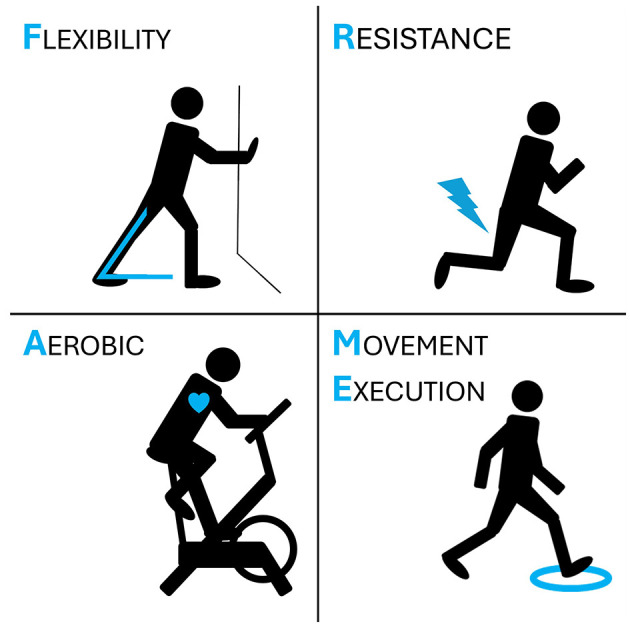
Background: Hereditary Spastic Paraplegia (HSP) is a heterogeneous group of inherited neurological disorders characterized by progressive weakness and spasticity in the lower limbs, significantly affecting gait capacity (endurance and speed). Although specific interventions have been already investigated, there is currently a lack of comprehensive, structured neurorehabilitation programs to improve gait capacity in adults with HSP. Thus, this protocol aims to explore the feasibility and effectiveness of a composite training targeting flexibility, muscle strength, motor control, balance, and aerobic capacity.
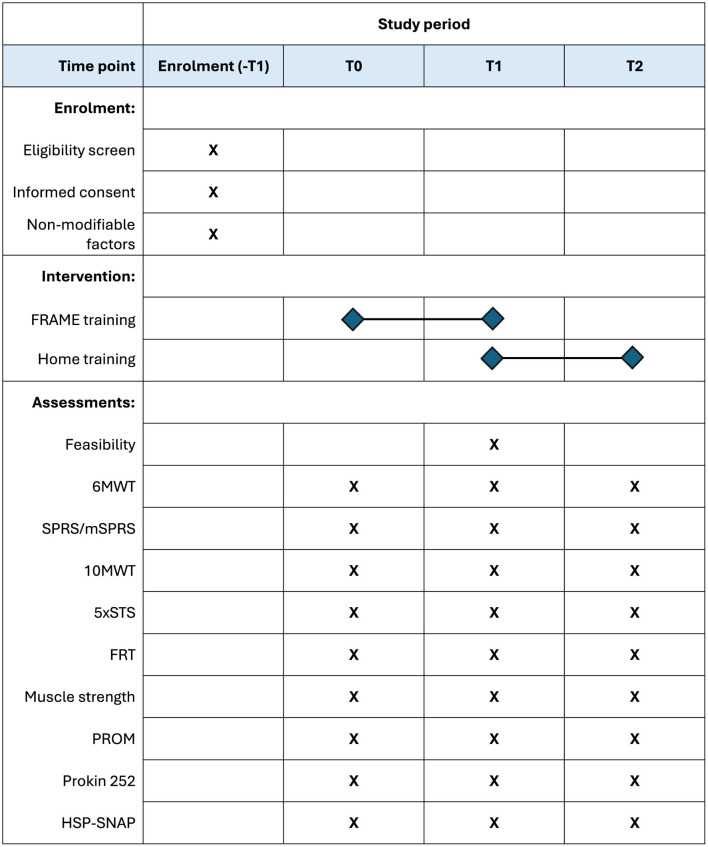
Methods: 20 adults diagnosed with HSP will participate in 10 to 16 therapist-guided sessions (intervention), lasting 60 to 120 minutes each, occurring once or twice weekly based on individual preferences. Depending on the number and frequency of sessions, the intervention period may vary in between five to 10 weeks. Upon completion, participants will receive a transfer package (manual, video tutorials) to stimulate long-term exercise at home. Assessments will take place before intervention (T0), at the end of the intervention (T1), and 12 weeks post-T1 (T2). Primary outcomes will focus on feasibility (recruitment, retention, adherence, absence of adverse events, and patient's satisfaction). Secondary outcomes will evaluate improvements in gait capacity and specific contributing factors such as reduced spasticity, increased muscle strength, and improved balance.
Relevance: The significance of this protocol is to provide valuable insights for clinicians regarding the feasibility and potential efficacy of a comprehensive, clinical-oriented program to improve gait capacity in adults with HSP, and inform future translational research studies in the field.
期刊介绍:
The section Stroke aims to quickly and accurately publish important experimental, translational and clinical studies, and reviews that contribute to the knowledge of stroke, its causes, manifestations, diagnosis, and management.



 京公网安备 11010802042870号
京ICP备2023020795号-1
京公网安备 11010802042870号
京ICP备2023020795号-1

 分享
分享
 求助内容:
求助内容: 应助结果提醒方式:
 扫码关注我们
