Michael J Rempe, Ian Rasmussen, Kevin Gregory, Cheyenne Johnson, Matthew Hsin, Erin Flynn-Evans, Amanda Lamp, Cassie J Hilditch
{"title":"Layover start timing predicts layover sleep quantity and timing on long-range and ultra-long-range trips.","authors":"Michael J Rempe, Ian Rasmussen, Kevin Gregory, Cheyenne Johnson, Matthew Hsin, Erin Flynn-Evans, Amanda Lamp, Cassie J Hilditch","doi":"10.1093/sleepadvances/zpaf002","DOIUrl":null,"url":null,"abstract":"<p><strong>Study objectives: </strong>Airline transport pilot sleep during layover is an important factor for alertness on subsequent flights. Assessing pilots' sleep on layover is an important first step in helping them obtain the most recuperative sleep possible on layover. Here, we investigate the quantity and timing of sleep during layovers and determine predictors for layover sleep.</p><p><strong>Methods: </strong>Sleep was assessed in 256 pilots flying a total of 473 long-range (LR; flight time 12-16 hours) or ultra-long-range (ULR; flight time <i>></i> 16 hours) trips. Sleep was assessed using actigraphy. We employed linear mixed-effects models with layover sleep characteristics as the outcomes. The predictor variables included operational factors and sleep history.</p><p><strong>Results: </strong>Overall, pilots averaged 7.2 hours of sleep per 24 hours of layover, which was significantly less than their daily sleep before or after the trip. Layover start time (relative to home base time) was the most salient predictor of sleep timing and quantity during both shorter (∼24-hour) and the first 24 hours of longer (∼48-hour) layovers. During the last 24 hours of longer layovers, crew type predicted sleep quantity.</p><p><strong>Conclusions: </strong>Although average sleep quantity during layovers was within the margins of recommended sleep duration, it was still less than pre- and post-trip sleep duration, suggesting modest sleep loss on layovers. Layover start timing was the strongest predictor of layover sleep quantity and timing and, thus, may be a modifiable factor to protect circadian-aligned sleep opportunities during layover.</p>","PeriodicalId":74808,"journal":{"name":"Sleep advances : a journal of the Sleep Research Society","volume":"6 1","pages":"zpaf002"},"PeriodicalIF":0.0000,"publicationDate":"2025-02-02","publicationTypes":"Journal Article","fieldsOfStudy":null,"isOpenAccess":false,"openAccessPdf":"https://www.ncbi.nlm.nih.gov/pmc/articles/PMC11879054/pdf/","citationCount":"0","resultStr":null,"platform":"Semanticscholar","paperid":null,"PeriodicalName":"Sleep advances : a journal of the Sleep Research Society","FirstCategoryId":"1085","ListUrlMain":"https://doi.org/10.1093/sleepadvances/zpaf002","RegionNum":0,"RegionCategory":null,"ArticlePicture":[],"TitleCN":null,"AbstractTextCN":null,"PMCID":null,"EPubDate":"2025/1/1 0:00:00","PubModel":"eCollection","JCR":"","JCRName":"","Score":null,"Total":0}
引用次数: 0
Abstract
Study objectives: Airline transport pilot sleep during layover is an important factor for alertness on subsequent flights. Assessing pilots' sleep on layover is an important first step in helping them obtain the most recuperative sleep possible on layover. Here, we investigate the quantity and timing of sleep during layovers and determine predictors for layover sleep.
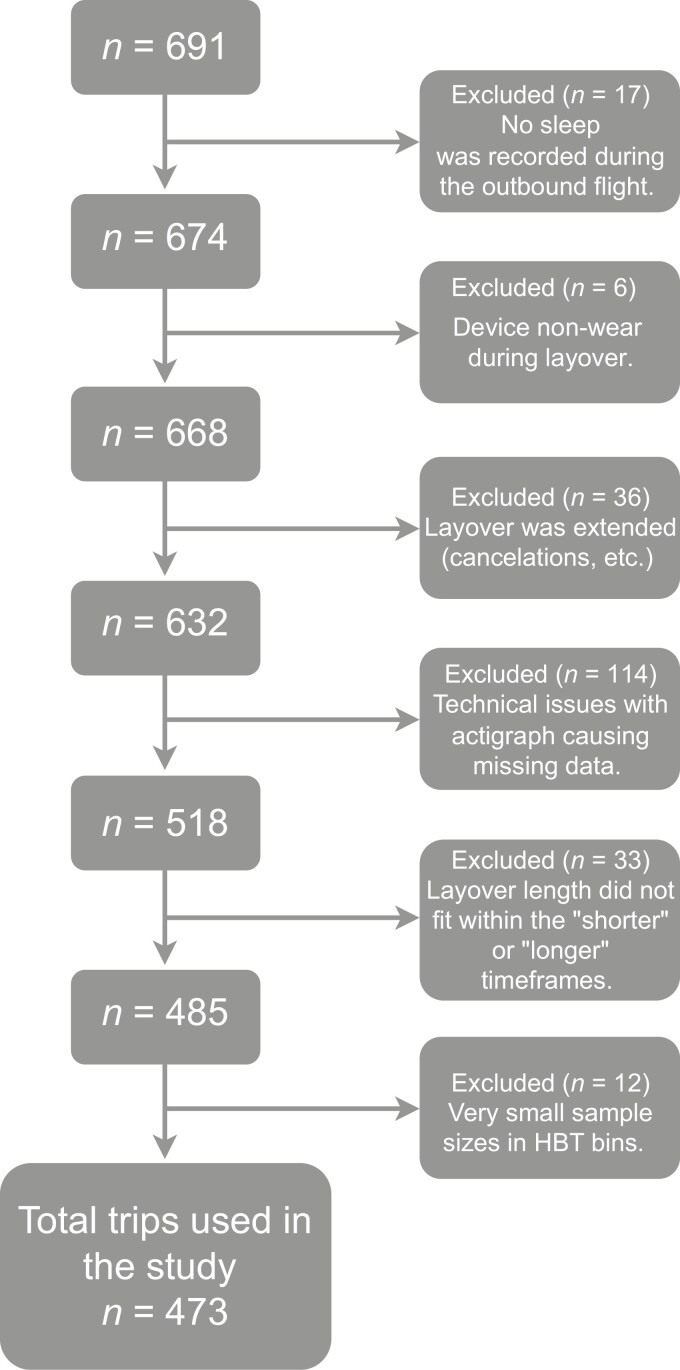
Methods: Sleep was assessed in 256 pilots flying a total of 473 long-range (LR; flight time 12-16 hours) or ultra-long-range (ULR; flight time > 16 hours) trips. Sleep was assessed using actigraphy. We employed linear mixed-effects models with layover sleep characteristics as the outcomes. The predictor variables included operational factors and sleep history.
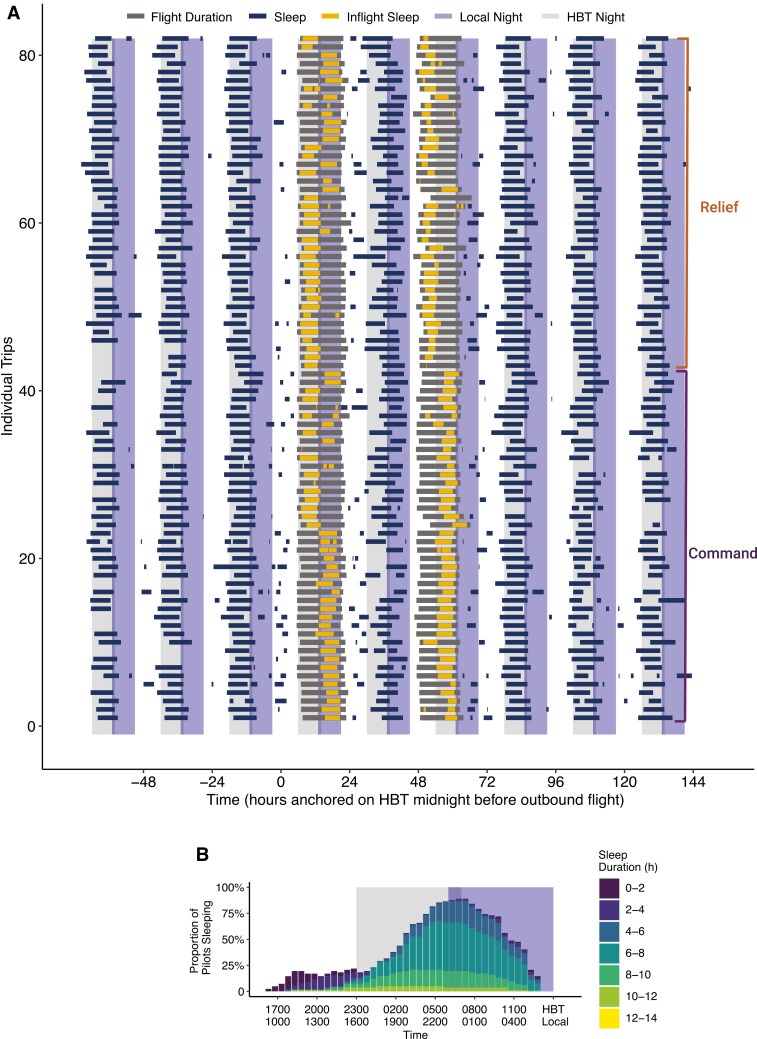
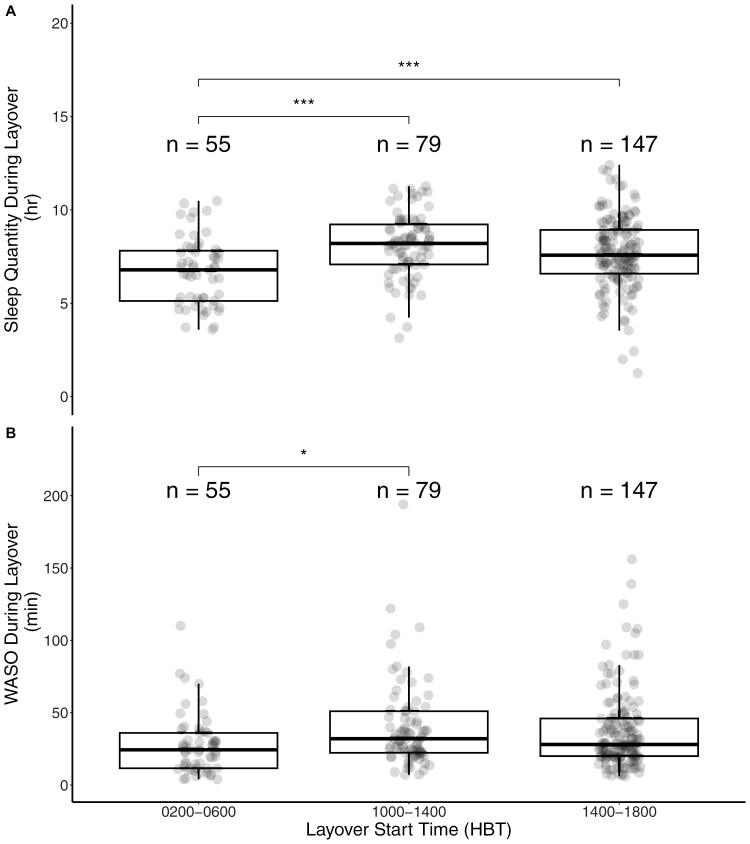
Results: Overall, pilots averaged 7.2 hours of sleep per 24 hours of layover, which was significantly less than their daily sleep before or after the trip. Layover start time (relative to home base time) was the most salient predictor of sleep timing and quantity during both shorter (∼24-hour) and the first 24 hours of longer (∼48-hour) layovers. During the last 24 hours of longer layovers, crew type predicted sleep quantity.
Conclusions: Although average sleep quantity during layovers was within the margins of recommended sleep duration, it was still less than pre- and post-trip sleep duration, suggesting modest sleep loss on layovers. Layover start timing was the strongest predictor of layover sleep quantity and timing and, thus, may be a modifiable factor to protect circadian-aligned sleep opportunities during layover.



 京公网安备 11010802042870号
京ICP备2023020795号-1
京公网安备 11010802042870号
京ICP备2023020795号-1

 分享
分享

 求助内容:
求助内容: 应助结果提醒方式:
 扫码关注我们
