{"title":"Beyond phytic acid: Nutrigenetic and nutrigenomic insights into its hydrolysis, transport, and metabolism","authors":"Suyun Choi, Sangyong Choi","doi":"10.1016/j.jafr.2025.101758","DOIUrl":null,"url":null,"abstract":"<div><div>Phytic acid (inositol hexakisphosphate, IP6), often known as an antinutrient for its mineral-chelating properties, has emerged as a precursor to bioactive metabolites with significant health roles. Its hydrolysis, mediated by gut microbiota and host enzymes, generates lower inositol phosphates (IPs) and myo-inositol (MI), which are involved in gene regulation, signaling pathways, and metabolic processes. IP6 metabolism is highly variable among individuals, driven by differences in gut microbiota composition, genetic variability, and complex host-microbiome interactions. Microbial phytase activity varies with species diversity, contributing to the production of metabolites like short-chain fatty acids, which influence host health. Genetic variations in human phytase enzymes, nutrient transporters, and regulatory pathways further affect the metabolism of IP6 and its derivatives, shaping individual responses. These processes modulate immune function, cancer prevention, and other health-related pathways, but also underscore the duality of IP6, which offers antioxidant benefits and reduced glycation-linked diabetes complications while potentially chelating essential minerals like calcium, iron, and zinc. This review synthesizes the mechanisms of IP6 hydrolysis, absorption, and metabolism, integrating findings from nutrigenetics, nutrigenomics, and microbiome research. It highlights the potential of precision nutrition strategies by addressing individual variability in IP6 and IPs metabolic responses. The complexity of IP6 metabolism presents challenges but offers opportunities for personalized dietary interventions tailored to genetic and microbial profiles.</div></div>","PeriodicalId":34393,"journal":{"name":"Journal of Agriculture and Food Research","volume":"20 ","pages":"Article 101758"},"PeriodicalIF":7.2000,"publicationDate":"2025-04-01","publicationTypes":"Journal Article","fieldsOfStudy":null,"isOpenAccess":false,"openAccessPdf":"","citationCount":"0","resultStr":null,"platform":"Semanticscholar","paperid":null,"PeriodicalName":"Journal of Agriculture and Food Research","FirstCategoryId":"1085","ListUrlMain":"https://www.sciencedirect.com/science/article/pii/S2666154325001292","RegionNum":0,"RegionCategory":null,"ArticlePicture":[],"TitleCN":null,"AbstractTextCN":null,"PMCID":null,"EPubDate":"2025/2/25 0:00:00","PubModel":"Epub","JCR":"Q1","JCRName":"AGRICULTURE, MULTIDISCIPLINARY","Score":null,"Total":0}
引用次数: 0
Abstract
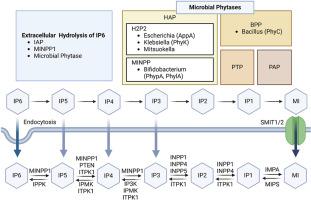
Phytic acid (inositol hexakisphosphate, IP6), often known as an antinutrient for its mineral-chelating properties, has emerged as a precursor to bioactive metabolites with significant health roles. Its hydrolysis, mediated by gut microbiota and host enzymes, generates lower inositol phosphates (IPs) and myo-inositol (MI), which are involved in gene regulation, signaling pathways, and metabolic processes. IP6 metabolism is highly variable among individuals, driven by differences in gut microbiota composition, genetic variability, and complex host-microbiome interactions. Microbial phytase activity varies with species diversity, contributing to the production of metabolites like short-chain fatty acids, which influence host health. Genetic variations in human phytase enzymes, nutrient transporters, and regulatory pathways further affect the metabolism of IP6 and its derivatives, shaping individual responses. These processes modulate immune function, cancer prevention, and other health-related pathways, but also underscore the duality of IP6, which offers antioxidant benefits and reduced glycation-linked diabetes complications while potentially chelating essential minerals like calcium, iron, and zinc. This review synthesizes the mechanisms of IP6 hydrolysis, absorption, and metabolism, integrating findings from nutrigenetics, nutrigenomics, and microbiome research. It highlights the potential of precision nutrition strategies by addressing individual variability in IP6 and IPs metabolic responses. The complexity of IP6 metabolism presents challenges but offers opportunities for personalized dietary interventions tailored to genetic and microbial profiles.





 京公网安备 11010802042870号
京ICP备2023020795号-1
京公网安备 11010802042870号
京ICP备2023020795号-1

 分享
分享
 求助内容:
求助内容: 应助结果提醒方式:
 扫码关注我们
