Surgical risk of CSF leakage following endoscopic transorbital approach for anterior and middle skull base pathologies: a systematic review and meta-analysis.
Sergio Corvino, Jacopo Berardinelli, Giuseppe Corazzelli, Roberto Altieri, Iacopo Dallan, Francesco Corrivetti, Matteo de Notaris
{"title":"Surgical risk of CSF leakage following endoscopic transorbital approach for anterior and middle skull base pathologies: a systematic review and meta-analysis.","authors":"Sergio Corvino, Jacopo Berardinelli, Giuseppe Corazzelli, Roberto Altieri, Iacopo Dallan, Francesco Corrivetti, Matteo de Notaris","doi":"10.1007/s10143-025-03426-z","DOIUrl":null,"url":null,"abstract":"<p><p>The endoscopic superior eyelid transorbital approach (SETOA) has demonstrated considerable versatility and effectiveness in managing various paramedian anterior and middle skull base pathologies. However, as with any relatively new technique, potential complications remain. We conducted an extensive literature search in MEDLINE and Embase in accordance with PRISMA guidelines including case reports and surgical series reporting cerebrospinal fluid (CSF) leak rate following SETOA for intracranial pathologies. Factors analyzed included lesion location (extra- or intra-axial), reconstruction techniques, and complication management. ROBINS-I tool was employed to assess the risk of bias. Twenty-five studies including 240 cases were eligible. The majority of lesions were intradural extra-axial (68.3%), while trigeminal schwannomas comprised all extradural cases (25.0%). Sixteen patients (6.6%) presented intradural intra-axial tumors. Osteodural reconstruction involved dural substitutes in one third of the cases (32.5%) either alone (14.2%) or combined with fat free graft (18.3%). CSF leak occurred in 6 patients (2.50%), mostly resolving via conservative management (66.6%). The risk of postoperative CSF leak was found to be significantly higher in patients undergoing resection for intra-axial tumors (OR 0.13, 95% CI: 0.04-0.49) compared to those undergoing resection for extra-axial (OR 0.01, 95% CI: 0.00-0.02; I<sup>2</sup> = 0%; p < 0.001). Key limitations include the retrospective nature and small sample sizes among included studies as well as data heterogeneity and lack of standardized protocols for reconstruction across studies. SETOA appears safe for addressing selected extradural and intradural skull base pathologies with a low postoperative CSF leak rate. The natural repositioning of the orbital content to its original position may be instrumental in preventing its postoperative occurrence. The investigation followed a prespecified protocol registered on PROSPERO (PROSPERO 2024 CRD42024614111).</p>","PeriodicalId":19184,"journal":{"name":"Neurosurgical Review","volume":"48 1","pages":"282"},"PeriodicalIF":2.5000,"publicationDate":"2025-03-06","publicationTypes":"Journal Article","fieldsOfStudy":null,"isOpenAccess":false,"openAccessPdf":"https://www.ncbi.nlm.nih.gov/pmc/articles/PMC11882707/pdf/","citationCount":"0","resultStr":null,"platform":"Semanticscholar","paperid":null,"PeriodicalName":"Neurosurgical Review","FirstCategoryId":"3","ListUrlMain":"https://doi.org/10.1007/s10143-025-03426-z","RegionNum":3,"RegionCategory":"医学","ArticlePicture":[],"TitleCN":null,"AbstractTextCN":null,"PMCID":null,"EPubDate":"","PubModel":"","JCR":"Q2","JCRName":"CLINICAL NEUROLOGY","Score":null,"Total":0}
引用次数: 0
Abstract
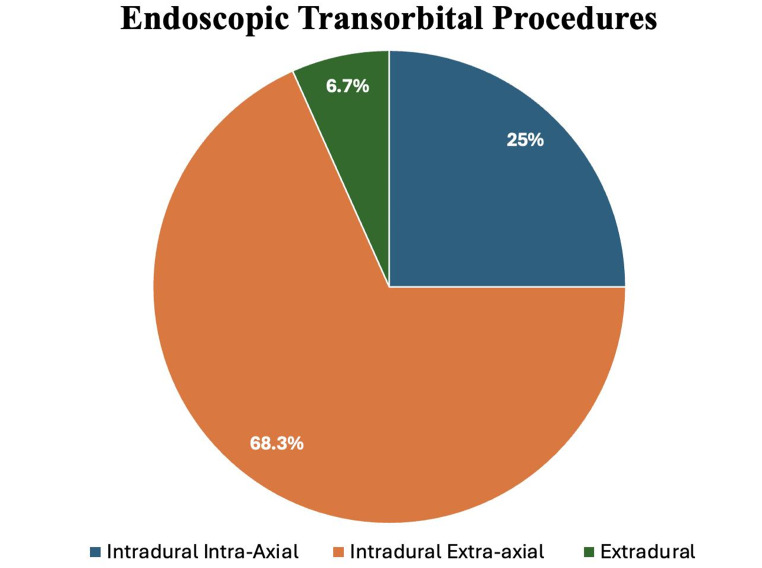
The endoscopic superior eyelid transorbital approach (SETOA) has demonstrated considerable versatility and effectiveness in managing various paramedian anterior and middle skull base pathologies. However, as with any relatively new technique, potential complications remain. We conducted an extensive literature search in MEDLINE and Embase in accordance with PRISMA guidelines including case reports and surgical series reporting cerebrospinal fluid (CSF) leak rate following SETOA for intracranial pathologies. Factors analyzed included lesion location (extra- or intra-axial), reconstruction techniques, and complication management. ROBINS-I tool was employed to assess the risk of bias. Twenty-five studies including 240 cases were eligible. The majority of lesions were intradural extra-axial (68.3%), while trigeminal schwannomas comprised all extradural cases (25.0%). Sixteen patients (6.6%) presented intradural intra-axial tumors. Osteodural reconstruction involved dural substitutes in one third of the cases (32.5%) either alone (14.2%) or combined with fat free graft (18.3%). CSF leak occurred in 6 patients (2.50%), mostly resolving via conservative management (66.6%). The risk of postoperative CSF leak was found to be significantly higher in patients undergoing resection for intra-axial tumors (OR 0.13, 95% CI: 0.04-0.49) compared to those undergoing resection for extra-axial (OR 0.01, 95% CI: 0.00-0.02; I2 = 0%; p < 0.001). Key limitations include the retrospective nature and small sample sizes among included studies as well as data heterogeneity and lack of standardized protocols for reconstruction across studies. SETOA appears safe for addressing selected extradural and intradural skull base pathologies with a low postoperative CSF leak rate. The natural repositioning of the orbital content to its original position may be instrumental in preventing its postoperative occurrence. The investigation followed a prespecified protocol registered on PROSPERO (PROSPERO 2024 CRD42024614111).
期刊介绍:
The goal of Neurosurgical Review is to provide a forum for comprehensive reviews on current issues in neurosurgery. Each issue contains up to three reviews, reflecting all important aspects of one topic (a disease or a surgical approach). Comments by a panel of experts within the same issue complete the topic. By providing comprehensive coverage of one topic per issue, Neurosurgical Review combines the topicality of professional journals with the indepth treatment of a monograph. Original papers of high quality are also welcome.





 京公网安备 11010802042870号
京ICP备2023020795号-1
京公网安备 11010802042870号
京ICP备2023020795号-1

 分享
分享
 求助内容:
求助内容: 应助结果提醒方式:
 扫码关注我们
