Julia S Slagter, Carolina A M Schurink, Ga-Lai M Chong, Marlies E J Reinders, Robert J Porte, Robert C Minnee
{"title":"Limited Risk of Microbial Contamination During Hypothermic and Normothermic Machine Perfusion of Donor Kidneys.","authors":"Julia S Slagter, Carolina A M Schurink, Ga-Lai M Chong, Marlies E J Reinders, Robert J Porte, Robert C Minnee","doi":"10.1111/tid.70019","DOIUrl":null,"url":null,"abstract":"<p><strong>Background: </strong>Both hypothermic machine perfusion (HMP) and normothermic machine perfusion (NMP) are increasingly used for preservation of deceased donor kidneys. However, especially NMP can pose as a risk for microbial contamination of the kidney graft as the 37°C perfusate can act as a breeding ground for microbial contaminants.</p><p><strong>Methods: </strong>In this study, we investigated the cultures of HMP and NMP perfusates of deceased donor kidneys.</p><p><strong>Results: </strong>Between January 2021 and April 2024, a total of 99 perfusates were examined (73 HMP and 26 NMP perfusates)-. We found that contamination of HMP perfusate was common, occurring in 21 of 73 cultures (29%). Most bacteria originated from the skin. Microbial contamination during NMP was rare, occurring only in 2 of 26 cultures (8%). Microbial contamination during machine perfusion did not lead to infectious complications in the recipients.</p><p><strong>Conclusion: </strong>Machine perfusion poses a very limited risk of infection in kidney transplant recipients.</p>","PeriodicalId":23318,"journal":{"name":"Transplant Infectious Disease","volume":" ","pages":"e70019"},"PeriodicalIF":2.6000,"publicationDate":"2025-05-01","publicationTypes":"Journal Article","fieldsOfStudy":null,"isOpenAccess":false,"openAccessPdf":"https://www.ncbi.nlm.nih.gov/pmc/articles/PMC12205300/pdf/","citationCount":"0","resultStr":null,"platform":"Semanticscholar","paperid":null,"PeriodicalName":"Transplant Infectious Disease","FirstCategoryId":"3","ListUrlMain":"https://doi.org/10.1111/tid.70019","RegionNum":4,"RegionCategory":"医学","ArticlePicture":[],"TitleCN":null,"AbstractTextCN":null,"PMCID":null,"EPubDate":"2025/3/6 0:00:00","PubModel":"Epub","JCR":"Q3","JCRName":"IMMUNOLOGY","Score":null,"Total":0}
引用次数: 0
Abstract
Background: Both hypothermic machine perfusion (HMP) and normothermic machine perfusion (NMP) are increasingly used for preservation of deceased donor kidneys. However, especially NMP can pose as a risk for microbial contamination of the kidney graft as the 37°C perfusate can act as a breeding ground for microbial contaminants.
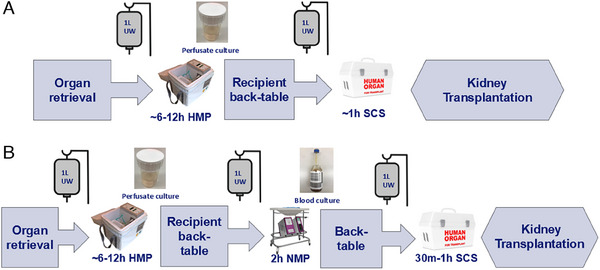
Methods: In this study, we investigated the cultures of HMP and NMP perfusates of deceased donor kidneys.
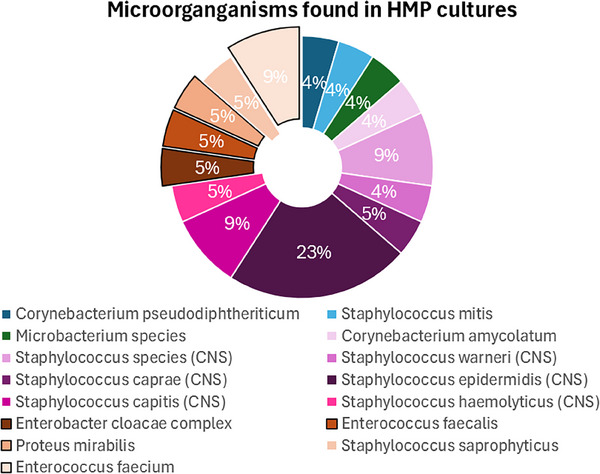
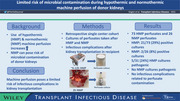
Results: Between January 2021 and April 2024, a total of 99 perfusates were examined (73 HMP and 26 NMP perfusates)-. We found that contamination of HMP perfusate was common, occurring in 21 of 73 cultures (29%). Most bacteria originated from the skin. Microbial contamination during NMP was rare, occurring only in 2 of 26 cultures (8%). Microbial contamination during machine perfusion did not lead to infectious complications in the recipients.
Conclusion: Machine perfusion poses a very limited risk of infection in kidney transplant recipients.
期刊介绍:
Transplant Infectious Disease has been established as a forum for presenting the most current information on the prevention and treatment of infection complicating organ and bone marrow transplantation. The point of view of the journal is that infection and allograft rejection (or graft-versus-host disease) are closely intertwined, and that advances in one area will have immediate consequences on the other. The interaction of the transplant recipient with potential microbial invaders, the impact of immunosuppressive strategies on this interaction, and the effects of cytokines, growth factors, and chemokines liberated during the course of infections, rejection, or graft-versus-host disease are central to the interests and mission of this journal.
Transplant Infectious Disease is aimed at disseminating the latest information relevant to the infectious disease complications of transplantation to clinicians and scientists involved in bone marrow, kidney, liver, heart, lung, intestinal, and pancreatic transplantation. The infectious disease consequences and concerns regarding innovative transplant strategies, from novel immunosuppressive agents to xenotransplantation, are very much a concern of this journal. In addition, this journal feels a particular responsibility to inform primary care practitioners in the community, who increasingly are sharing the responsibility for the care of these patients, of the special considerations regarding the prevention and treatment of infection in transplant recipients. As exemplified by the international editorial board, articles are sought throughout the world that address both general issues and those of a more restricted geographic import.



 京公网安备 11010802042870号
京ICP备2023020795号-1
京公网安备 11010802042870号
京ICP备2023020795号-1

 分享
分享
 求助内容:
求助内容: 应助结果提醒方式:
 扫码关注我们
