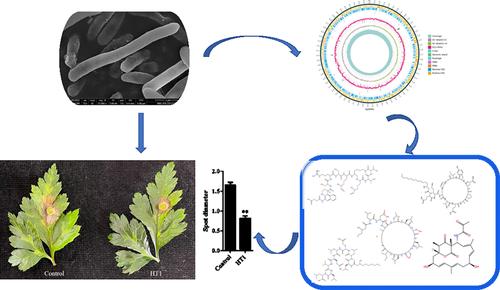
Southern blight, caused by Sclerotium rolfsii, poses a formidable threat to the cultivation of Coptis chinensis, especially affecting both yield and crop quality. Given the environmental harm associated with chemical fungicides, microbial antagonists are emerging as a viable solution for plant disease management. This study aimed to identify bacterial strains with antagonistic properties against southern blight in Coptis chinensis and to evaluate their biocontrol capabilities.
Using the dilution plating method, 164 bacterial strains were isolated from the rhizosphere soil of Coptis chinensis. Among these, 17 strains demonstrated significant antagonistic activity against Sclerotium rolfsii. Pseudomonas fluorescens HT1 was identified as the most promising candidate due to its broad-spectrum inhibitory effects on various fungal pathogens and its effectiveness in preventing southern blight. Genome-wide analysis revealed that the HT1 strain possesses seven gene clusters involved in the synthesis of secondary metabolites known to antagonize pathogenic fungi. These metabolites include Pf-5 pyrrolidene dihydropyran and 2,4-diacetylbenzofuran, which may serve as the active components underlying HT1's antagonistic activity against Sclerotium rolfsii.
This study underscores the biocontrol potential of Pseudomonas fluorescens HT1 and provides a scientific foundation for its development as an eco-friendly bio-fungicide, offering a viable alternative to chemical fungicides in the management of southern blight. © 2025 Society of Chemical Industry.







 京公网安备 11010802042870号
京ICP备2023020795号-1
京公网安备 11010802042870号
京ICP备2023020795号-1

 分享
分享
 求助内容:
求助内容: 应助结果提醒方式:
 扫码关注我们
