J J Coughlan, Robert A Byrne, Georgios C M Siontis, Laurna McGovern, Rory Durand, Anne Lübbeke, Arjola Bano, Alan G Fraser
{"title":"Inclusion and reporting by age, sex, and ethnicity in clinical studies of high-risk medical devices approved in the European Union.","authors":"J J Coughlan, Robert A Byrne, Georgios C M Siontis, Laurna McGovern, Rory Durand, Anne Lübbeke, Arjola Bano, Alan G Fraser","doi":"10.1093/ehjqcco/qcaf007","DOIUrl":null,"url":null,"abstract":"<p><strong>Introduction: </strong>Adequate inclusion and representation of patients in clinical studies is critical for the generalizability of research findings. The aim of this analysis was to determine inclusion and reporting by age, sex, and ethnicity in clinical studies of high-risk medical devices (orthopaedic, diabetes, and cardiovascular) approved in the European Union.</p><p><strong>Methods: </strong>This is an analysis of data from three co-ordinated systematic reviews of clinical evidence for high-risk medical devices. This analysis includes 641 studies, reporting on more than 1.9 million patients treated with high-risk orthopaedic, diabetes, and cardiovascular medical devices. The main outcomes were the proportions of studies providing data on the age, sex, and ethnicity of participants, and the performance of stratified analyses based on these factors.</p><p><strong>Results: </strong>The majority (>90%) of studies in all three device categories (orthopaedics, diabetes, and cardiovascular) provided data on the age and sex of participants, but only a minority (<10%) provided information on ethnicity. Female patients comprised over half of the patients in the included orthopaedic and diabetes device studies, but <40% of patients in the included cardiovascular device studies (P < 0.001). A minority of studies performed analyses stratified by age (14.6%) or sex (10.4%), although those were more frequently reported in randomized studies.</p><p><strong>Conclusions: </strong>Almost all studies in this analysis provided demographic data on age and sex, but only a small minority had analysed whether these factors had any impact on device performance. Very few studies provided information on the ethnicity of study participants. Cardiovascular device studies enrolled a lower proportion of female patients in comparison to orthopaedic and diabetes device studies.</p><p><strong>Study registration: </strong>Cardiovascular device systematic review: PROSPERO (CRD42022308593). Diabetes device systematic review: PROSPERO (CRD42022366871). Orthopaedic device systematic review: open science framework (https://osf.io/6gmyx).</p>","PeriodicalId":11869,"journal":{"name":"European Heart Journal - Quality of Care and Clinical Outcomes","volume":" ","pages":"962-968"},"PeriodicalIF":4.6000,"publicationDate":"2025-11-04","publicationTypes":"Journal Article","fieldsOfStudy":null,"isOpenAccess":false,"openAccessPdf":"https://www.ncbi.nlm.nih.gov/pmc/articles/PMC12587281/pdf/","citationCount":"0","resultStr":null,"platform":"Semanticscholar","paperid":null,"PeriodicalName":"European Heart Journal - Quality of Care and Clinical Outcomes","FirstCategoryId":"3","ListUrlMain":"https://doi.org/10.1093/ehjqcco/qcaf007","RegionNum":2,"RegionCategory":"医学","ArticlePicture":[],"TitleCN":null,"AbstractTextCN":null,"PMCID":null,"EPubDate":"","PubModel":"","JCR":"Q1","JCRName":"CARDIAC & CARDIOVASCULAR SYSTEMS","Score":null,"Total":0}
引用次数: 0
Abstract
Introduction: Adequate inclusion and representation of patients in clinical studies is critical for the generalizability of research findings. The aim of this analysis was to determine inclusion and reporting by age, sex, and ethnicity in clinical studies of high-risk medical devices (orthopaedic, diabetes, and cardiovascular) approved in the European Union.
Methods: This is an analysis of data from three co-ordinated systematic reviews of clinical evidence for high-risk medical devices. This analysis includes 641 studies, reporting on more than 1.9 million patients treated with high-risk orthopaedic, diabetes, and cardiovascular medical devices. The main outcomes were the proportions of studies providing data on the age, sex, and ethnicity of participants, and the performance of stratified analyses based on these factors.
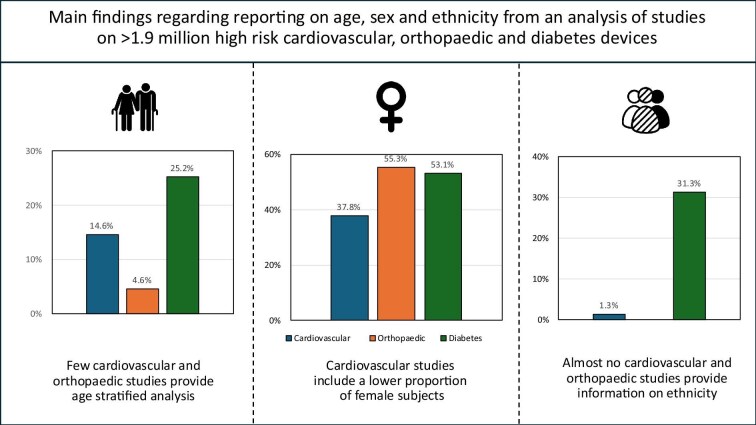
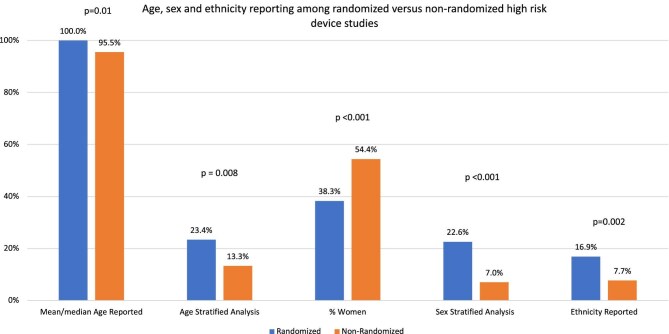
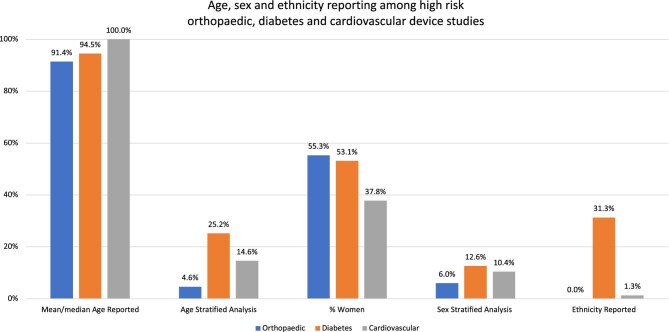
Results: The majority (>90%) of studies in all three device categories (orthopaedics, diabetes, and cardiovascular) provided data on the age and sex of participants, but only a minority (<10%) provided information on ethnicity. Female patients comprised over half of the patients in the included orthopaedic and diabetes device studies, but <40% of patients in the included cardiovascular device studies (P < 0.001). A minority of studies performed analyses stratified by age (14.6%) or sex (10.4%), although those were more frequently reported in randomized studies.
Conclusions: Almost all studies in this analysis provided demographic data on age and sex, but only a small minority had analysed whether these factors had any impact on device performance. Very few studies provided information on the ethnicity of study participants. Cardiovascular device studies enrolled a lower proportion of female patients in comparison to orthopaedic and diabetes device studies.
期刊介绍:
European Heart Journal - Quality of Care & Clinical Outcomes is an English language, peer-reviewed journal dedicated to publishing cardiovascular outcomes research. It serves as an official journal of the European Society of Cardiology and maintains a close alliance with the European Heart Health Institute. The journal disseminates original research and topical reviews contributed by health scientists globally, with a focus on the quality of care and its impact on cardiovascular outcomes at the hospital, national, and international levels. It provides a platform for presenting the most outstanding cardiovascular outcomes research to influence cardiovascular public health policy on a global scale. Additionally, the journal aims to motivate young investigators and foster the growth of the outcomes research community.



 京公网安备 11010802042870号
京ICP备2023020795号-1
京公网安备 11010802042870号
京ICP备2023020795号-1

 分享
分享
 求助内容:
求助内容: 应助结果提醒方式:
 扫码关注我们
