{"title":"Biomechanical effects of altered multifidus muscle morphology on cervical spine tissues.","authors":"Guangming Xu, Chenxing Li, Zhizhong Sheng","doi":"10.3389/fbioe.2025.1524844","DOIUrl":null,"url":null,"abstract":"<p><strong>Background: </strong>Muscle fat infiltration and atrophy were common pathomorphologic changes in the paravertebral muscles. Some studies indicated that degeneration of paravertebral muscles may be one of the important causes of chronic neck pain. Therefore, we investigated the mechanical effects of multifidus muscle morphologic changes on cervical spine tissues by constructing cervical spine models of multfiidus muscle with different degrees of atrophy.</p><p><strong>Method: </strong>Three-dimensional finite element models of the cervical spine with 100%, 80%, and 50% with the multifidus muscle were constructed by referring to previous literature. According to the mechanical loading conditions in previous literature, the patient's head weight and 1 Nm of loading were considered to be applied to the cervical spine, and the mechanical differences in the cervical intervertebral discs, joint capsule, cartilage endplates and range of motion (ROM) due to the morphological changes of the multifidus muscle were recorded and analyzed.</p><p><strong>Result: </strong>Under anterior flexion loading, model C increasing by 55% and 22% at the C5-6 segment compared to A and B, respectively. Among the three model groups, the stresses in the discs of the lower segments (C4-C7) were significantly higher than those in the upper segments. Under posterior extension loading, the strain values of the joint capsule were higher in the lower cervical segments, with the maximum strain values in the C5-6 segments. The maximum strain values in the lower cartilage endplates were in the C5-6 segments in model group A, whereas the maximum values were in the C4-5 segments in both models B and C. The maximum values in the lower cervical segments were in the C4-6 and C4-5 segments. In addition, a similar trend described above occurs in lateral bending and axial rotation conditions. The ROM of the lower cervical was higher than that of the upper cervical vertebrae, except in lateral bending conditions.</p><p><strong>Conclusion: </strong>In this study, we constructed the morphology of the multifidus muscle to more realistically simulate the mechanical environment of the cervical spine <i>in vivo</i> and quantitatively explored the effects of multifidus muscle atrophy on cervical spine tissues. The results showed that volume atrophy of the multifidus muscle altered the mechanical response of cervical spine tissues. Volume atrophy of the multifidus muscle significantly increased the mechanical indexes of the cervical spine tissues, in which the cervical disc stresses, joint capsule strains, and cartilage endplates increased significantly. Compared with the mechanical changes in the upper cervical segments, the mechanical changes in the lower cervical segments were higher. Therefore, it is important to moderately increase the functional exercise of the multifidus muscle to prevent atrophy leading to abnormal stress concentrations in cervical tissues.</p>","PeriodicalId":12444,"journal":{"name":"Frontiers in Bioengineering and Biotechnology","volume":"13 ","pages":"1524844"},"PeriodicalIF":4.8000,"publicationDate":"2025-02-20","publicationTypes":"Journal Article","fieldsOfStudy":null,"isOpenAccess":false,"openAccessPdf":"https://www.ncbi.nlm.nih.gov/pmc/articles/PMC11882557/pdf/","citationCount":"0","resultStr":null,"platform":"Semanticscholar","paperid":null,"PeriodicalName":"Frontiers in Bioengineering and Biotechnology","FirstCategoryId":"5","ListUrlMain":"https://doi.org/10.3389/fbioe.2025.1524844","RegionNum":3,"RegionCategory":"工程技术","ArticlePicture":[],"TitleCN":null,"AbstractTextCN":null,"PMCID":null,"EPubDate":"2025/1/1 0:00:00","PubModel":"eCollection","JCR":"Q1","JCRName":"BIOTECHNOLOGY & APPLIED MICROBIOLOGY","Score":null,"Total":0}
引用次数: 0
Abstract
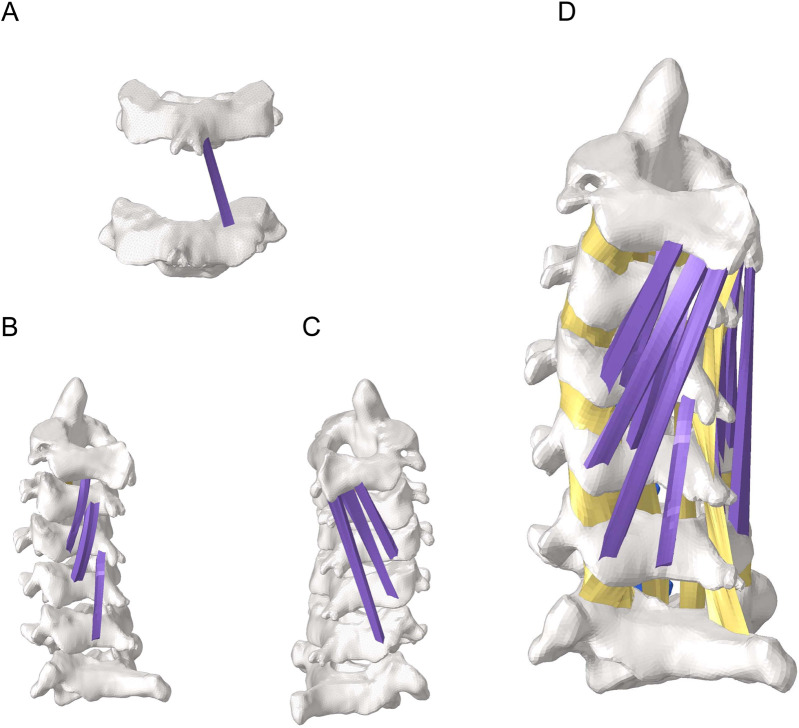
Background: Muscle fat infiltration and atrophy were common pathomorphologic changes in the paravertebral muscles. Some studies indicated that degeneration of paravertebral muscles may be one of the important causes of chronic neck pain. Therefore, we investigated the mechanical effects of multifidus muscle morphologic changes on cervical spine tissues by constructing cervical spine models of multfiidus muscle with different degrees of atrophy.
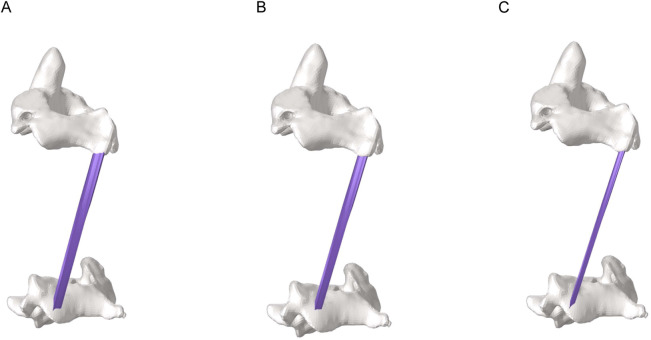
Method: Three-dimensional finite element models of the cervical spine with 100%, 80%, and 50% with the multifidus muscle were constructed by referring to previous literature. According to the mechanical loading conditions in previous literature, the patient's head weight and 1 Nm of loading were considered to be applied to the cervical spine, and the mechanical differences in the cervical intervertebral discs, joint capsule, cartilage endplates and range of motion (ROM) due to the morphological changes of the multifidus muscle were recorded and analyzed.
Result: Under anterior flexion loading, model C increasing by 55% and 22% at the C5-6 segment compared to A and B, respectively. Among the three model groups, the stresses in the discs of the lower segments (C4-C7) were significantly higher than those in the upper segments. Under posterior extension loading, the strain values of the joint capsule were higher in the lower cervical segments, with the maximum strain values in the C5-6 segments. The maximum strain values in the lower cartilage endplates were in the C5-6 segments in model group A, whereas the maximum values were in the C4-5 segments in both models B and C. The maximum values in the lower cervical segments were in the C4-6 and C4-5 segments. In addition, a similar trend described above occurs in lateral bending and axial rotation conditions. The ROM of the lower cervical was higher than that of the upper cervical vertebrae, except in lateral bending conditions.
Conclusion: In this study, we constructed the morphology of the multifidus muscle to more realistically simulate the mechanical environment of the cervical spine in vivo and quantitatively explored the effects of multifidus muscle atrophy on cervical spine tissues. The results showed that volume atrophy of the multifidus muscle altered the mechanical response of cervical spine tissues. Volume atrophy of the multifidus muscle significantly increased the mechanical indexes of the cervical spine tissues, in which the cervical disc stresses, joint capsule strains, and cartilage endplates increased significantly. Compared with the mechanical changes in the upper cervical segments, the mechanical changes in the lower cervical segments were higher. Therefore, it is important to moderately increase the functional exercise of the multifidus muscle to prevent atrophy leading to abnormal stress concentrations in cervical tissues.
期刊介绍:
The translation of new discoveries in medicine to clinical routine has never been easy. During the second half of the last century, thanks to the progress in chemistry, biochemistry and pharmacology, we have seen the development and the application of a large number of drugs and devices aimed at the treatment of symptoms, blocking unwanted pathways and, in the case of infectious diseases, fighting the micro-organisms responsible. However, we are facing, today, a dramatic change in the therapeutic approach to pathologies and diseases. Indeed, the challenge of the present and the next decade is to fully restore the physiological status of the diseased organism and to completely regenerate tissue and organs when they are so seriously affected that treatments cannot be limited to the repression of symptoms or to the repair of damage. This is being made possible thanks to the major developments made in basic cell and molecular biology, including stem cell science, growth factor delivery, gene isolation and transfection, the advances in bioengineering and nanotechnology, including development of new biomaterials, biofabrication technologies and use of bioreactors, and the big improvements in diagnostic tools and imaging of cells, tissues and organs.
In today`s world, an enhancement of communication between multidisciplinary experts, together with the promotion of joint projects and close collaborations among scientists, engineers, industry people, regulatory agencies and physicians are absolute requirements for the success of any attempt to develop and clinically apply a new biological therapy or an innovative device involving the collective use of biomaterials, cells and/or bioactive molecules. “Frontiers in Bioengineering and Biotechnology” aspires to be a forum for all people involved in the process by bridging the gap too often existing between a discovery in the basic sciences and its clinical application.





 京公网安备 11010802042870号
京ICP备2023020795号-1
京公网安备 11010802042870号
京ICP备2023020795号-1

 分享
分享
 求助内容:
求助内容: 应助结果提醒方式:
 扫码关注我们
