Toward industrial C8 production: oxygen intrusion drives renewable n-caprylate production from ethanol and acetate via intermediate metabolite production†
Kurt Gemeinhardt , Byoung Seung Jeon , Jean Nepomuscene Ntihuga , Han Wang , Caroline Schlaiß , Timo N. Lucas , Irina Bessarab , Nicolas Nalpas , Nanqing Zhou , Joseph G. Usack , Daniel H. Huson , Rohan B. H. Williams , Boris Maček , Ludmilla Aristilde , Largus T. Angenent
{"title":"Toward industrial C8 production: oxygen intrusion drives renewable n-caprylate production from ethanol and acetate via intermediate metabolite production†","authors":"Kurt Gemeinhardt , Byoung Seung Jeon , Jean Nepomuscene Ntihuga , Han Wang , Caroline Schlaiß , Timo N. Lucas , Irina Bessarab , Nicolas Nalpas , Nanqing Zhou , Joseph G. Usack , Daniel H. Huson , Rohan B. H. Williams , Boris Maček , Ludmilla Aristilde , Largus T. Angenent","doi":"10.1039/d5gc00411j","DOIUrl":null,"url":null,"abstract":"<div><div>Previous bioreactor studies achieved high volumetric <em>n</em>-caprylate (<em>i.e.</em>, <em>n</em>-octanoate) production rates and selectivities from ethanol and acetate with chain-elongating microbiomes. However, the metabolic pathways from the substrates to <em>n</em>-caprylate synthesis were unclear. We operated two <em>n</em>-caprylate-producing upflow bioreactors with a synthetic medium to study the underlying metabolic pathways. The operating period exceeded 2.5 years, with a peak volumetric <em>n</em>-caprylate production rate of 190 ± 8.4 mmol C L<sup>−1</sup> d<sup>−1</sup> (0.14 g L<sup>−1</sup> h<sup>−1</sup>). We identified oxygen availability as a critical performance parameter, facilitating intermediate metabolite production from ethanol. Bottle experiments in the presence and absence of oxygen with <sup>13</sup>C-labeled ethanol suggest acetyl-coenzyme A-based derived production of <em>n</em>-butyrate (<em>i.e.</em>, <em>n</em>-butanoate), <em>n</em>-caproate (<em>i.e.</em>, <em>n</em>-hexanoate), and <em>n</em>-caprylate. Here, we postulate a trophic hierarchy within the bioreactor microbiomes based on metagenomics, metaproteomics, and metabolomics data, as well as experiments with a <em>Clostridium kluyveri</em> isolate. First, the aerobic bacterium <em>Pseudoclavibacter caeni</em> and the facultative anaerobic fungus <em>Cyberlindnera jadinii</em> converted part of the ethanol pool into the intermediate metabolites succinate, lactate, and pyroglutamate. Second, the strict anaerobic <em>C. kluyveri</em> elongated acetate with the residual ethanol to <em>n</em>-butyrate. Third, <em>Caproicibacter fermentans</em> and <em>Oscillibacter valericigenes</em> elongated <em>n</em>-butyrate with the intermediate metabolites to <em>n</em>-caproate and then to <em>n</em>-caprylate. Among the carbon chain-elongating pathways of carboxylates, the tricarboxylic acid cycle and the reverse β-oxidation pathways showed a positive correlation with <em>n</em>-caprylate production. The results of this study inspire the realization of a chain-elongating production platform with separately controlled aerobic and anaerobic stages to produce <em>n</em>-caprylate renewably as an attractive chemical from ethanol and acetate as substrates.</div></div>","PeriodicalId":78,"journal":{"name":"Green Chemistry","volume":"27 11","pages":"Pages 2931-2949"},"PeriodicalIF":9.2000,"publicationDate":"2025-01-14","publicationTypes":"Journal Article","fieldsOfStudy":null,"isOpenAccess":false,"openAccessPdf":"","citationCount":"0","resultStr":null,"platform":"Semanticscholar","paperid":null,"PeriodicalName":"Green Chemistry","FirstCategoryId":"92","ListUrlMain":"https://www.sciencedirect.com/org/science/article/pii/S146392622500127X","RegionNum":1,"RegionCategory":"化学","ArticlePicture":[],"TitleCN":null,"AbstractTextCN":null,"PMCID":null,"EPubDate":"","PubModel":"","JCR":"Q1","JCRName":"CHEMISTRY, MULTIDISCIPLINARY","Score":null,"Total":0}
引用次数: 0
Abstract
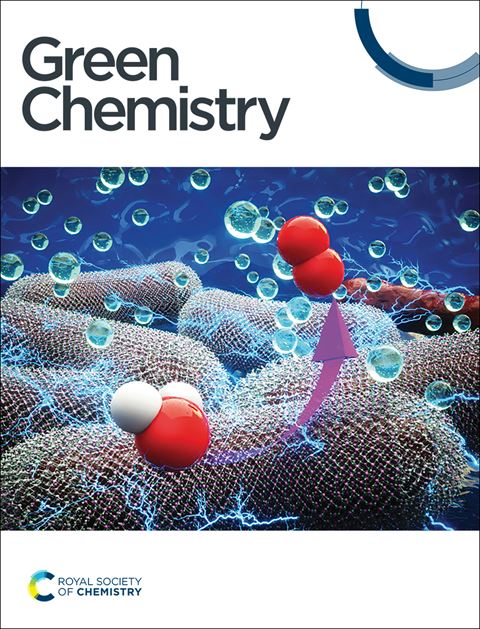
Previous bioreactor studies achieved high volumetric n-caprylate (i.e., n-octanoate) production rates and selectivities from ethanol and acetate with chain-elongating microbiomes. However, the metabolic pathways from the substrates to n-caprylate synthesis were unclear. We operated two n-caprylate-producing upflow bioreactors with a synthetic medium to study the underlying metabolic pathways. The operating period exceeded 2.5 years, with a peak volumetric n-caprylate production rate of 190 ± 8.4 mmol C L−1 d−1 (0.14 g L−1 h−1). We identified oxygen availability as a critical performance parameter, facilitating intermediate metabolite production from ethanol. Bottle experiments in the presence and absence of oxygen with 13C-labeled ethanol suggest acetyl-coenzyme A-based derived production of n-butyrate (i.e., n-butanoate), n-caproate (i.e., n-hexanoate), and n-caprylate. Here, we postulate a trophic hierarchy within the bioreactor microbiomes based on metagenomics, metaproteomics, and metabolomics data, as well as experiments with a Clostridium kluyveri isolate. First, the aerobic bacterium Pseudoclavibacter caeni and the facultative anaerobic fungus Cyberlindnera jadinii converted part of the ethanol pool into the intermediate metabolites succinate, lactate, and pyroglutamate. Second, the strict anaerobic C. kluyveri elongated acetate with the residual ethanol to n-butyrate. Third, Caproicibacter fermentans and Oscillibacter valericigenes elongated n-butyrate with the intermediate metabolites to n-caproate and then to n-caprylate. Among the carbon chain-elongating pathways of carboxylates, the tricarboxylic acid cycle and the reverse β-oxidation pathways showed a positive correlation with n-caprylate production. The results of this study inspire the realization of a chain-elongating production platform with separately controlled aerobic and anaerobic stages to produce n-caprylate renewably as an attractive chemical from ethanol and acetate as substrates.
期刊介绍:
Green Chemistry is a journal that provides a unique forum for the publication of innovative research on the development of alternative green and sustainable technologies. The scope of Green Chemistry is based on the definition proposed by Anastas and Warner (Green Chemistry: Theory and Practice, P T Anastas and J C Warner, Oxford University Press, Oxford, 1998), which defines green chemistry as the utilisation of a set of principles that reduces or eliminates the use or generation of hazardous substances in the design, manufacture and application of chemical products. Green Chemistry aims to reduce the environmental impact of the chemical enterprise by developing a technology base that is inherently non-toxic to living things and the environment. The journal welcomes submissions on all aspects of research relating to this endeavor and publishes original and significant cutting-edge research that is likely to be of wide general appeal. For a work to be published, it must present a significant advance in green chemistry, including a comparison with existing methods and a demonstration of advantages over those methods.




 京公网安备 11010802042870号
京ICP备2023020795号-1
京公网安备 11010802042870号
京ICP备2023020795号-1

 分享
分享
 求助内容:
求助内容: 应助结果提醒方式:
 扫码关注我们
