Xianzhu You , Yating Zhou , Rongjiao Sun , Xiaopeng Pei , Hua Zhou , Da Deng , Zhiying Wang , Wanle Hu , Ying Tan
{"title":"Biodegradable microbeads for personal care products and cosmetics","authors":"Xianzhu You , Yating Zhou , Rongjiao Sun , Xiaopeng Pei , Hua Zhou , Da Deng , Zhiying Wang , Wanle Hu , Ying Tan","doi":"10.1039/d4gc05852f","DOIUrl":null,"url":null,"abstract":"<div><div>Plastic microbeads in cosmetics and personal care products are major contributors to microplastic pollution and pose a significant threat to ecosystems and human health. Biodegradable microbeads, made from synthetic or natural biodegradable polymers, are emerging as promising alternatives with considerable potential for application in the personal care and cosmetics industry. This review focuses on the current alternatives to plastic microbeads and discusses methods for producing biodegradable microbeads for exfoliation. The properties of biodegradable microbeads directly influence both product performance and environmental impacts. Thus, their mechanical properties, stability, biocompatibility, biodegradability, and environmental friendliness are outlined. Additionally, potential future applications of biodegradable microbeads in cosmetics are explored. Finally, this review addresses the challenges and green sustainability prospects of biodegradable microbeads in the cosmetics industry.</div></div>","PeriodicalId":78,"journal":{"name":"Green Chemistry","volume":"27 11","pages":"Pages 2823-2845"},"PeriodicalIF":9.2000,"publicationDate":"2025-01-14","publicationTypes":"Journal Article","fieldsOfStudy":null,"isOpenAccess":false,"openAccessPdf":"","citationCount":"0","resultStr":null,"platform":"Semanticscholar","paperid":null,"PeriodicalName":"Green Chemistry","FirstCategoryId":"92","ListUrlMain":"https://www.sciencedirect.com/org/science/article/pii/S1463926225001256","RegionNum":1,"RegionCategory":"化学","ArticlePicture":[],"TitleCN":null,"AbstractTextCN":null,"PMCID":null,"EPubDate":"","PubModel":"","JCR":"Q1","JCRName":"CHEMISTRY, MULTIDISCIPLINARY","Score":null,"Total":0}
引用次数: 0
Abstract
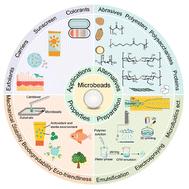
Plastic microbeads in cosmetics and personal care products are major contributors to microplastic pollution and pose a significant threat to ecosystems and human health. Biodegradable microbeads, made from synthetic or natural biodegradable polymers, are emerging as promising alternatives with considerable potential for application in the personal care and cosmetics industry. This review focuses on the current alternatives to plastic microbeads and discusses methods for producing biodegradable microbeads for exfoliation. The properties of biodegradable microbeads directly influence both product performance and environmental impacts. Thus, their mechanical properties, stability, biocompatibility, biodegradability, and environmental friendliness are outlined. Additionally, potential future applications of biodegradable microbeads in cosmetics are explored. Finally, this review addresses the challenges and green sustainability prospects of biodegradable microbeads in the cosmetics industry.
期刊介绍:
Green Chemistry is a journal that provides a unique forum for the publication of innovative research on the development of alternative green and sustainable technologies. The scope of Green Chemistry is based on the definition proposed by Anastas and Warner (Green Chemistry: Theory and Practice, P T Anastas and J C Warner, Oxford University Press, Oxford, 1998), which defines green chemistry as the utilisation of a set of principles that reduces or eliminates the use or generation of hazardous substances in the design, manufacture and application of chemical products. Green Chemistry aims to reduce the environmental impact of the chemical enterprise by developing a technology base that is inherently non-toxic to living things and the environment. The journal welcomes submissions on all aspects of research relating to this endeavor and publishes original and significant cutting-edge research that is likely to be of wide general appeal. For a work to be published, it must present a significant advance in green chemistry, including a comparison with existing methods and a demonstration of advantages over those methods.



 京公网安备 11010802042870号
京ICP备2023020795号-1
京公网安备 11010802042870号
京ICP备2023020795号-1

 分享
分享
 求助内容:
求助内容: 应助结果提醒方式:
 扫码关注我们
