Chloé Wirbel, Simon Durand, Félix Boivin, Maud Plaschka, Valentin Benboubker, Maxime Grimont, Laetitia Barbollat-Boutrand, Garance Tondeur, Brigitte Balme, Olivier Harou, Anaïs Eberhardt, Stéphane Dalle, Jonathan Lopez, Julie Caramel
{"title":"ZEB1 transcription factor induces tumor cell PD-L1 expression in melanoma.","authors":"Chloé Wirbel, Simon Durand, Félix Boivin, Maud Plaschka, Valentin Benboubker, Maxime Grimont, Laetitia Barbollat-Boutrand, Garance Tondeur, Brigitte Balme, Olivier Harou, Anaïs Eberhardt, Stéphane Dalle, Jonathan Lopez, Julie Caramel","doi":"10.1007/s00262-025-03978-5","DOIUrl":null,"url":null,"abstract":"<p><p>Tumor cells can evade antitumor immune response by expressing the PD-L1 ligand, leading to the inhibition of PD-1-expressing T lymphocytes. The mechanisms that regulate PD-L1 expression in cancer cells are imperfectly characterized. The transcription factor ZEB1, a major regulator of phenotype switching in melanoma cells, was shown to promote immune escape in melanoma by repressing T cell infiltration. Using inducible models of phenotype switching and ZEB1 gain/loss-of-function melanoma, we show that ZEB1 binds to the CD274 (PD-L1) promoter, directly enhancing PD-L1 mRNA transcription and its expression at the cell membrane. Furthermore, using single-cell spatial analyses on human primary melanoma samples, we demonstrate the correlation of ZEB1 and PD-L1 expression in tumor cells. Overall, these data identify ZEB1-mediated regulation of PD-L1 tumor expression as a mechanism that could contribute to immune escape in melanoma.</p>","PeriodicalId":9595,"journal":{"name":"Cancer Immunology, Immunotherapy","volume":"74 4","pages":"141"},"PeriodicalIF":5.1000,"publicationDate":"2025-03-08","publicationTypes":"Journal Article","fieldsOfStudy":null,"isOpenAccess":false,"openAccessPdf":"https://www.ncbi.nlm.nih.gov/pmc/articles/PMC11890833/pdf/","citationCount":"0","resultStr":null,"platform":"Semanticscholar","paperid":null,"PeriodicalName":"Cancer Immunology, Immunotherapy","FirstCategoryId":"3","ListUrlMain":"https://doi.org/10.1007/s00262-025-03978-5","RegionNum":2,"RegionCategory":"医学","ArticlePicture":[],"TitleCN":null,"AbstractTextCN":null,"PMCID":null,"EPubDate":"","PubModel":"","JCR":"Q2","JCRName":"IMMUNOLOGY","Score":null,"Total":0}
引用次数: 0
Abstract
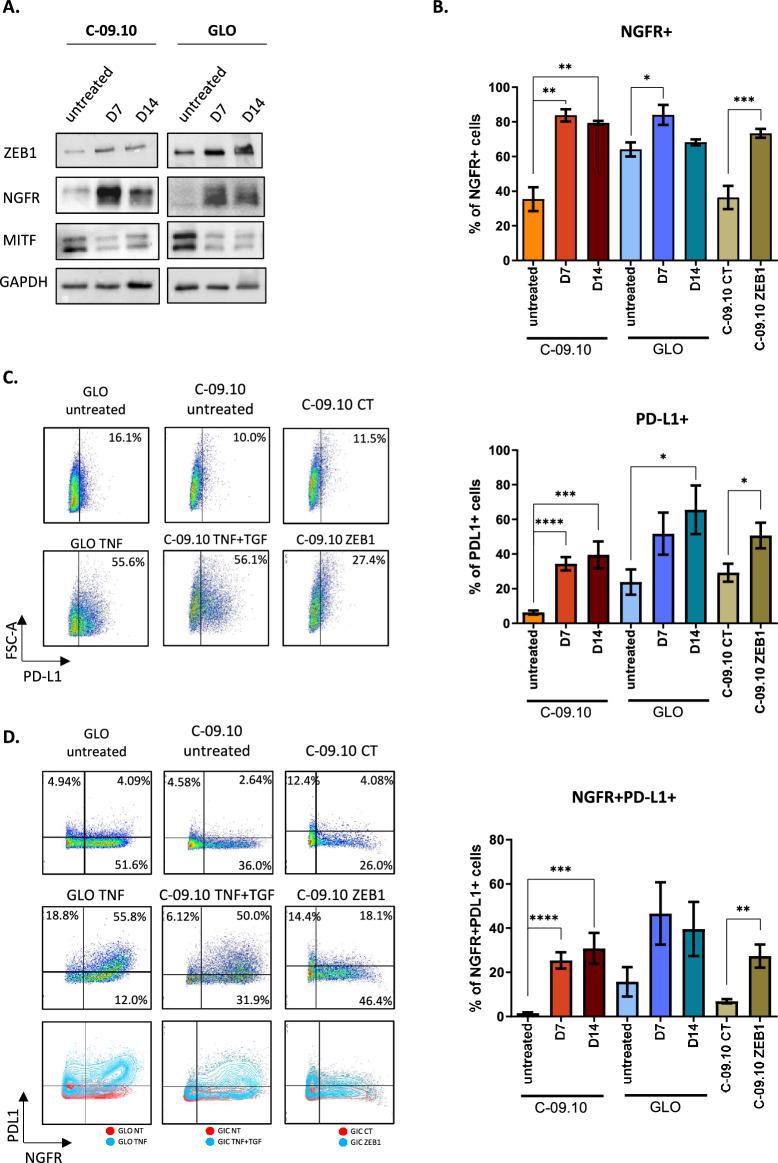
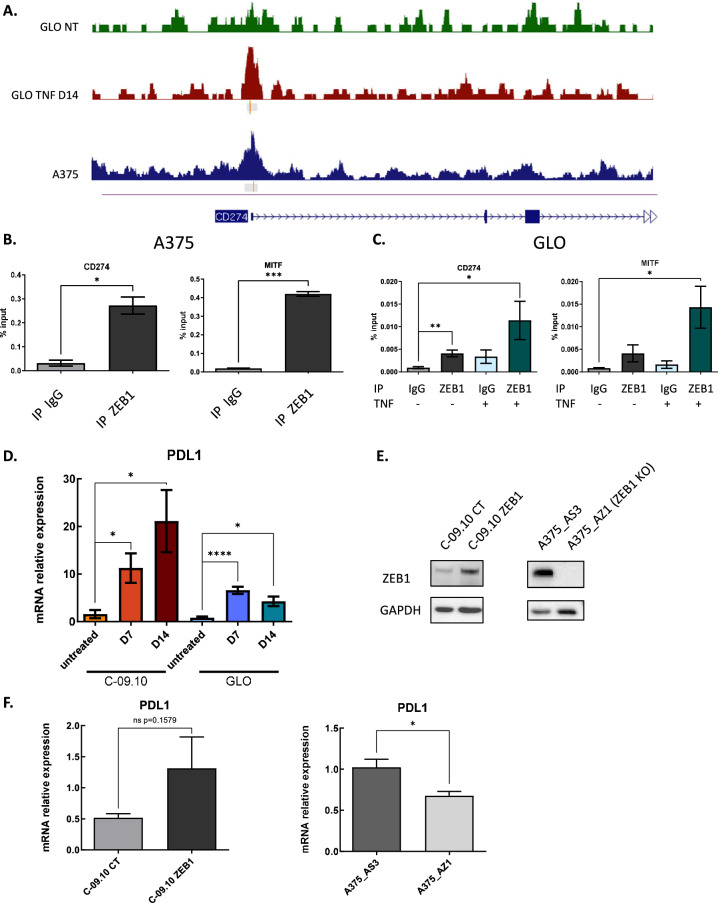
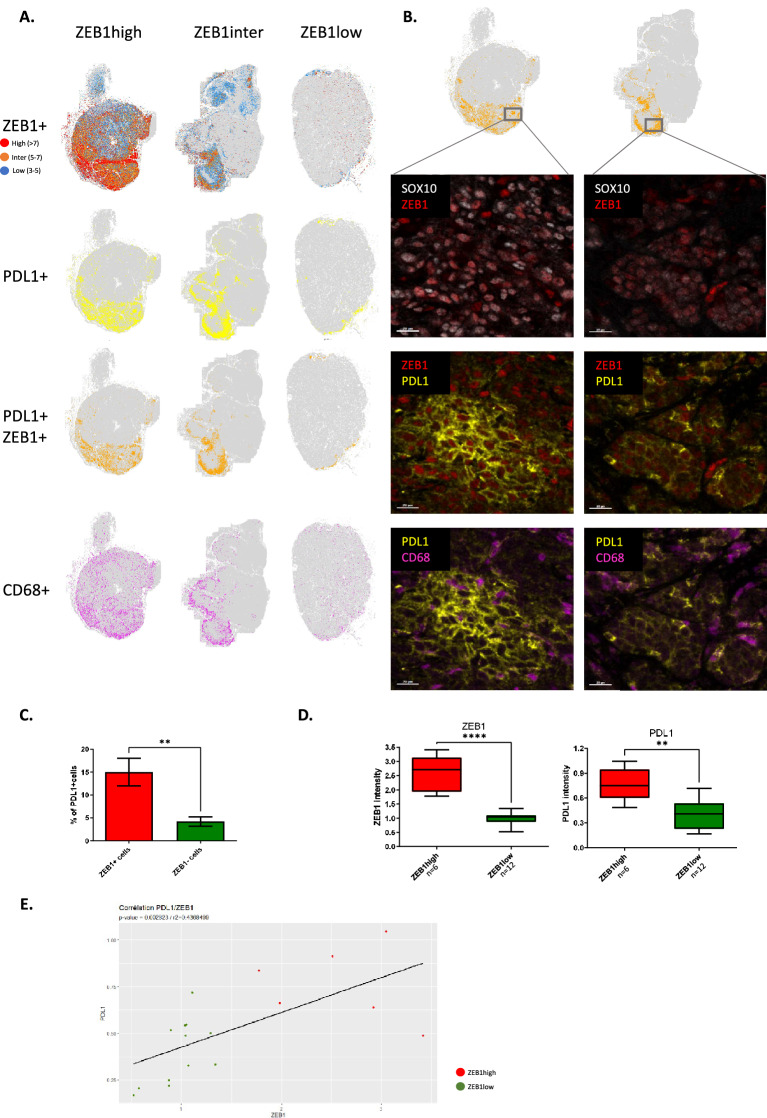
Tumor cells can evade antitumor immune response by expressing the PD-L1 ligand, leading to the inhibition of PD-1-expressing T lymphocytes. The mechanisms that regulate PD-L1 expression in cancer cells are imperfectly characterized. The transcription factor ZEB1, a major regulator of phenotype switching in melanoma cells, was shown to promote immune escape in melanoma by repressing T cell infiltration. Using inducible models of phenotype switching and ZEB1 gain/loss-of-function melanoma, we show that ZEB1 binds to the CD274 (PD-L1) promoter, directly enhancing PD-L1 mRNA transcription and its expression at the cell membrane. Furthermore, using single-cell spatial analyses on human primary melanoma samples, we demonstrate the correlation of ZEB1 and PD-L1 expression in tumor cells. Overall, these data identify ZEB1-mediated regulation of PD-L1 tumor expression as a mechanism that could contribute to immune escape in melanoma.
期刊介绍:
Cancer Immunology, Immunotherapy has the basic aim of keeping readers informed of the latest research results in the fields of oncology and immunology. As knowledge expands, the scope of the journal has broadened to include more of the progress being made in the areas of biology concerned with biological response modifiers. This helps keep readers up to date on the latest advances in our understanding of tumor-host interactions.
The journal publishes short editorials including "position papers," general reviews, original articles, and short communications, providing a forum for the most current experimental and clinical advances in tumor immunology.




 京公网安备 11010802042870号
京ICP备2023020795号-1
京公网安备 11010802042870号
京ICP备2023020795号-1

 分享
分享
 求助内容:
求助内容: 应助结果提醒方式:
 扫码关注我们
