Sedation management and processed EEG-based solutions during venovenous extracorporeal membrane oxygenation: a narrative review of key challenges and potential benefits.
Lajos Szentgyorgyi, Samuel Henry Howitt, Heather Iles-Smith, Bhuvaneswari Krishnamoorthy
{"title":"Sedation management and processed EEG-based solutions during venovenous extracorporeal membrane oxygenation: a narrative review of key challenges and potential benefits.","authors":"Lajos Szentgyorgyi, Samuel Henry Howitt, Heather Iles-Smith, Bhuvaneswari Krishnamoorthy","doi":"10.1007/s10047-025-01494-y","DOIUrl":null,"url":null,"abstract":"<p><p>Extracorporeal membrane oxygenation (ECMO) is an established technique for managing severe cardiorespiratory failure. However, it is invasive and requires profound analgo-sedation during initiation and often throughout the therapy. Managing sedation in venovenous (VV) ECMO patients is particularly challenging due to the impact of ECMO circuits on pharmacokinetics and specific patient requirements. This can lead to unpredictable sedative effects and require multiple drugs at higher doses. Additionally, sedation is usually managed with traditional scoring methods, which are subjective and invalid during neuromuscular blockade. These uncertainties may impact outcomes. Recent clinical practice increasingly focuses on reducing sedation to enable earlier physiotherapy and mobilisation, particularly in patients awaiting transplants or receiving mechanical circulatory support. In this context, processed electroencephalogram-based (pEEG) sedation monitoring might be promising, having shown benefits in general anaesthesia and intensive care. However, the technology has limitations, and its benefits in ECMO practice have yet to be formally evaluated. This review provides insights into the challenges of ECMO sedation, including pharmacokinetics, unique ECMO requirements, and the implications of inadequate sedation scores. Finally, it includes a brief overview of the practicality and limitations of pEEG monitoring during VV-ECMO, highlighting a significant research gap.</p>","PeriodicalId":15177,"journal":{"name":"Journal of Artificial Organs","volume":" ","pages":"293-307"},"PeriodicalIF":1.3000,"publicationDate":"2025-09-01","publicationTypes":"Journal Article","fieldsOfStudy":null,"isOpenAccess":false,"openAccessPdf":"https://www.ncbi.nlm.nih.gov/pmc/articles/PMC12373690/pdf/","citationCount":"0","resultStr":null,"platform":"Semanticscholar","paperid":null,"PeriodicalName":"Journal of Artificial Organs","FirstCategoryId":"5","ListUrlMain":"https://doi.org/10.1007/s10047-025-01494-y","RegionNum":4,"RegionCategory":"医学","ArticlePicture":[],"TitleCN":null,"AbstractTextCN":null,"PMCID":null,"EPubDate":"2025/3/8 0:00:00","PubModel":"Epub","JCR":"Q4","JCRName":"ENGINEERING, BIOMEDICAL","Score":null,"Total":0}
引用次数: 0
Abstract
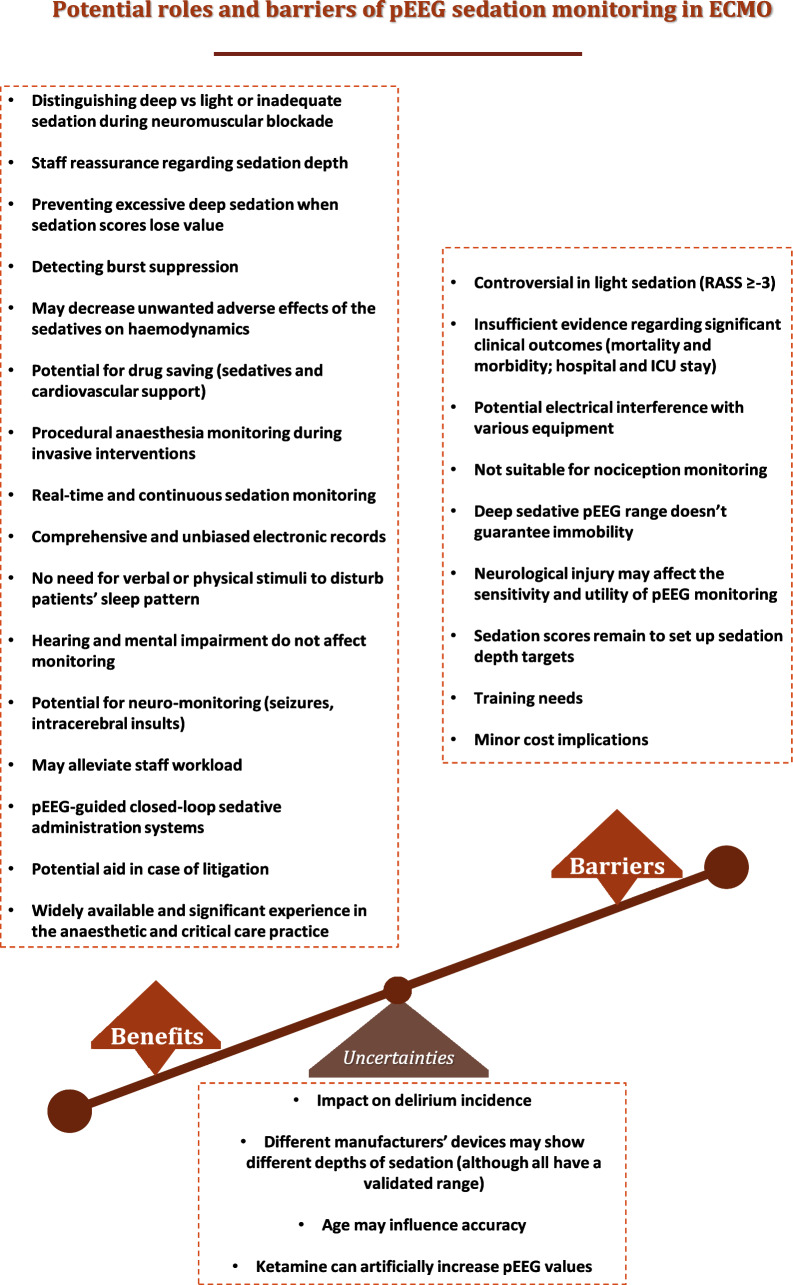
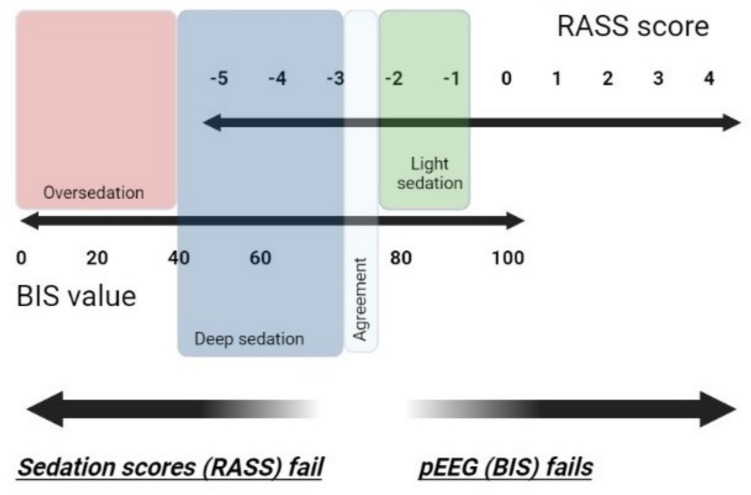
Extracorporeal membrane oxygenation (ECMO) is an established technique for managing severe cardiorespiratory failure. However, it is invasive and requires profound analgo-sedation during initiation and often throughout the therapy. Managing sedation in venovenous (VV) ECMO patients is particularly challenging due to the impact of ECMO circuits on pharmacokinetics and specific patient requirements. This can lead to unpredictable sedative effects and require multiple drugs at higher doses. Additionally, sedation is usually managed with traditional scoring methods, which are subjective and invalid during neuromuscular blockade. These uncertainties may impact outcomes. Recent clinical practice increasingly focuses on reducing sedation to enable earlier physiotherapy and mobilisation, particularly in patients awaiting transplants or receiving mechanical circulatory support. In this context, processed electroencephalogram-based (pEEG) sedation monitoring might be promising, having shown benefits in general anaesthesia and intensive care. However, the technology has limitations, and its benefits in ECMO practice have yet to be formally evaluated. This review provides insights into the challenges of ECMO sedation, including pharmacokinetics, unique ECMO requirements, and the implications of inadequate sedation scores. Finally, it includes a brief overview of the practicality and limitations of pEEG monitoring during VV-ECMO, highlighting a significant research gap.
期刊介绍:
The aim of the Journal of Artificial Organs is to introduce to colleagues worldwide a broad spectrum of important new achievements in the field of artificial organs, ranging from fundamental research to clinical applications. The scope of the Journal of Artificial Organs encompasses but is not restricted to blood purification, cardiovascular intervention, biomaterials, and artificial metabolic organs. Additionally, the journal will cover technical and industrial innovations. Membership in the Japanese Society for Artificial Organs is not a prerequisite for submission.



 京公网安备 11010802042870号
京ICP备2023020795号-1
京公网安备 11010802042870号
京ICP备2023020795号-1

 分享
分享
 求助内容:
求助内容: 应助结果提醒方式:
 扫码关注我们
