{"title":"Computer vision syndrome: a comprehensive literature review.","authors":"Fares Kahal, Ahmad Al Darra, André Torbey","doi":"10.1080/20565623.2025.2476923","DOIUrl":null,"url":null,"abstract":"<p><p>Computer Vision Syndrome is a growing health concern in the digital age, with a reported prevalence of 69.0%. It is caused by screen-related, environmental, ergonomic, and physiological factors, affecting diverse demographics. The COVID-19 pandemic significantly amplified CVS due to increased screen time for remote work, online learning, and social media use, with studies reporting symptoms in up to 74% of individuals. Unique visual challenges from digital screens, including reduced clarity and glare, exacerbate symptoms like dry eyes and discomfort, especially in those with uncorrected vision. Understanding CVS is crucial for mitigating its impact through effective prevention and management strategies. This study explores the causes, diagnosis, management, and prevention strategies of CVS by synthesizing recent findings from optometry, occupational health, digital health, and ergonomics. It also highlights emerging trends such as AI, wearables, and augmented reality while providing practical management strategies. A narrative review of literature from 2014 to 2024 was conducted, focusing on PubMed-indexed, peer-reviewed articles, including meta-analyses and systematic reviews, with priority given to recent, highly cited studies.</p>","PeriodicalId":12568,"journal":{"name":"Future Science OA","volume":"11 1","pages":"2476923"},"PeriodicalIF":2.1000,"publicationDate":"2025-12-01","publicationTypes":"Journal Article","fieldsOfStudy":null,"isOpenAccess":false,"openAccessPdf":"https://www.ncbi.nlm.nih.gov/pmc/articles/PMC11901492/pdf/","citationCount":"0","resultStr":null,"platform":"Semanticscholar","paperid":null,"PeriodicalName":"Future Science OA","FirstCategoryId":"1085","ListUrlMain":"https://doi.org/10.1080/20565623.2025.2476923","RegionNum":0,"RegionCategory":null,"ArticlePicture":[],"TitleCN":null,"AbstractTextCN":null,"PMCID":null,"EPubDate":"2025/3/8 0:00:00","PubModel":"Epub","JCR":"Q3","JCRName":"MEDICINE, RESEARCH & EXPERIMENTAL","Score":null,"Total":0}
引用次数: 0
Abstract
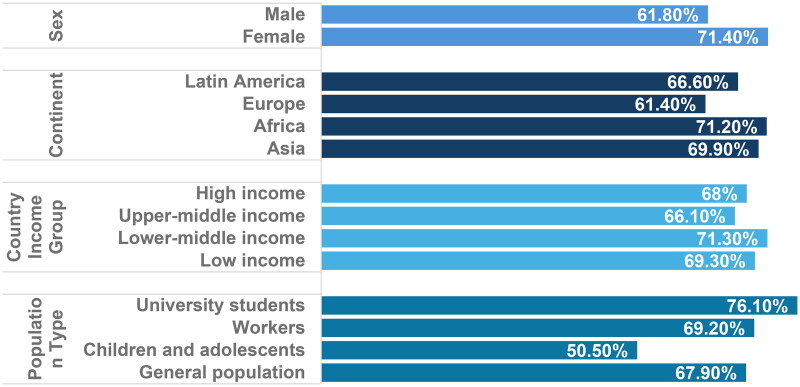
Computer Vision Syndrome is a growing health concern in the digital age, with a reported prevalence of 69.0%. It is caused by screen-related, environmental, ergonomic, and physiological factors, affecting diverse demographics. The COVID-19 pandemic significantly amplified CVS due to increased screen time for remote work, online learning, and social media use, with studies reporting symptoms in up to 74% of individuals. Unique visual challenges from digital screens, including reduced clarity and glare, exacerbate symptoms like dry eyes and discomfort, especially in those with uncorrected vision. Understanding CVS is crucial for mitigating its impact through effective prevention and management strategies. This study explores the causes, diagnosis, management, and prevention strategies of CVS by synthesizing recent findings from optometry, occupational health, digital health, and ergonomics. It also highlights emerging trends such as AI, wearables, and augmented reality while providing practical management strategies. A narrative review of literature from 2014 to 2024 was conducted, focusing on PubMed-indexed, peer-reviewed articles, including meta-analyses and systematic reviews, with priority given to recent, highly cited studies.
期刊介绍:
Future Science OA is an online, open access, peer-reviewed title from the Future Science Group. The journal covers research and discussion related to advances in biotechnology, medicine and health. The journal embraces the importance of publishing all good-quality research with the potential to further the progress of research in these fields. All original research articles will be considered that are within the journal''s scope, and have been conducted with scientific rigour and research integrity. The journal also features review articles, editorials and perspectives, providing readers with a leading source of commentary and analysis. Submissions of the following article types will be considered: -Research articles -Preliminary communications -Short communications -Methodologies -Trial design articles -Trial results (including early-phase and negative studies) -Reviews -Perspectives -Commentaries




 京公网安备 11010802042870号
京ICP备2023020795号-1
京公网安备 11010802042870号
京ICP备2023020795号-1

 分享
分享
 求助内容:
求助内容: 应助结果提醒方式:
 扫码关注我们
