{"title":"Latent preference representation in the human brain for scented products: Effects of novelty and familiarity","authors":"Toshiki Okumura , Kai Saito , Risako Harada , Tohru Ohki , Hiroyuki Hanihara , Ikuhiro Kida","doi":"10.1016/j.neuroimage.2025.121131","DOIUrl":null,"url":null,"abstract":"<div><div>Decoding latent preferences for novel products is crucial for understanding decision-making processes, especially when subjective evaluations are unclear. Brain activity in regions like the medial orbitofrontal cortex and nucleus accumbens (NAcc) correlates with subjective preferences. However, whether these regions represent preferences toward novel products and whether coding persists after familiarity remain unclear. We examined the brain coding of latent preferences for novel scented products and how they evolve with familiarity. We measured functional magnetic resonance imaging (fMRI) signals evoked by three fabric softener odors, both when novel and when familiar, in 25 previously unexposed females. To obtain reliable preferences, participants chose one softener after using all three twice at home after the first fMRI measurement (Day 1) and continued using it at home for four months until the second day of the fMRI measurement (Day 2). Subjective ratings were also obtained after each fMRI run. On Day 1, no significant differences in subjective ratings between selected and non-selected odors were found. However, the decoding analysis revealed that future odor preferences for novel products were coded in several regions, including the left superior frontal lobe (SF), right NAcc, and left piriform cortex. On Day 2, the left SF continued to encode preferences after familiarity. These results suggest that odor preferences for novel products are coded in the brain even without conscious awareness, and that the coding in the SF is robust against familiarity. These findings provide insights into a more comprehensive understanding of the brain coding of latent preferences.</div></div>","PeriodicalId":19299,"journal":{"name":"NeuroImage","volume":"310 ","pages":"Article 121131"},"PeriodicalIF":4.5000,"publicationDate":"2025-04-15","publicationTypes":"Journal Article","fieldsOfStudy":null,"isOpenAccess":false,"openAccessPdf":"","citationCount":"0","resultStr":null,"platform":"Semanticscholar","paperid":null,"PeriodicalName":"NeuroImage","FirstCategoryId":"3","ListUrlMain":"https://www.sciencedirect.com/science/article/pii/S1053811925001338","RegionNum":2,"RegionCategory":"医学","ArticlePicture":[],"TitleCN":null,"AbstractTextCN":null,"PMCID":null,"EPubDate":"2025/3/7 0:00:00","PubModel":"Epub","JCR":"Q1","JCRName":"NEUROIMAGING","Score":null,"Total":0}
引用次数: 0
Abstract
Decoding latent preferences for novel products is crucial for understanding decision-making processes, especially when subjective evaluations are unclear. Brain activity in regions like the medial orbitofrontal cortex and nucleus accumbens (NAcc) correlates with subjective preferences. However, whether these regions represent preferences toward novel products and whether coding persists after familiarity remain unclear. We examined the brain coding of latent preferences for novel scented products and how they evolve with familiarity. We measured functional magnetic resonance imaging (fMRI) signals evoked by three fabric softener odors, both when novel and when familiar, in 25 previously unexposed females. To obtain reliable preferences, participants chose one softener after using all three twice at home after the first fMRI measurement (Day 1) and continued using it at home for four months until the second day of the fMRI measurement (Day 2). Subjective ratings were also obtained after each fMRI run. On Day 1, no significant differences in subjective ratings between selected and non-selected odors were found. However, the decoding analysis revealed that future odor preferences for novel products were coded in several regions, including the left superior frontal lobe (SF), right NAcc, and left piriform cortex. On Day 2, the left SF continued to encode preferences after familiarity. These results suggest that odor preferences for novel products are coded in the brain even without conscious awareness, and that the coding in the SF is robust against familiarity. These findings provide insights into a more comprehensive understanding of the brain coding of latent preferences.
期刊介绍:
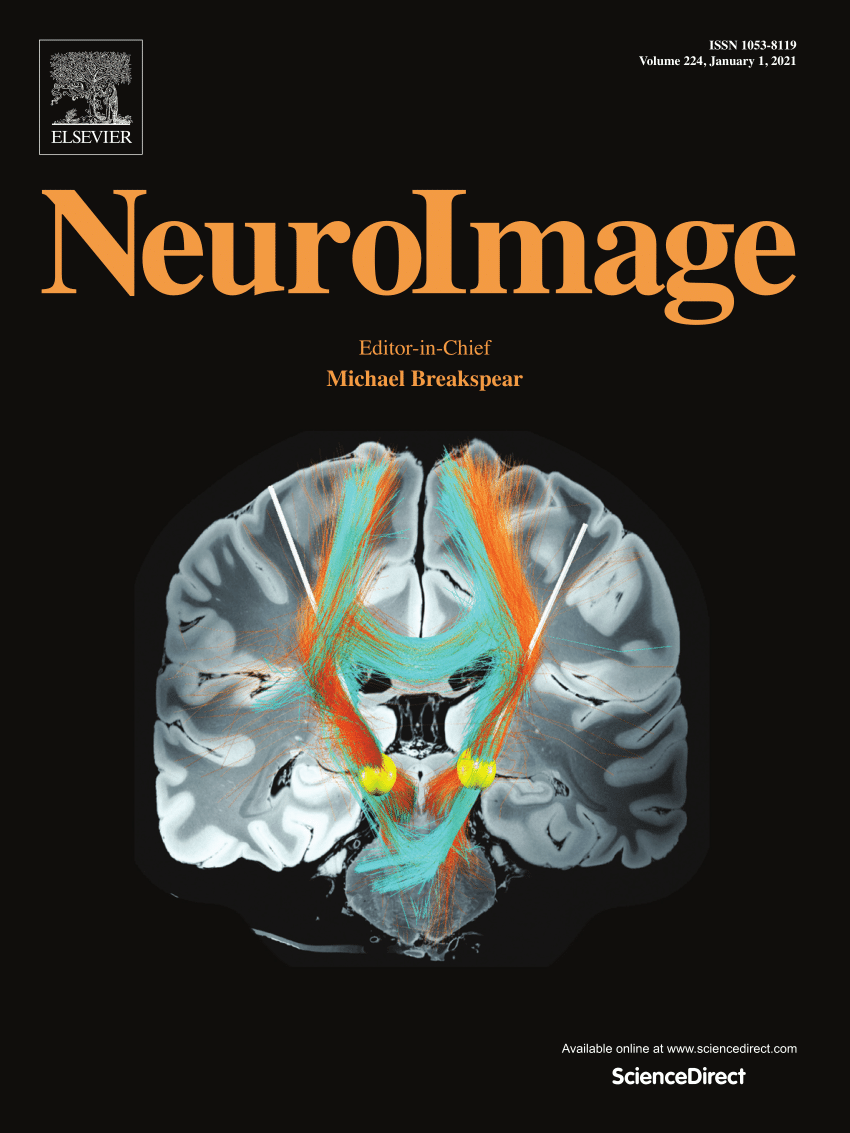
NeuroImage, a Journal of Brain Function provides a vehicle for communicating important advances in acquiring, analyzing, and modelling neuroimaging data and in applying these techniques to the study of structure-function and brain-behavior relationships. Though the emphasis is on the macroscopic level of human brain organization, meso-and microscopic neuroimaging across all species will be considered if informative for understanding the aforementioned relationships.



 京公网安备 11010802042870号
京ICP备2023020795号-1
京公网安备 11010802042870号
京ICP备2023020795号-1

 分享
分享
 求助内容:
求助内容: 应助结果提醒方式:
 扫码关注我们
