Hongzhi Wang, Chenchen Jiang, Boyi Xu, Di Lei, Rendong Fang, Yi Tang
{"title":"Transcriptomic analysis revealed ferroptosis in ducklings with splenic necrosis induced by NDRV infection.","authors":"Hongzhi Wang, Chenchen Jiang, Boyi Xu, Di Lei, Rendong Fang, Yi Tang","doi":"10.1186/s13567-025-01479-y","DOIUrl":null,"url":null,"abstract":"<p><p>Infection with novel duck reovirus (NDRV) results in severe splenic necrosis, leading to immunosuppression, secondary infections with other pathogens, and impairment of the immune effect of the vaccine. However, little is known about NDRV-induced spleen injury and its antagonistic mechanism on the host immune response. In this study, we conducted pathological and comparative transcriptomic analyses of NDRV-infected duck spleens. Our findings elucidated the histopathological progression of splenic necrotic foci formation following NDRV infection and identified splenic macrophages as the primary target cells. RNA-Seq analysis revealed differentially expressed genes that were enriched predominantly in immune system processes, signalling molecules and interactions, and pathways related to cell growth and necrosis. Notably, we observed a significant upregulation of ferroptosis during NDRV infection, characterized by the induction of specific metabolism-related genes such as TfR1, Hmox1, and STEAP3, alongside the downregulation of Fpn expression. Our findings collectively indicate the involvement of ferroptosis in spleen injury induced by NDRV infection. Investigating the mechanism of NDRV-induced ferroptosis in spleen macrophages will contribute to a comprehensive understanding of the pathogenesis associated with NDRV.</p>","PeriodicalId":23658,"journal":{"name":"Veterinary Research","volume":"56 1","pages":"54"},"PeriodicalIF":3.5000,"publicationDate":"2025-03-09","publicationTypes":"Journal Article","fieldsOfStudy":null,"isOpenAccess":false,"openAccessPdf":"https://www.ncbi.nlm.nih.gov/pmc/articles/PMC11892222/pdf/","citationCount":"0","resultStr":null,"platform":"Semanticscholar","paperid":null,"PeriodicalName":"Veterinary Research","FirstCategoryId":"97","ListUrlMain":"https://doi.org/10.1186/s13567-025-01479-y","RegionNum":1,"RegionCategory":"农林科学","ArticlePicture":[],"TitleCN":null,"AbstractTextCN":null,"PMCID":null,"EPubDate":"","PubModel":"","JCR":"Q1","JCRName":"VETERINARY SCIENCES","Score":null,"Total":0}
引用次数: 0
Abstract
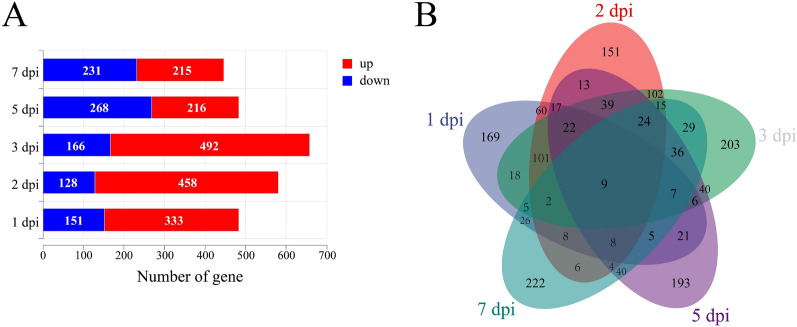
Infection with novel duck reovirus (NDRV) results in severe splenic necrosis, leading to immunosuppression, secondary infections with other pathogens, and impairment of the immune effect of the vaccine. However, little is known about NDRV-induced spleen injury and its antagonistic mechanism on the host immune response. In this study, we conducted pathological and comparative transcriptomic analyses of NDRV-infected duck spleens. Our findings elucidated the histopathological progression of splenic necrotic foci formation following NDRV infection and identified splenic macrophages as the primary target cells. RNA-Seq analysis revealed differentially expressed genes that were enriched predominantly in immune system processes, signalling molecules and interactions, and pathways related to cell growth and necrosis. Notably, we observed a significant upregulation of ferroptosis during NDRV infection, characterized by the induction of specific metabolism-related genes such as TfR1, Hmox1, and STEAP3, alongside the downregulation of Fpn expression. Our findings collectively indicate the involvement of ferroptosis in spleen injury induced by NDRV infection. Investigating the mechanism of NDRV-induced ferroptosis in spleen macrophages will contribute to a comprehensive understanding of the pathogenesis associated with NDRV.
期刊介绍:
Veterinary Research is an open access journal that publishes high quality and novel research and review articles focusing on all aspects of infectious diseases and host-pathogen interaction in animals.





 京公网安备 11010802042870号
京ICP备2023020795号-1
京公网安备 11010802042870号
京ICP备2023020795号-1

 分享
分享
 求助内容:
求助内容: 应助结果提醒方式:
 扫码关注我们
