Kundapura S Haripriya, Anju Srinivas, Manju Hosuru Chikkalingaih, Anshu Kumar Yadav, Prashant Vishwanath, Suma M Nataraj, Akila Prashant
{"title":"Revolutionizing DNA Extraction: A Cost-Effective Approach for Genomic DNA Retrieval from Dried Blood Spots.","authors":"Kundapura S Haripriya, Anju Srinivas, Manju Hosuru Chikkalingaih, Anshu Kumar Yadav, Prashant Vishwanath, Suma M Nataraj, Akila Prashant","doi":"","DOIUrl":null,"url":null,"abstract":"<p><strong>Background: </strong>This study introduces an efficient, cost-effective laboratory- derived method for extracting genomic DNA from dried blood spots (DBS) by optimizing the organic separation phenol method.</p><p><strong>Methodology: </strong>DBS samples, collected via heel prick from 50 neonates as a part of routine newborn screening, were processed using an optimized phenol method that employs lysis buffers with minimal concentrations of proteinase K and phenol:chloroform:isoamyl alcohol (PCI) reagent.</p><p><strong>Results: </strong>The extracted genomic DNA exhibited a concentration range of 50 to 200ng/μl, with purity levels (A260/280) falling within the range of 1.4 to 1.6, as measured by nanodrop. Gel electrophoresis, post polymerase chain reaction (PCR) amplification, consistently revealed distinct, non-degraded bands for both a 345-bp fragment (Chymotrypsin C, CTRC gene) and a 250-bp fragment (Glyceraldehyde-3-phosphate dehydrogenase, GAPDH gene) across all samples.</p><p><strong>Conclusion: </strong>The method utilizes routine consumables readily available in basic molecular biology laboratories, circumventing the need for expensive kits. It holds significant promise for genetic diagnostics and research applications, particularly in situations where DBS serves as a means of collecting and preserving samples from individuals in remote areas.</p><p><strong>Graphical abstract: </strong></p><p><strong>Highlights: </strong>Refined phenol-based method that offers cost-effective means of extracting genomic DNA from dried blood spots on filter paper.Key attributes of this approach include its simplicity and use of PCI (25:24:1) reagent for superior DNA yield.A reliable choice that is economically advantageous for further molecular investigations involving DBS specimens.</p>","PeriodicalId":37192,"journal":{"name":"Electronic Journal of the International Federation of Clinical Chemistry and Laboratory Medicine","volume":"36 1","pages":"60-68"},"PeriodicalIF":0.0000,"publicationDate":"2025-02-28","publicationTypes":"Journal Article","fieldsOfStudy":null,"isOpenAccess":false,"openAccessPdf":"https://www.ncbi.nlm.nih.gov/pmc/articles/PMC11886624/pdf/","citationCount":"0","resultStr":null,"platform":"Semanticscholar","paperid":null,"PeriodicalName":"Electronic Journal of the International Federation of Clinical Chemistry and Laboratory Medicine","FirstCategoryId":"1085","ListUrlMain":"","RegionNum":0,"RegionCategory":null,"ArticlePicture":[],"TitleCN":null,"AbstractTextCN":null,"PMCID":null,"EPubDate":"2025/3/1 0:00:00","PubModel":"eCollection","JCR":"Q2","JCRName":"Medicine","Score":null,"Total":0}
引用次数: 0
Abstract
Background: This study introduces an efficient, cost-effective laboratory- derived method for extracting genomic DNA from dried blood spots (DBS) by optimizing the organic separation phenol method.
Methodology: DBS samples, collected via heel prick from 50 neonates as a part of routine newborn screening, were processed using an optimized phenol method that employs lysis buffers with minimal concentrations of proteinase K and phenol:chloroform:isoamyl alcohol (PCI) reagent.
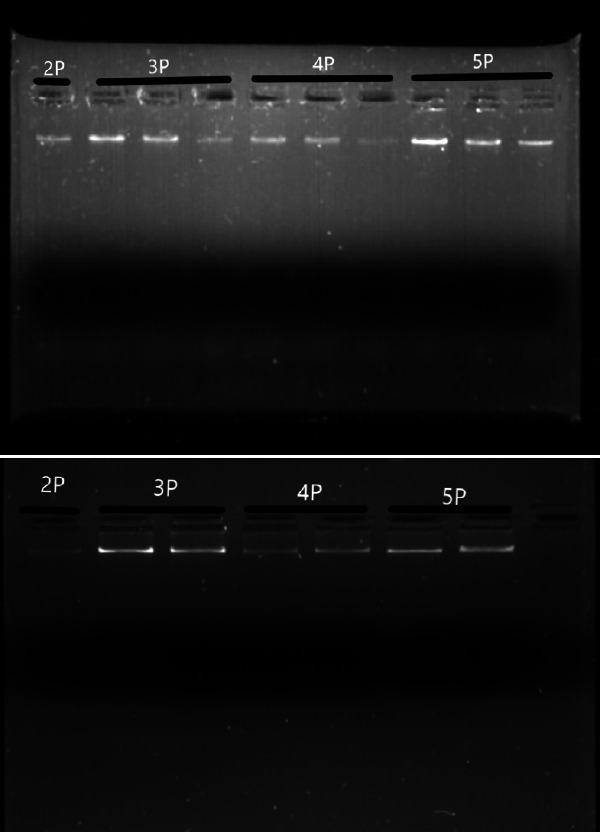
Results: The extracted genomic DNA exhibited a concentration range of 50 to 200ng/μl, with purity levels (A260/280) falling within the range of 1.4 to 1.6, as measured by nanodrop. Gel electrophoresis, post polymerase chain reaction (PCR) amplification, consistently revealed distinct, non-degraded bands for both a 345-bp fragment (Chymotrypsin C, CTRC gene) and a 250-bp fragment (Glyceraldehyde-3-phosphate dehydrogenase, GAPDH gene) across all samples.
Conclusion: The method utilizes routine consumables readily available in basic molecular biology laboratories, circumventing the need for expensive kits. It holds significant promise for genetic diagnostics and research applications, particularly in situations where DBS serves as a means of collecting and preserving samples from individuals in remote areas.
Graphical abstract:
Highlights: Refined phenol-based method that offers cost-effective means of extracting genomic DNA from dried blood spots on filter paper.Key attributes of this approach include its simplicity and use of PCI (25:24:1) reagent for superior DNA yield.A reliable choice that is economically advantageous for further molecular investigations involving DBS specimens.


 分享
分享




 京公网安备 11010802042870号
京ICP备2023020795号-1
京公网安备 11010802042870号
京ICP备2023020795号-1

 求助内容:
求助内容: 应助结果提醒方式:
 扫码关注我们
