Alexander Refisch, Andy Schumann, Yubraj Gupta, Steffen Schulz, Andreas Voss, Berend Malchow, Karl-Jürgen Bär
{"title":"Characterization of cardiac autonomic dysfunction in acute Schizophrenia: a cluster analysis of heart rate variability parameters.","authors":"Alexander Refisch, Andy Schumann, Yubraj Gupta, Steffen Schulz, Andreas Voss, Berend Malchow, Karl-Jürgen Bär","doi":"10.1038/s41537-025-00589-y","DOIUrl":null,"url":null,"abstract":"<p><p>Underlying biological mechanisms leading to the dramatically increased cardiac mortality in patients with schizophrenia (SCZ) are largely unknown. Cardiac autonomic dysfunction (CADF), which has been extensively described in patients with SCZ, represents an important physiological link to cardiovascular disease (CVD). This study investigated the prevalence of CADF in patients with SCZ using HRV across multiple domains (time and frequency, nonlinear dynamics, complexity measures, symbolic dynamics, and segmented Poincaré plot analysis). HRV-based clustering classified 119 SCZ patients as having or not having CADF based on deviations from 119 age- and sex-matched healthy controls. Our findings showed that approximately half of the patients had normal cardiac autonomic function, while the other half had significant abnormalities. The severity of CADF correlated with age, body mass indes (BMI), disease duration, and symptom severity. About half of SCZ patients have significant CADF, which increases their risk for cardiac events. These findings highlight the potential of HRV-based biomarkers in improving CVD risk prediction and stratification in SCZ. Future research should explore integrating HRV analysis with other biomarkers to enhance early detection and intervention strategies.</p>","PeriodicalId":74758,"journal":{"name":"Schizophrenia (Heidelberg, Germany)","volume":"11 1","pages":"40"},"PeriodicalIF":4.1000,"publicationDate":"2025-03-08","publicationTypes":"Journal Article","fieldsOfStudy":null,"isOpenAccess":false,"openAccessPdf":"https://www.ncbi.nlm.nih.gov/pmc/articles/PMC11890564/pdf/","citationCount":"0","resultStr":null,"platform":"Semanticscholar","paperid":null,"PeriodicalName":"Schizophrenia (Heidelberg, Germany)","FirstCategoryId":"1085","ListUrlMain":"https://doi.org/10.1038/s41537-025-00589-y","RegionNum":0,"RegionCategory":null,"ArticlePicture":[],"TitleCN":null,"AbstractTextCN":null,"PMCID":null,"EPubDate":"","PubModel":"","JCR":"Q2","JCRName":"PSYCHIATRY","Score":null,"Total":0}
引用次数: 0
Abstract
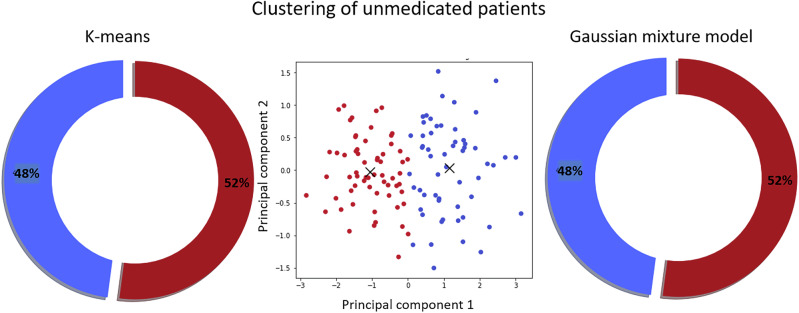
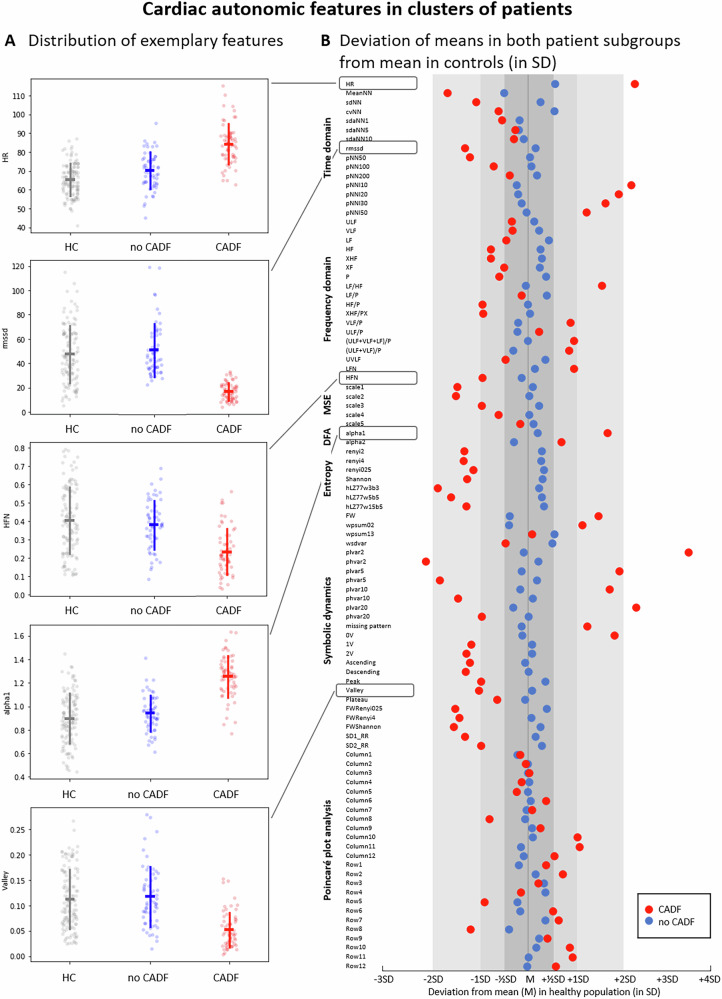
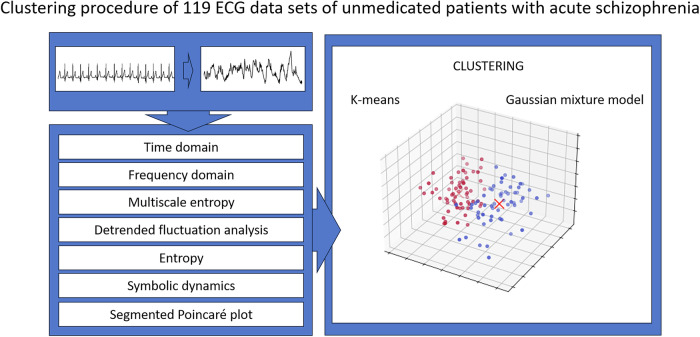
Underlying biological mechanisms leading to the dramatically increased cardiac mortality in patients with schizophrenia (SCZ) are largely unknown. Cardiac autonomic dysfunction (CADF), which has been extensively described in patients with SCZ, represents an important physiological link to cardiovascular disease (CVD). This study investigated the prevalence of CADF in patients with SCZ using HRV across multiple domains (time and frequency, nonlinear dynamics, complexity measures, symbolic dynamics, and segmented Poincaré plot analysis). HRV-based clustering classified 119 SCZ patients as having or not having CADF based on deviations from 119 age- and sex-matched healthy controls. Our findings showed that approximately half of the patients had normal cardiac autonomic function, while the other half had significant abnormalities. The severity of CADF correlated with age, body mass indes (BMI), disease duration, and symptom severity. About half of SCZ patients have significant CADF, which increases their risk for cardiac events. These findings highlight the potential of HRV-based biomarkers in improving CVD risk prediction and stratification in SCZ. Future research should explore integrating HRV analysis with other biomarkers to enhance early detection and intervention strategies.



 京公网安备 11010802042870号
京ICP备2023020795号-1
京公网安备 11010802042870号
京ICP备2023020795号-1

 分享
分享

 求助内容:
求助内容: 应助结果提醒方式:
 扫码关注我们
