Alejandra Rendon-Patiño, Xinhuilan Wang, Stiven Duran-Uribe, Antonio Sepulveda-Escribano, Diego Mateo, Enrique V. Ramos-Fernandez, Jorge Gascon
{"title":"Carbon-Coated Urchin-Like Silica Nanospheres for Enhanced Photothermal Catalysis","authors":"Alejandra Rendon-Patiño, Xinhuilan Wang, Stiven Duran-Uribe, Antonio Sepulveda-Escribano, Diego Mateo, Enrique V. Ramos-Fernandez, Jorge Gascon","doi":"10.1002/cssc.202500068","DOIUrl":null,"url":null,"abstract":"<p>Photothermal catalysis represents a promising strategy to improve the sustainability of chemical transformations by integrating light and heat into a single process. However, materials featuring excellent harvesting and utilization of solar energy are still needed. Here, a photothermal catalyst architecture is reported, which is based on carbon-coated urchin-like silica nanospheres (KCC-1) decorated with Ru nanoparticles that maximizes light absorption and heat confinement. The composite material exhibits outstanding catalytic activity toward photothermal ammonia decomposition and CO<sub>2</sub> hydrogenation reactions, outperforming most traditional Ru-based thermal catalysts. The insulating nature of silica is hypothesized to help minimize heat loss via conduction, while its high surface area enables excellent metal dispersion. Additionally, the deposition of a carbon layer further enhances both photon absorption and light-to-heat conversion. Mechanistic experiments suggest the co-existence of thermal and nonthermal effects, with light playing a crucial role in facilitating the desorption of H<sub>2</sub> and N<sub>2</sub> from the surface of the catalyst. Overall, these results demonstrate that the rational design of catalysts combining effective heat insulators and broad light absorbers is crucial to optimizing catalytic performance in photothermal systems.</p>","PeriodicalId":149,"journal":{"name":"ChemSusChem","volume":"18 12","pages":""},"PeriodicalIF":6.6000,"publicationDate":"2025-03-11","publicationTypes":"Journal Article","fieldsOfStudy":null,"isOpenAccess":false,"openAccessPdf":"https://onlinelibrary.wiley.com/doi/epdf/10.1002/cssc.202500068","citationCount":"0","resultStr":null,"platform":"Semanticscholar","paperid":null,"PeriodicalName":"ChemSusChem","FirstCategoryId":"92","ListUrlMain":"https://chemistry-europe.onlinelibrary.wiley.com/doi/10.1002/cssc.202500068","RegionNum":2,"RegionCategory":"化学","ArticlePicture":[],"TitleCN":null,"AbstractTextCN":null,"PMCID":null,"EPubDate":"","PubModel":"","JCR":"Q1","JCRName":"CHEMISTRY, MULTIDISCIPLINARY","Score":null,"Total":0}
引用次数: 0
Abstract
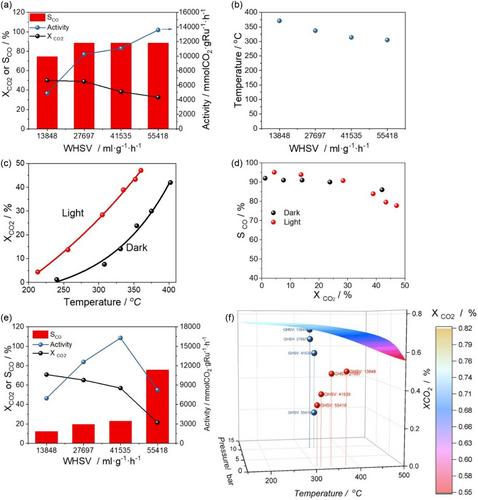
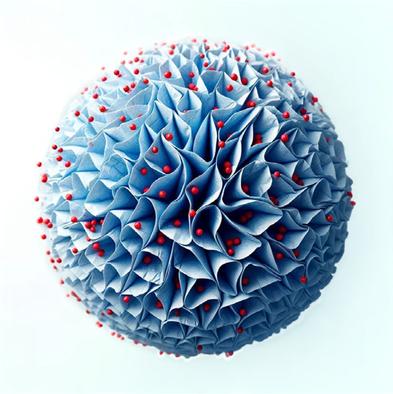
Photothermal catalysis represents a promising strategy to improve the sustainability of chemical transformations by integrating light and heat into a single process. However, materials featuring excellent harvesting and utilization of solar energy are still needed. Here, a photothermal catalyst architecture is reported, which is based on carbon-coated urchin-like silica nanospheres (KCC-1) decorated with Ru nanoparticles that maximizes light absorption and heat confinement. The composite material exhibits outstanding catalytic activity toward photothermal ammonia decomposition and CO2 hydrogenation reactions, outperforming most traditional Ru-based thermal catalysts. The insulating nature of silica is hypothesized to help minimize heat loss via conduction, while its high surface area enables excellent metal dispersion. Additionally, the deposition of a carbon layer further enhances both photon absorption and light-to-heat conversion. Mechanistic experiments suggest the co-existence of thermal and nonthermal effects, with light playing a crucial role in facilitating the desorption of H2 and N2 from the surface of the catalyst. Overall, these results demonstrate that the rational design of catalysts combining effective heat insulators and broad light absorbers is crucial to optimizing catalytic performance in photothermal systems.
期刊介绍:
ChemSusChem
Impact Factor (2016): 7.226
Scope:
Interdisciplinary journal
Focuses on research at the interface of chemistry and sustainability
Features the best research on sustainability and energy
Areas Covered:
Chemistry
Materials Science
Chemical Engineering
Biotechnology





 京公网安备 11010802042870号
京ICP备2023020795号-1
京公网安备 11010802042870号
京ICP备2023020795号-1

 分享
分享
 求助内容:
求助内容: 应助结果提醒方式:
 扫码关注我们
