Patrick J Hearle, Emily Ann Smith, Richard J Caplan, Ram A Sharma
{"title":"Access to Virtual Care in Behavioral Health: A Social Determinant of Health.","authors":"Patrick J Hearle, Emily Ann Smith, Richard J Caplan, Ram A Sharma","doi":"10.32481/djph.2024.12.09","DOIUrl":null,"url":null,"abstract":"<p><strong>Objective: </strong>In the wake of COVID-19, the use of virtual modalities to provide healthcare has increased significantly. While virtual care services, particularly for behavioral health encounters, have become commonplace in many healthcare systems, there is limited data describing to what extent access to virtual care is affected by social determinants of health. The present study aims to characterize the utilization of virtual (video, phone) and non-virtual (in-person office visits) behavioral health care encounters among differing socioeconomic and demographic populations in two campuses served by a tertiary care center in Delaware to identify trends and potential barriers to these services.</p><p><strong>Methods: </strong>A dataset of 19500 behavioral health visits among 3420 patients in the Christiana-Care health network at sites in Newark, DE and Wilmington, DE was analyzed using Kruskal-Wallis test results for continuous variables and chi-squared tests for categorical variables.</p><p><strong>Results: </strong>Patients utilizing virtual (video, phone) visits tended to be younger and have a lighter burden of economic inequality than patients seen in-person. Metrics such as access to a computer, internet connection, and median income were directly correlated with increased use of virtual modalities.</p><p><strong>Conclusion: </strong>The findings indicate that access to and utilization of virtual care may be a social determinant of health. Future research should assess access to telehealth and its impact on health outcomes.</p>","PeriodicalId":72774,"journal":{"name":"Delaware journal of public health","volume":"10 5","pages":"70-75"},"PeriodicalIF":0.0000,"publicationDate":"2024-12-23","publicationTypes":"Journal Article","fieldsOfStudy":null,"isOpenAccess":false,"openAccessPdf":"https://www.ncbi.nlm.nih.gov/pmc/articles/PMC11892720/pdf/","citationCount":"0","resultStr":null,"platform":"Semanticscholar","paperid":null,"PeriodicalName":"Delaware journal of public health","FirstCategoryId":"1085","ListUrlMain":"https://doi.org/10.32481/djph.2024.12.09","RegionNum":0,"RegionCategory":null,"ArticlePicture":[],"TitleCN":null,"AbstractTextCN":null,"PMCID":null,"EPubDate":"2024/12/1 0:00:00","PubModel":"eCollection","JCR":"","JCRName":"","Score":null,"Total":0}
引用次数: 0
Abstract
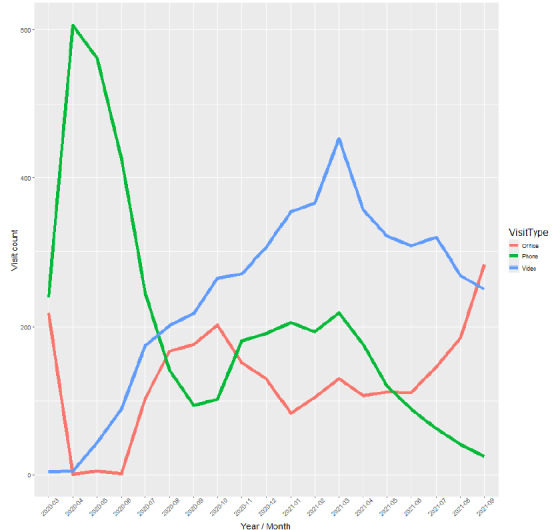
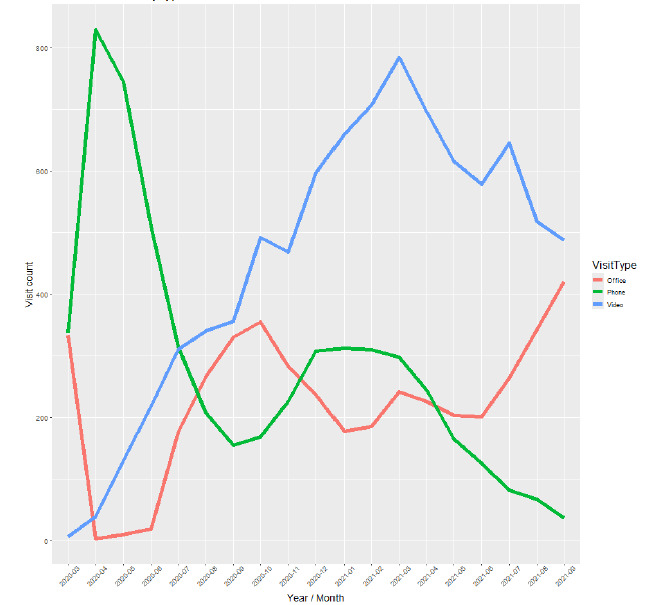
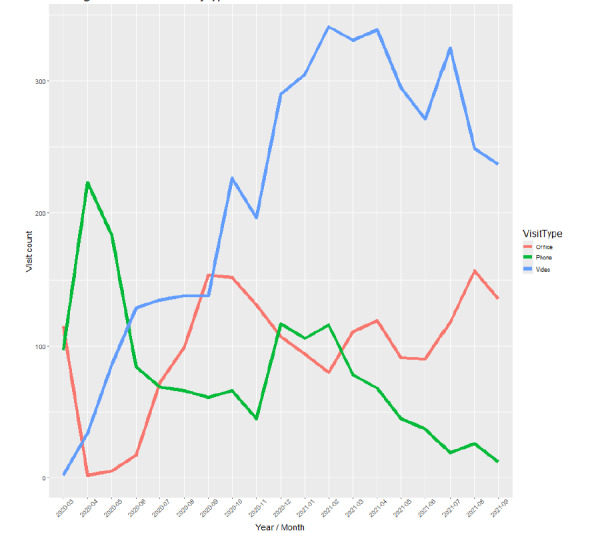
Objective: In the wake of COVID-19, the use of virtual modalities to provide healthcare has increased significantly. While virtual care services, particularly for behavioral health encounters, have become commonplace in many healthcare systems, there is limited data describing to what extent access to virtual care is affected by social determinants of health. The present study aims to characterize the utilization of virtual (video, phone) and non-virtual (in-person office visits) behavioral health care encounters among differing socioeconomic and demographic populations in two campuses served by a tertiary care center in Delaware to identify trends and potential barriers to these services.
Methods: A dataset of 19500 behavioral health visits among 3420 patients in the Christiana-Care health network at sites in Newark, DE and Wilmington, DE was analyzed using Kruskal-Wallis test results for continuous variables and chi-squared tests for categorical variables.
Results: Patients utilizing virtual (video, phone) visits tended to be younger and have a lighter burden of economic inequality than patients seen in-person. Metrics such as access to a computer, internet connection, and median income were directly correlated with increased use of virtual modalities.
Conclusion: The findings indicate that access to and utilization of virtual care may be a social determinant of health. Future research should assess access to telehealth and its impact on health outcomes.



 京公网安备 11010802042870号
京ICP备2023020795号-1
京公网安备 11010802042870号
京ICP备2023020795号-1

 分享
分享

 求助内容:
求助内容: 应助结果提醒方式:
 扫码关注我们
