Hanadi F. Al-Shammari, Mashael A. AL-Jarba, Jehan M. Al-Shammeri, Salim Al-Ateeqi, Anfal Ismaeel, Aisha Al-Boloushi
{"title":"Risk assessment of gross alpha–beta activity concentration in drinking water in Kuwait: baseline measurements and review","authors":"Hanadi F. Al-Shammari, Mashael A. AL-Jarba, Jehan M. Al-Shammeri, Salim Al-Ateeqi, Anfal Ismaeel, Aisha Al-Boloushi","doi":"10.1007/s10661-025-13847-4","DOIUrl":null,"url":null,"abstract":"<div><p>This study measured the gross alpha and beta radiation in Kuwait’s drinking water sources, including local and imported bottled and public-piped water, to assess safety and establish consumer trust. The assessment aimed to establish a baseline for gross alpha and gross beta activity levels and to validate a rapid emergency detection method, following World Health Organization (WHO) guidelines. The results indicated that gross alpha and beta radiation concentrations and total effective doses remained within the safe limits established by WHO for all water types. Specifically, the measured values were as follows: local bottled water (0.034 ± 0.002 Bq/L for alpha, 0.078 ± 0.04 Bq/L for beta, and 0.046 ± 0.022 mSv/y for total effective dose), imported bottled water (0.031 ± 0.001 Bq/L for alpha, 0.066 ± 0.02 Bq/L for beta, and 0.04 ± 0.01 mSv/y for total effective dose), and public-piped water (0.029 ± 0.0004 Bq/L for alpha, 0.041 ± 0.001 Bq/L for beta, and 0.026 ± 0.001 mSv/y for total effective dose). The measured gross alpha and beta values, which affect the total (annual) effective dose, were below the WHO reference levels for gross activity (0.5 ± 0.01 Bq/L for alpha, 1 ± 0.13 Bq/L for beta, and 0.1 mSv/y for the annual effective dose). This indicates that the water is acceptable for human consumption without any safety concerns. However, three bottled water samples exhibited higher gross beta activity concentrations than the others; these samples require specialized nuclide analysis using advanced methods to determine their radionuclide content, influencing the estimated effective dose.</p></div>","PeriodicalId":544,"journal":{"name":"Environmental Monitoring and Assessment","volume":"197 4","pages":""},"PeriodicalIF":3.0000,"publicationDate":"2025-03-14","publicationTypes":"Journal Article","fieldsOfStudy":null,"isOpenAccess":false,"openAccessPdf":"","citationCount":"0","resultStr":null,"platform":"Semanticscholar","paperid":null,"PeriodicalName":"Environmental Monitoring and Assessment","FirstCategoryId":"93","ListUrlMain":"https://link.springer.com/article/10.1007/s10661-025-13847-4","RegionNum":4,"RegionCategory":"环境科学与生态学","ArticlePicture":[],"TitleCN":null,"AbstractTextCN":null,"PMCID":null,"EPubDate":"","PubModel":"","JCR":"Q3","JCRName":"ENVIRONMENTAL SCIENCES","Score":null,"Total":0}
引用次数: 0
Abstract
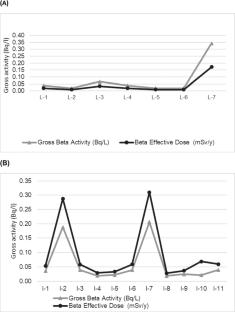
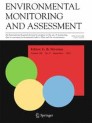
This study measured the gross alpha and beta radiation in Kuwait’s drinking water sources, including local and imported bottled and public-piped water, to assess safety and establish consumer trust. The assessment aimed to establish a baseline for gross alpha and gross beta activity levels and to validate a rapid emergency detection method, following World Health Organization (WHO) guidelines. The results indicated that gross alpha and beta radiation concentrations and total effective doses remained within the safe limits established by WHO for all water types. Specifically, the measured values were as follows: local bottled water (0.034 ± 0.002 Bq/L for alpha, 0.078 ± 0.04 Bq/L for beta, and 0.046 ± 0.022 mSv/y for total effective dose), imported bottled water (0.031 ± 0.001 Bq/L for alpha, 0.066 ± 0.02 Bq/L for beta, and 0.04 ± 0.01 mSv/y for total effective dose), and public-piped water (0.029 ± 0.0004 Bq/L for alpha, 0.041 ± 0.001 Bq/L for beta, and 0.026 ± 0.001 mSv/y for total effective dose). The measured gross alpha and beta values, which affect the total (annual) effective dose, were below the WHO reference levels for gross activity (0.5 ± 0.01 Bq/L for alpha, 1 ± 0.13 Bq/L for beta, and 0.1 mSv/y for the annual effective dose). This indicates that the water is acceptable for human consumption without any safety concerns. However, three bottled water samples exhibited higher gross beta activity concentrations than the others; these samples require specialized nuclide analysis using advanced methods to determine their radionuclide content, influencing the estimated effective dose.
期刊介绍:
Environmental Monitoring and Assessment emphasizes technical developments and data arising from environmental monitoring and assessment, the use of scientific principles in the design of monitoring systems at the local, regional and global scales, and the use of monitoring data in assessing the consequences of natural resource management actions and pollution risks to man and the environment.



 京公网安备 11010802042870号
京ICP备2023020795号-1
京公网安备 11010802042870号
京ICP备2023020795号-1

 分享
分享
 求助内容:
求助内容: 应助结果提醒方式:
 扫码关注我们
