V. Ya. Dashevskii, A. A. Aleksandrov, L. I. Leont’ev
{"title":"Thermodynamics of Oxygen Solutions in Manganese-Containing Ni–Co Melts","authors":"V. Ya. Dashevskii, A. A. Aleksandrov, L. I. Leont’ev","doi":"10.1134/S0036029524702379","DOIUrl":null,"url":null,"abstract":"<p><b>Abstract</b>—Nickel–cobalt alloys are widely used in the modern technology. Manganese is one of alloying components in these alloys. Oxygen is a harmful impurity in the Ni–Co alloys and exists in the metal in both the dissolved state and as nonmetallic inclusions. The presence of oxygen in the alloys leads to the degradation of their service characteristics. The study of the thermodynamics of oxygen solutions in melts of this system is of considerable interest for the practice of alloy production. A thermodynamic analysis of oxygen solutions in the manganese-containing Ni–Co melts is carried out. The equilibrium constant of the reaction of manganese with oxygen dissolved in the nickel–cobalt melts, the activity coefficients for infinite dilution, and interaction parameters in the melts of different compositions are determined. When manganese reacts with oxygen in the Ni–Co melts, the oxide phase contains NiO and CoO along with MnO. The mole fractions of MnO, NiO, and CoO in the oxide phase for different manganese contents in the Ni–Co melts at 1873 K are calculated. In the case of the nickel melt already at the manganese content higher than 0.1%, the mole fraction of manganese oxide is close to unity. The mole fraction of manganese oxide in the oxide phase decreases as the cobalt content in the melt increases. In the case of pure cobalt, the mole fraction of MnO is close to unity at the manganese concentrations higher than 0.7%. The dependences of the solubility of oxygen in the melts under study on the cobalt and manganese concentrations are calculated. In the nickel–cobalt melts, manganese is characterized by a high oxygen affinity. The deoxidizing ability of manganese decreases with increasing cobalt content in the melt and is significantly lower in pure cobalt than in pure nickel. The curves of oxygen solubility in the manganese-containing nickel–cobalt melts pass through a minimum, the position of which shifts toward higher manganese concentrations as the cobalt content in the melt increases.</p>","PeriodicalId":769,"journal":{"name":"Russian Metallurgy (Metally)","volume":"2024 6","pages":"1298 - 1305"},"PeriodicalIF":0.3000,"publicationDate":"2025-03-14","publicationTypes":"Journal Article","fieldsOfStudy":null,"isOpenAccess":false,"openAccessPdf":"","citationCount":"0","resultStr":null,"platform":"Semanticscholar","paperid":null,"PeriodicalName":"Russian Metallurgy (Metally)","FirstCategoryId":"5","ListUrlMain":"https://link.springer.com/article/10.1134/S0036029524702379","RegionNum":0,"RegionCategory":null,"ArticlePicture":[],"TitleCN":null,"AbstractTextCN":null,"PMCID":null,"EPubDate":"","PubModel":"","JCR":"Q4","JCRName":"METALLURGY & METALLURGICAL ENGINEERING","Score":null,"Total":0}
引用次数: 0
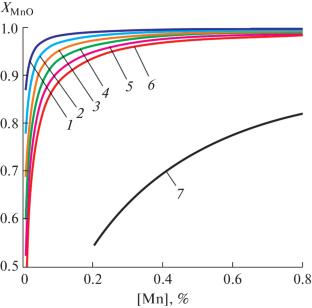
Abstract—Nickel–cobalt alloys are widely used in the modern technology. Manganese is one of alloying components in these alloys. Oxygen is a harmful impurity in the Ni–Co alloys and exists in the metal in both the dissolved state and as nonmetallic inclusions. The presence of oxygen in the alloys leads to the degradation of their service characteristics. The study of the thermodynamics of oxygen solutions in melts of this system is of considerable interest for the practice of alloy production. A thermodynamic analysis of oxygen solutions in the manganese-containing Ni–Co melts is carried out. The equilibrium constant of the reaction of manganese with oxygen dissolved in the nickel–cobalt melts, the activity coefficients for infinite dilution, and interaction parameters in the melts of different compositions are determined. When manganese reacts with oxygen in the Ni–Co melts, the oxide phase contains NiO and CoO along with MnO. The mole fractions of MnO, NiO, and CoO in the oxide phase for different manganese contents in the Ni–Co melts at 1873 K are calculated. In the case of the nickel melt already at the manganese content higher than 0.1%, the mole fraction of manganese oxide is close to unity. The mole fraction of manganese oxide in the oxide phase decreases as the cobalt content in the melt increases. In the case of pure cobalt, the mole fraction of MnO is close to unity at the manganese concentrations higher than 0.7%. The dependences of the solubility of oxygen in the melts under study on the cobalt and manganese concentrations are calculated. In the nickel–cobalt melts, manganese is characterized by a high oxygen affinity. The deoxidizing ability of manganese decreases with increasing cobalt content in the melt and is significantly lower in pure cobalt than in pure nickel. The curves of oxygen solubility in the manganese-containing nickel–cobalt melts pass through a minimum, the position of which shifts toward higher manganese concentrations as the cobalt content in the melt increases.
期刊介绍:
Russian Metallurgy (Metally) publishes results of original experimental and theoretical research in the form of reviews and regular articles devoted to topical problems of metallurgy, physical metallurgy, and treatment of ferrous, nonferrous, rare, and other metals and alloys, intermetallic compounds, and metallic composite materials. The journal focuses on physicochemical properties of metallurgical materials (ores, slags, matters, and melts of metals and alloys); physicochemical processes (thermodynamics and kinetics of pyrometallurgical, hydrometallurgical, electrochemical, and other processes); theoretical metallurgy; metal forming; thermoplastic and thermochemical treatment; computation and experimental determination of phase diagrams and thermokinetic diagrams; mechanisms and kinetics of phase transitions in metallic materials; relations between the chemical composition, phase and structural states of materials and their physicochemical and service properties; interaction between metallic materials and external media; and effects of radiation on these materials.



 京公网安备 11010802042870号
京ICP备2023020795号-1
京公网安备 11010802042870号
京ICP备2023020795号-1

 分享
分享
 求助内容:
求助内容: 应助结果提醒方式:
 扫码关注我们
