Natiele Kleemann, Andrei Igansi, Nauro Silveira Jr., Luiz Pinto, Tito Cadaval Jr., Jean Arias, Sergiane Barbosa, Ednei Primel, Adilson Bamberg
{"title":"Simultaneous adsorption of polycyclic aromatic hydrocarbons (PAHs) on biochar from sewage sludge","authors":"Natiele Kleemann, Andrei Igansi, Nauro Silveira Jr., Luiz Pinto, Tito Cadaval Jr., Jean Arias, Sergiane Barbosa, Ednei Primel, Adilson Bamberg","doi":"10.1007/s11356-025-36255-0","DOIUrl":null,"url":null,"abstract":"<div><p>PAHs are organic pollutants of great environmental persistence. This study produced biochar of sewage sludge from a treatment plant and used it as an adsorbent in a complex system containing 16 priority PAHs. The biochar was characterized by the morphology and elemental composition (SEM/EDS), specific surface area, and pore size using N<sub>2</sub> adsorption–desorption (BET/BJH), crystallinity (DRX), functional groups (FTIR), and thermogravimetric degradation (DSC/DTG). The dosage effect showed that 90% of the PAHs were removed when SSB was 2 g L<sup>−1</sup>. Kinetic assays were performed using different SSB dosages. The most adequate model to represent the kinetic results was the Elovich. The adsorption capacity and removal percentage of the 16 emerging organic polycyclic aromatic hydrocarbons cited by the US EPA were evaluated individually. The highest adsorption capacity was verified for fluoranthene, pyrene, and phenanthrene, respectively, evidencing the electivity of this material for these compounds.</p><h3>Graphical Abstract</h3>\n<div><figure><div><div><picture><source><img></source></picture></div></div></figure></div></div>","PeriodicalId":545,"journal":{"name":"Environmental Science and Pollution Research","volume":"32 13","pages":"8518 - 8528"},"PeriodicalIF":5.8000,"publicationDate":"2025-03-14","publicationTypes":"Journal Article","fieldsOfStudy":null,"isOpenAccess":false,"openAccessPdf":"","citationCount":"0","resultStr":null,"platform":"Semanticscholar","paperid":null,"PeriodicalName":"Environmental Science and Pollution Research","FirstCategoryId":"93","ListUrlMain":"https://link.springer.com/article/10.1007/s11356-025-36255-0","RegionNum":3,"RegionCategory":"环境科学与生态学","ArticlePicture":[],"TitleCN":null,"AbstractTextCN":null,"PMCID":null,"EPubDate":"","PubModel":"","JCR":"0","JCRName":"ENVIRONMENTAL SCIENCES","Score":null,"Total":0}
引用次数: 0
Abstract
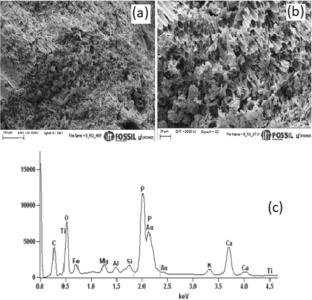
PAHs are organic pollutants of great environmental persistence. This study produced biochar of sewage sludge from a treatment plant and used it as an adsorbent in a complex system containing 16 priority PAHs. The biochar was characterized by the morphology and elemental composition (SEM/EDS), specific surface area, and pore size using N2 adsorption–desorption (BET/BJH), crystallinity (DRX), functional groups (FTIR), and thermogravimetric degradation (DSC/DTG). The dosage effect showed that 90% of the PAHs were removed when SSB was 2 g L−1. Kinetic assays were performed using different SSB dosages. The most adequate model to represent the kinetic results was the Elovich. The adsorption capacity and removal percentage of the 16 emerging organic polycyclic aromatic hydrocarbons cited by the US EPA were evaluated individually. The highest adsorption capacity was verified for fluoranthene, pyrene, and phenanthrene, respectively, evidencing the electivity of this material for these compounds.
多环芳烃是具有很强环境持久性的有机污染物。本研究从污水处理厂的污泥中制备生物炭,并将其用作含有16个优先多环芳烃的复杂系统的吸附剂。通过形貌和元素组成(SEM/EDS)、比表面积、N2吸附-解吸(BET/BJH)、结晶度(DRX)、官能团(FTIR)和热重降解(DSC/DTG)对生物炭进行了表征。剂量效应表明,当SSB浓度为2 g L-1时,PAHs的去除率为90%。采用不同剂量的SSB进行动力学分析。最适合表示动力学结果的模型是Elovich模型。分别对美国环保局引用的16种新兴有机多环芳烃的吸附能力和去除率进行了评价。对氟蒽、芘和菲的吸附能力分别最高,证明了该材料对这些化合物的选择性。
期刊介绍:
Environmental Science and Pollution Research (ESPR) serves the international community in all areas of Environmental Science and related subjects with emphasis on chemical compounds. This includes:
- Terrestrial Biology and Ecology
- Aquatic Biology and Ecology
- Atmospheric Chemistry
- Environmental Microbiology/Biobased Energy Sources
- Phytoremediation and Ecosystem Restoration
- Environmental Analyses and Monitoring
- Assessment of Risks and Interactions of Pollutants in the Environment
- Conservation Biology and Sustainable Agriculture
- Impact of Chemicals/Pollutants on Human and Animal Health
It reports from a broad interdisciplinary outlook.



 京公网安备 11010802042870号
京ICP备2023020795号-1
京公网安备 11010802042870号
京ICP备2023020795号-1

 分享
分享
 求助内容:
求助内容: 应助结果提醒方式:
 扫码关注我们
