{"title":"Bacterial translocation and gut microbiome imbalance in an experimental infection model of legionellosis in guinea pigs.","authors":"Xu Cai, Mingtao Xu, Ye Lu, Wei Shen, Jian Kang, Wei Wang, Yu Chen","doi":"10.1186/s12866-025-03845-4","DOIUrl":null,"url":null,"abstract":"<p><strong>Background: </strong>Recent studies have shown that in critically ill patients such as those with sepsis and shock, the lung and gut microbiomes undergo profound changes. Legionella pneumophila (Lp) can cause fatal infection, however, such changes have not been investigated in legionellosis. Here, we evaluated the microbiome of the lungs, blood, liver, and small intestine content in Lp-infected guinea pigs.</p><p><strong>Methods: </strong>We used a culture-independent method by analysing the conserved 16S rDNA sequences of bacteria from the organs of guinea pigs infected with legionellosis. Bacterial DNA was also identified through bacterial probe-fluorescence in situ hybridisation (BP-FISH). Bacterial entry from the intestinal lumen into the submucosa was examined via ultrastructural visualisation.</p><p><strong>Results: </strong>Anoxybacillus kestanbolensis, Geobacillus vulcani, and other bacteria were identified in the small intestine content of healthy guinea pigs but not in other tissues. However, in Lp-infected guinea pigs, DNA from these bacteria was detected in the small intestine, lungs, blood, and liver tissues at 24 h and 48 h post-infection, indicating the possible translocation of gut bacteria to the remote tissues. This was validated through BP-FISH and ultrastructural visualisation. At 72 h post-infection, Pseudomonadota were the dominant gut bacteria, highlighting an imbalance in the gut microbiome.</p><p><strong>Conclusion: </strong>Infection with the Legionella pneumophila serotype 1 disrupted the intestinal microbiota in a subset of guinea pigs during a 72-hour period post-infection, with possible translocation of gut-associated anaerobic bacteria to the lungs and liver based on the presence of genomic DNA detected in tissue from infected guinea pigs.</p>","PeriodicalId":9233,"journal":{"name":"BMC Microbiology","volume":"25 1","pages":"139"},"PeriodicalIF":4.2000,"publicationDate":"2025-03-14","publicationTypes":"Journal Article","fieldsOfStudy":null,"isOpenAccess":false,"openAccessPdf":"https://www.ncbi.nlm.nih.gov/pmc/articles/PMC11908093/pdf/","citationCount":"0","resultStr":null,"platform":"Semanticscholar","paperid":null,"PeriodicalName":"BMC Microbiology","FirstCategoryId":"99","ListUrlMain":"https://doi.org/10.1186/s12866-025-03845-4","RegionNum":2,"RegionCategory":"生物学","ArticlePicture":[],"TitleCN":null,"AbstractTextCN":null,"PMCID":null,"EPubDate":"","PubModel":"","JCR":"Q2","JCRName":"MICROBIOLOGY","Score":null,"Total":0}
引用次数: 0
Abstract
Background: Recent studies have shown that in critically ill patients such as those with sepsis and shock, the lung and gut microbiomes undergo profound changes. Legionella pneumophila (Lp) can cause fatal infection, however, such changes have not been investigated in legionellosis. Here, we evaluated the microbiome of the lungs, blood, liver, and small intestine content in Lp-infected guinea pigs.
Methods: We used a culture-independent method by analysing the conserved 16S rDNA sequences of bacteria from the organs of guinea pigs infected with legionellosis. Bacterial DNA was also identified through bacterial probe-fluorescence in situ hybridisation (BP-FISH). Bacterial entry from the intestinal lumen into the submucosa was examined via ultrastructural visualisation.
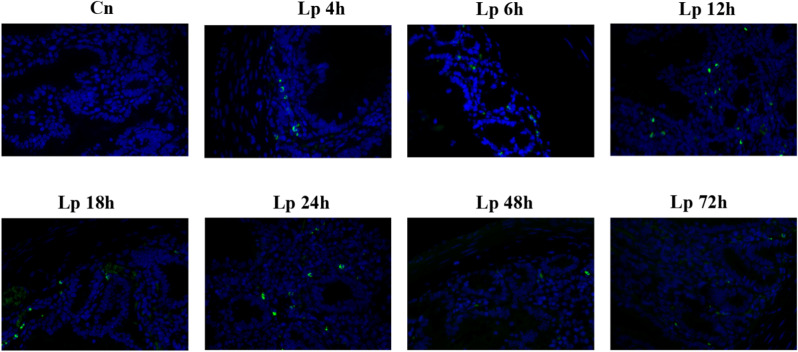
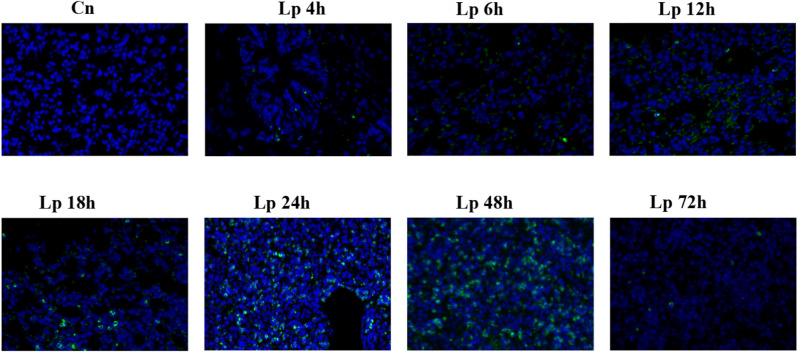
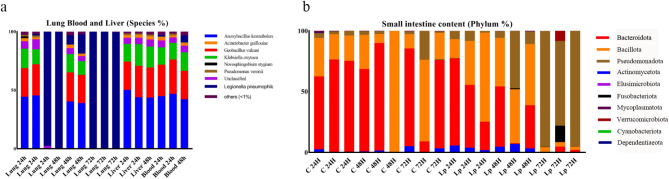
Results: Anoxybacillus kestanbolensis, Geobacillus vulcani, and other bacteria were identified in the small intestine content of healthy guinea pigs but not in other tissues. However, in Lp-infected guinea pigs, DNA from these bacteria was detected in the small intestine, lungs, blood, and liver tissues at 24 h and 48 h post-infection, indicating the possible translocation of gut bacteria to the remote tissues. This was validated through BP-FISH and ultrastructural visualisation. At 72 h post-infection, Pseudomonadota were the dominant gut bacteria, highlighting an imbalance in the gut microbiome.
Conclusion: Infection with the Legionella pneumophila serotype 1 disrupted the intestinal microbiota in a subset of guinea pigs during a 72-hour period post-infection, with possible translocation of gut-associated anaerobic bacteria to the lungs and liver based on the presence of genomic DNA detected in tissue from infected guinea pigs.
期刊介绍:
BMC Microbiology is an open access, peer-reviewed journal that considers articles on analytical and functional studies of prokaryotic and eukaryotic microorganisms, viruses and small parasites, as well as host and therapeutic responses to them and their interaction with the environment.



 京公网安备 11010802042870号
京ICP备2023020795号-1
京公网安备 11010802042870号
京ICP备2023020795号-1

 分享
分享
 求助内容:
求助内容: 应助结果提醒方式:
 扫码关注我们
