Barbara Engels, Manon A T Bloemen, Richard Felius, Karlijn Damen, Eline A M Bolster, Harriët Wittink, Raoul H H Engelbert, Jan Willem Gorter
{"title":"Monitoring of child-specific activities in ambulatory children with and without developmental disabilities.","authors":"Barbara Engels, Manon A T Bloemen, Richard Felius, Karlijn Damen, Eline A M Bolster, Harriët Wittink, Raoul H H Engelbert, Jan Willem Gorter","doi":"10.1186/s12887-025-05489-9","DOIUrl":null,"url":null,"abstract":"<p><strong>Background: </strong>Pediatric healthcare professionals facilitate children to enhance and maintain a physically active lifestyle. Activity monitors (AM) can help pediatric healthcare professionals assess physical activity in everyday life. However, validation research of activity monitors has often been conducted in laboratories and insight into physical activity of children in their own everyday environment is lacking. Our goal was to study the criterion validity of a prototype AM (AM-p) model in a natural setting.</p><p><strong>Methods: </strong>Cross-sectional community-based study with ambulatory children (2-19 years) with and without developmental disability. Children wore the AM-p on the ankle and were filmed (gold standard) while performing an activity protocol in a natural setting. We labelled all videos per 5-second epoch with individual activity labels. Raw AM-p data were synchronized with activity labels. Using machine learning techniques, activity labels were subdivided in three pre-defined categories. Accuracy, recall, precision, and F1 score were calculated per category.</p><p><strong>Results: </strong>We analyzed data of 93 children, of which 28 had a developmental disability. Mean age was 11 years (SD 4.5) with 55% girls. The AM-p model differentiated between 'stationary', 'cycling' and 'locomotion' activities with an accuracy of 82%, recall of 78%, precision of 75%, and F1 score of 75%, respectively. Children older than 13 years with typical development can be assessed more accurately than younger children (2-12 years) with and without developmental disabilities.</p><p><strong>Conclusion: </strong>The single ankle-worn AM-p model can differentiate between three activity categories in children with and without developmental disabilities with good accuracy (82%). Because the AM-p can be used for a heterogenous group of ambulatory children with and without developmental disabilities, it may support the clinical assessment for pediatric healthcare professionals in the future.</p>","PeriodicalId":9144,"journal":{"name":"BMC Pediatrics","volume":"25 1","pages":"193"},"PeriodicalIF":2.0000,"publicationDate":"2025-03-15","publicationTypes":"Journal Article","fieldsOfStudy":null,"isOpenAccess":false,"openAccessPdf":"https://www.ncbi.nlm.nih.gov/pmc/articles/PMC11909815/pdf/","citationCount":"0","resultStr":null,"platform":"Semanticscholar","paperid":null,"PeriodicalName":"BMC Pediatrics","FirstCategoryId":"3","ListUrlMain":"https://doi.org/10.1186/s12887-025-05489-9","RegionNum":3,"RegionCategory":"医学","ArticlePicture":[],"TitleCN":null,"AbstractTextCN":null,"PMCID":null,"EPubDate":"","PubModel":"","JCR":"Q2","JCRName":"PEDIATRICS","Score":null,"Total":0}
引用次数: 0
Abstract
Background: Pediatric healthcare professionals facilitate children to enhance and maintain a physically active lifestyle. Activity monitors (AM) can help pediatric healthcare professionals assess physical activity in everyday life. However, validation research of activity monitors has often been conducted in laboratories and insight into physical activity of children in their own everyday environment is lacking. Our goal was to study the criterion validity of a prototype AM (AM-p) model in a natural setting.
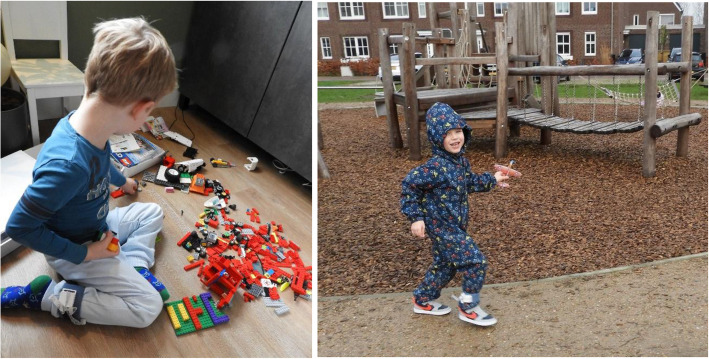
Methods: Cross-sectional community-based study with ambulatory children (2-19 years) with and without developmental disability. Children wore the AM-p on the ankle and were filmed (gold standard) while performing an activity protocol in a natural setting. We labelled all videos per 5-second epoch with individual activity labels. Raw AM-p data were synchronized with activity labels. Using machine learning techniques, activity labels were subdivided in three pre-defined categories. Accuracy, recall, precision, and F1 score were calculated per category.
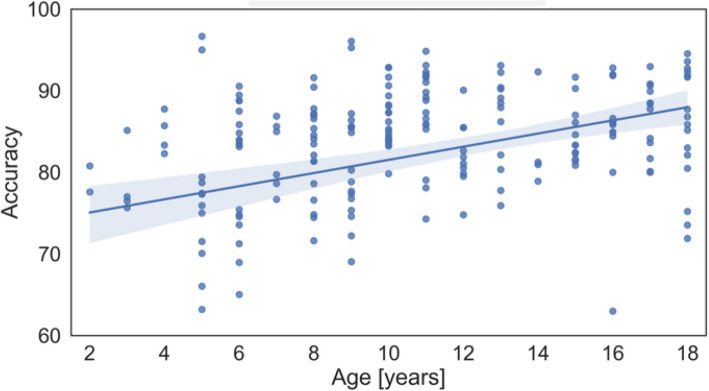
Results: We analyzed data of 93 children, of which 28 had a developmental disability. Mean age was 11 years (SD 4.5) with 55% girls. The AM-p model differentiated between 'stationary', 'cycling' and 'locomotion' activities with an accuracy of 82%, recall of 78%, precision of 75%, and F1 score of 75%, respectively. Children older than 13 years with typical development can be assessed more accurately than younger children (2-12 years) with and without developmental disabilities.
Conclusion: The single ankle-worn AM-p model can differentiate between three activity categories in children with and without developmental disabilities with good accuracy (82%). Because the AM-p can be used for a heterogenous group of ambulatory children with and without developmental disabilities, it may support the clinical assessment for pediatric healthcare professionals in the future.
期刊介绍:
BMC Pediatrics is an open access journal publishing peer-reviewed research articles in all aspects of health care in neonates, children and adolescents, as well as related molecular genetics, pathophysiology, and epidemiology.




 京公网安备 11010802042870号
京ICP备2023020795号-1
京公网安备 11010802042870号
京ICP备2023020795号-1

 分享
分享
 求助内容:
求助内容: 应助结果提醒方式:
 扫码关注我们
