{"title":"Effectiveness of Chamomile in Reducing the Incidence and Severity of Nausea and Vomiting After Middle Ear Surgery: A Triple-Blind Randomized Study.","authors":"Maryam Sarkhosh, Ehsan Rajabi Visroodi, Hamidreza Samaee, Motahareh Farhadi, Parisa Moradimajd","doi":"10.5812/aapm-153566","DOIUrl":null,"url":null,"abstract":"<p><strong>Background: </strong>Nausea and vomiting are among the most common complications after surgery.</p><p><strong>Objectives: </strong>The aim of this study was to investigate the effectiveness of chamomile in reducing the incidence and severity of nausea and vomiting after middle ear surgery.</p><p><strong>Methods: </strong>A total of 110 patients who met the inclusion criteria were randomly assigned to either the chamomile or placebo group. Group A consumed chamomile drops (500 mg), while group B consumed cornstarch with 30 mL of water, one hour before surgery. The severity of nausea and frequency of vomiting were recorded at recovery (time of zero), 1, 2, 4, and 6 hours after surgery using the Rhodes Index. Data were analyzed using SPSS v.21 software, paired <i>t</i>-tests, and chi-square tests.</p><p><strong>Results: </strong>A total of 110 patients were included, with an average age of 36.14 ± 10.3 years (group A) and 34.28 ± 13.3 years (group B). There was no statistically significant difference between the chamomile and placebo groups in terms of the severity of nausea and the frequency of vomiting immediately after recovery (time of zero), 1, 2, and 6 hours after surgery (P > 0.05). However, 4 hours post-surgery, the severity of nausea in the chamomile group was lower than in the placebo group, and a statistically significant difference was observed between the two groups (P = 0.03). No gastrointestinal side effects were reported.</p><p><strong>Conclusions: </strong>Based on the results of this study, chamomile can be used to reduce nausea and vomiting after middle ear surgery, given its availability and low cost.</p>","PeriodicalId":7841,"journal":{"name":"Anesthesiology and Pain Medicine","volume":"14 6","pages":"e153566"},"PeriodicalIF":0.0000,"publicationDate":"2025-01-07","publicationTypes":"Journal Article","fieldsOfStudy":null,"isOpenAccess":false,"openAccessPdf":"https://www.ncbi.nlm.nih.gov/pmc/articles/PMC11910166/pdf/","citationCount":"0","resultStr":null,"platform":"Semanticscholar","paperid":null,"PeriodicalName":"Anesthesiology and Pain Medicine","FirstCategoryId":"1085","ListUrlMain":"https://doi.org/10.5812/aapm-153566","RegionNum":0,"RegionCategory":null,"ArticlePicture":[],"TitleCN":null,"AbstractTextCN":null,"PMCID":null,"EPubDate":"2024/12/1 0:00:00","PubModel":"eCollection","JCR":"Q2","JCRName":"Medicine","Score":null,"Total":0}
引用次数: 0
Abstract
Background: Nausea and vomiting are among the most common complications after surgery.
Objectives: The aim of this study was to investigate the effectiveness of chamomile in reducing the incidence and severity of nausea and vomiting after middle ear surgery.
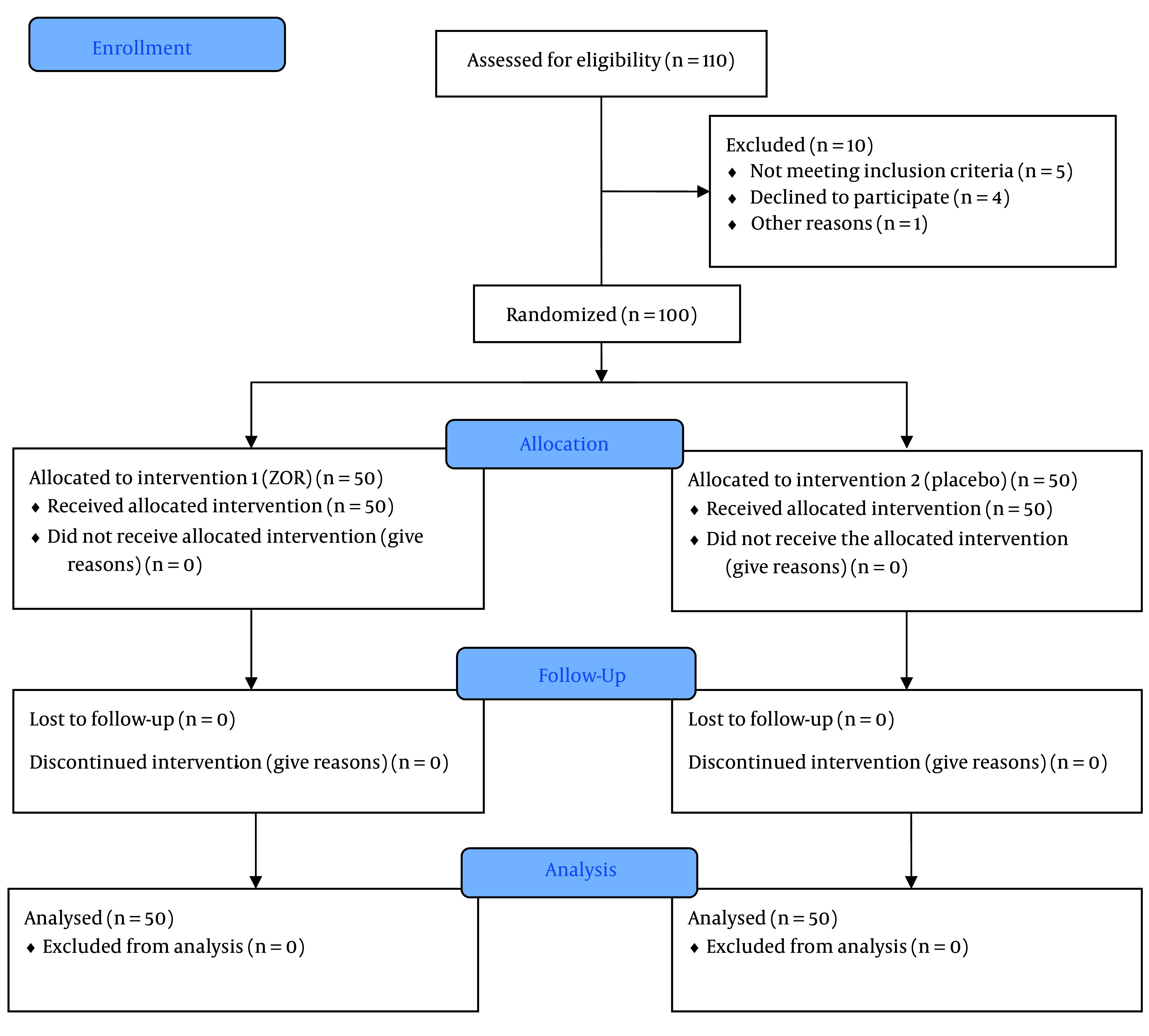
Methods: A total of 110 patients who met the inclusion criteria were randomly assigned to either the chamomile or placebo group. Group A consumed chamomile drops (500 mg), while group B consumed cornstarch with 30 mL of water, one hour before surgery. The severity of nausea and frequency of vomiting were recorded at recovery (time of zero), 1, 2, 4, and 6 hours after surgery using the Rhodes Index. Data were analyzed using SPSS v.21 software, paired t-tests, and chi-square tests.
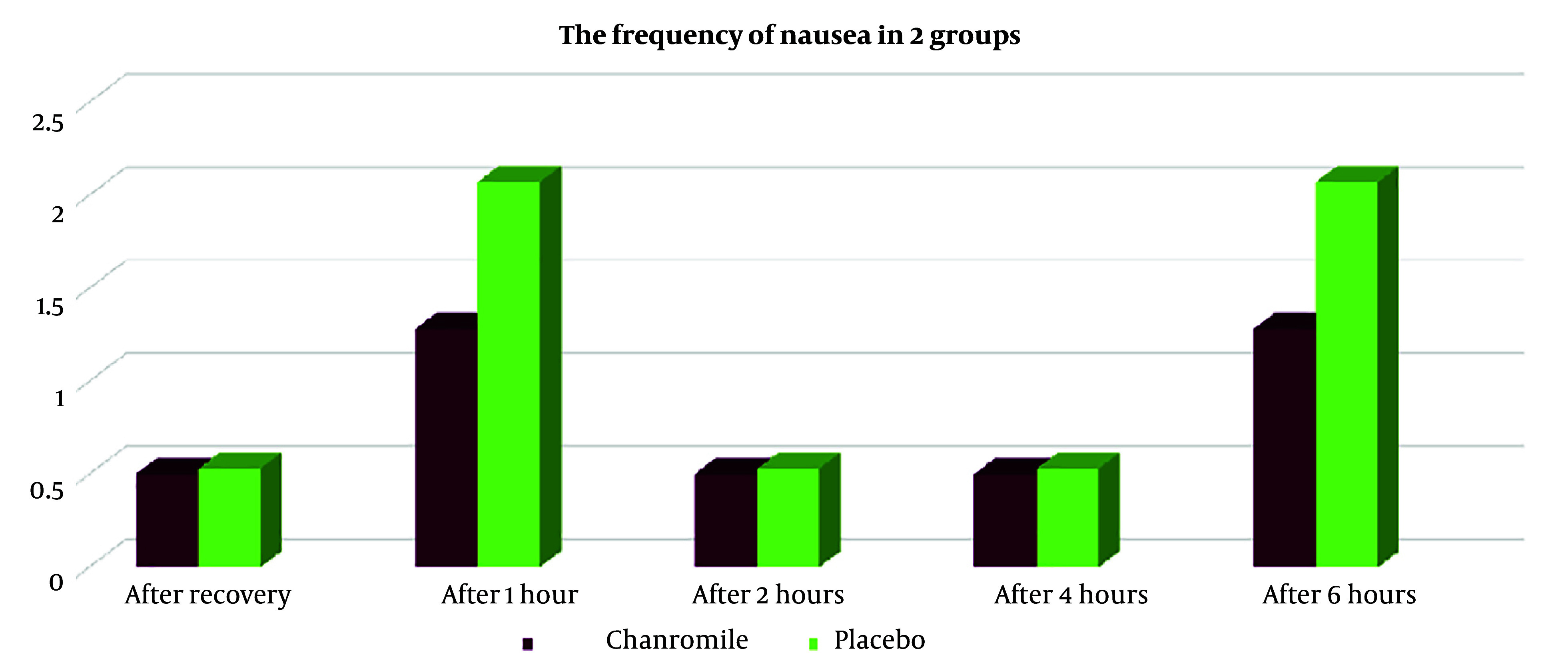
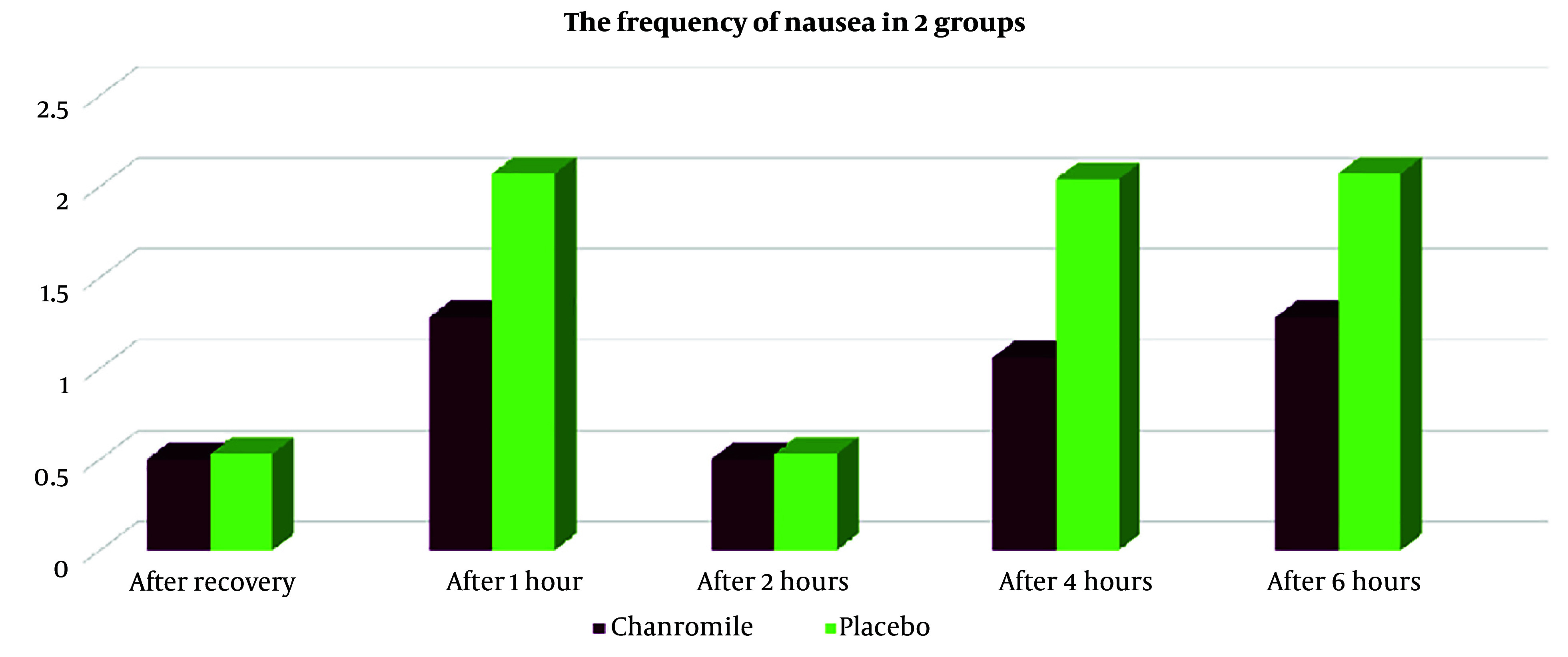
Results: A total of 110 patients were included, with an average age of 36.14 ± 10.3 years (group A) and 34.28 ± 13.3 years (group B). There was no statistically significant difference between the chamomile and placebo groups in terms of the severity of nausea and the frequency of vomiting immediately after recovery (time of zero), 1, 2, and 6 hours after surgery (P > 0.05). However, 4 hours post-surgery, the severity of nausea in the chamomile group was lower than in the placebo group, and a statistically significant difference was observed between the two groups (P = 0.03). No gastrointestinal side effects were reported.
Conclusions: Based on the results of this study, chamomile can be used to reduce nausea and vomiting after middle ear surgery, given its availability and low cost.




 京公网安备 11010802042870号
京ICP备2023020795号-1
京公网安备 11010802042870号
京ICP备2023020795号-1

 分享
分享
 求助内容:
求助内容: 应助结果提醒方式:
 扫码关注我们
